
By Gebre Tatios
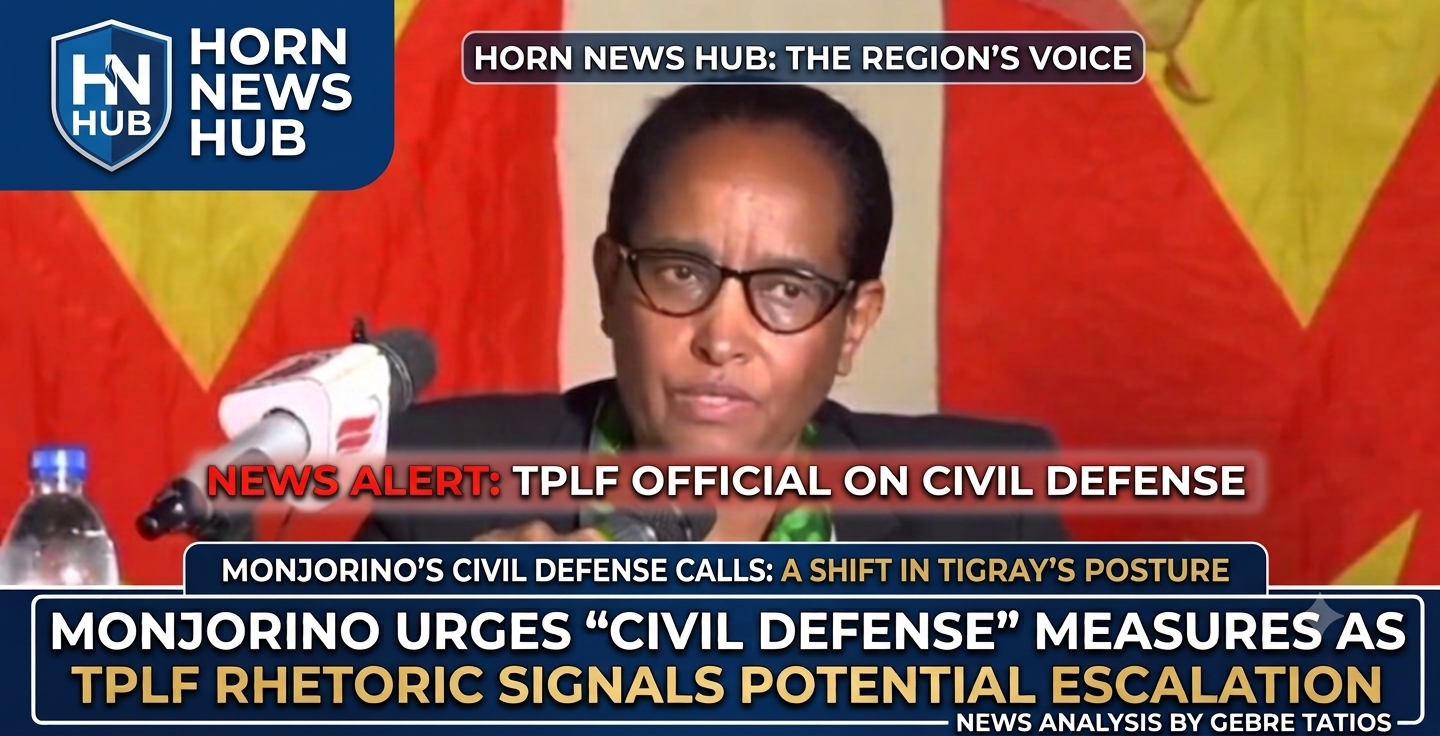
Recent public conference held across Tigray, highlighted by an address in Adigrat by Fetlework Gebregziabher, Head of the Tigray People’s Liberation Front (TPLF) Secretariat, have raised renewed diplomatic concerns over the durability of the November 2022 Pretoria Cessation of Hostilities Agreement.
During the address, Fetlework Gebregziabher called on the regional civilian population to adopt “Civil Defense” measures to mitigate potential risks associated with advanced aerial assets, including fighter jets and drones, in the event of renewed military confrontation with the Ethiopian Federal Government. The statement reflects a sharp shift in public messaging toward active conflict preparedness rather than political dialogue.
International observers and regional analysts suggest this rhetoric reflects broader geopolitical dynamics taking shape across the Horn of Africa. The potential resurgence of hostilities in northern Ethiopia coincides with complex regional alignments involving external stakeholders, including interests tied to Eritrea and Egypt, which seek to influence the regional balance of power along strategic corridors.
The heightened tension in Tigray comes alongside reports regarding cross-border security dynamics, including the alleged involvement of TPLF-affiliated combatants in the neighboring Sudanese civil war. Reports referencing captured personnel in Sudan, alongside broader discussions surrounding foreign armed factions highlighted in U.S. congressional proceedings, point to the presence of regional combatants frequently referred to in field reports as “Army 70” operating within Sudanese battle zones. Analysts note that the movement of youth across borders under wartime conditions raises severe human trafficking and regional security concerns.
The convergence of internal security friction, regional proxy dynamics, and potential threats to Red Sea maritime routes presents a multidimensional challenge for international policymakers. For European security planners, destabilization in the Horn of Africa and neighboring Sudan presents direct risks, including intensified forced displacement, expansion of human smuggling networks, and heightened pressure on international aid and border management frameworks.
With regional observers noting limited space for internal dissent or open opposition within public forums in Tigray, the diplomatic community, the Ethiopian Federal Government, and international guarantors of the Pretoria peace process face growing calls to engage key parties to prevent further military escalation and preserve regional stability.