

Addis Ababa, Ethiopia — May 7, 2026 | Horn News Hub
By Senior Regional Analyst (Horn of Africa Strategic Studies)
Abstract
Northern Ethiopia is once again approaching a dangerous political crossroads. While the Federal Government of Ethiopia continues to pursue the implementation of the Pretoria Cessation of Hostilities Agreement (CoHA), with emphasis on reconstruction, institutional recovery, and the return of Internally Displaced Persons (IDPs), elements within the Tigray People’s Liberation Front (TPLF) appear determined to reverse the transition process.
The attempt to dismantle the federally recognized Interim Administration of Tigray (IRA), combined with growing reports of political coordination with the Eritrean regime, reflects a deeper crisis within the TPLF leadership. Rather than adapting to the post-war political reality, hardline factions are increasingly retreating into survival politics rooted in institutional confrontation and external alliances.
What is unfolding is no longer simply an internal Tigrayan political dispute. It is becoming a broader struggle over the future direction of Tigray itself and whether the region moves toward recovery and reintegration or returns to isolation and instability.
I. The Illusion of Political Resurrection
The political dominance once exercised by the TPLF effectively collapsed after the outbreak of the northern conflict and the attack on the Northern Command of the Ethiopian National Defense Forces (ENDF). The consequences were not limited to military defeat. The war fundamentally dismantled the political order that had sustained the organization for decades.
Today, attempts to revive the pre-war regional council under Debretsion Gebremichael appear less like a democratic restoration and more like an effort to resurrect a political era that has already lost its legitimacy both nationally and internationally.
The Interim Administration was established as part of the transition framework following the Pretoria Agreement. Rejecting that framework risks pushing Tigray into constitutional uncertainty and administrative paralysis. A parallel political structure would not strengthen Tigray’s position. Instead, it could isolate the region from federal institutions, budgetary mechanisms, and reconstruction programs that remain essential for post-war recovery.
The political reality after Pretoria is fundamentally different from the one that existed before the war. Attempts to ignore that reality may deepen instability rather than restore authority.
II. The Federal Transition Versus Institutional Sabotage
The Federal Government’s current approach has centered on stabilization and normalization. The restoration of banking services, telecommunications, humanitarian access, and the gradual return of displaced populations are all tied to the implementation of the Pretoria framework.
However, efforts by TPLF hardliners to undermine the Interim Administration threaten to derail this fragile process.
The crisis now emerging inside Tigray resembles a “state within a state” scenario, where competing authorities seek legitimacy simultaneously. Such political fragmentation weakens governance structures and creates uncertainty for both domestic and international actors involved in reconstruction efforts.
Institutional confrontation also carries direct humanitarian consequences. Reconstruction funds, administrative coordination, civil service rehabilitation, and aid distribution depend on recognized governance mechanisms. Undermining those mechanisms risks delaying recovery for millions of civilians who continue to face displacement, poverty, and economic hardship.
Equally concerning is the growing rhetoric that frames the restoration of pre-war political structures as a form of resistance or sovereignty. In reality, forcing a return to the old order risks reopening unresolved tensions that the Pretoria Agreement was specifically designed to contain.
III. The Proxy Trap and the Eritrean Question
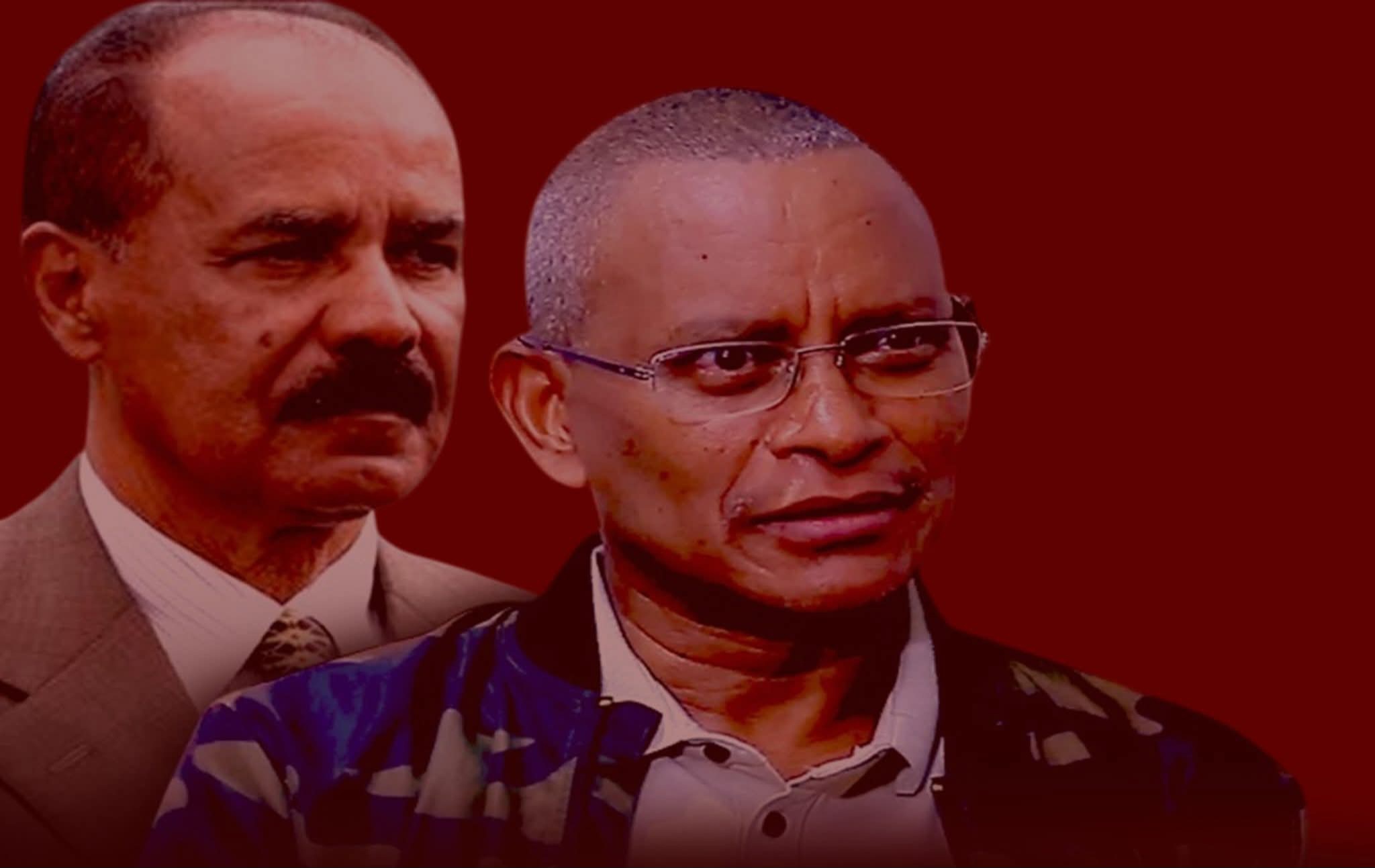
Perhaps the most politically sensitive development is the reported rapprochement between sections of the TPLF leadership and the Eritrean government.
For decades, the TPLF portrayed itself as the principal defender of Tigrayan autonomy and identity against external threats, particularly from Asmara. Any strategic alignment with Eritrea therefore carries profound political symbolism and raises difficult questions about ideological consistency and long-term intentions.
Critics increasingly argue that reliance on external actors for political leverage transforms Tigray from an autonomous political actor into a proxy arena for wider regional rivalries.
History across the Horn of Africa repeatedly demonstrates the dangers of proxy politics. External alliances formed for short-term tactical survival often produce long-term dependency, fragmentation, and internal collapse. Political movements that invite foreign influence into domestic disputes frequently lose both legitimacy and strategic independence in the process.
The danger for Tigray is not simply geopolitical. It is existential. A region already devastated by war cannot afford to become the battleground for another cycle of regional power competition.
IV. Humanitarian and Economic Consequences
The human cost of renewed political confrontation could be severe.
Tigray remains in urgent need of reconstruction, institutional recovery, agricultural rehabilitation, and economic reintegration. Stability is not a political luxury. It is the basic requirement for survival and recovery.
Continued tensions between the Interim Administration and TPLF hardliners threaten several critical areas.
First, economic reintegration could stall. Federal support mechanisms and international donor assistance rely heavily on political stability and recognized governance channels.
Second, diplomatic isolation may deepen. The African Union, international mediators, and major donor states continue to recognize the Pretoria Agreement as the primary framework for peace and normalization. Any attempt to establish a parallel authority outside that framework risks alienating the very actors needed for reconstruction and recovery.
Third, ordinary civilians may once again become trapped between competing political agendas. After years of devastating conflict, many residents are demanding peace, security, and economic opportunity rather than renewed mobilization and factional confrontation.
V. The Verdict of History
The broader trajectory of the Horn of Africa suggests that political movements unable to transition from armed dominance to negotiated political adaptation often enter periods of irreversible decline.
The TPLF now faces precisely that moment.
Attempts to maintain relevance through institutional sabotage, parallel governance structures, or external alliances may prolong political confrontation, but they are unlikely to restore the organization’s former dominance. Instead, they risk accelerating Tigray’s political and economic isolation at a time when the region requires reconciliation and recovery.
The sustainable path forward lies in strengthening transitional institutions, fully implementing the Pretoria Agreement, and rebuilding trust between regional and federal structures.
For the people of Tigray, the central question is no longer whether the past can be restored. It is whether the future will be built around peace and reintegration or around perpetual confrontation driven by competing elites.
History rarely rewards political actors that refuse to adapt to changing realities. And movements that sacrifice long-term regional stability for short-term political survival often discover too late that survival itself has become impossible.
“A movement that seeks survival through institutional sabotage and external dependency risks conceding not only its legitimacy, but its future.”
Editor’s Disclaimer:
The views and opinions expressed in articles published by Horn News Hub are those of the authors and do not necessarily reflect the official position or editorial stance of Horn News Hub. Publication does not imply endorsement.


