
Addis Ababa, Ethiopia — May 5, 2026 | Horn News Hub
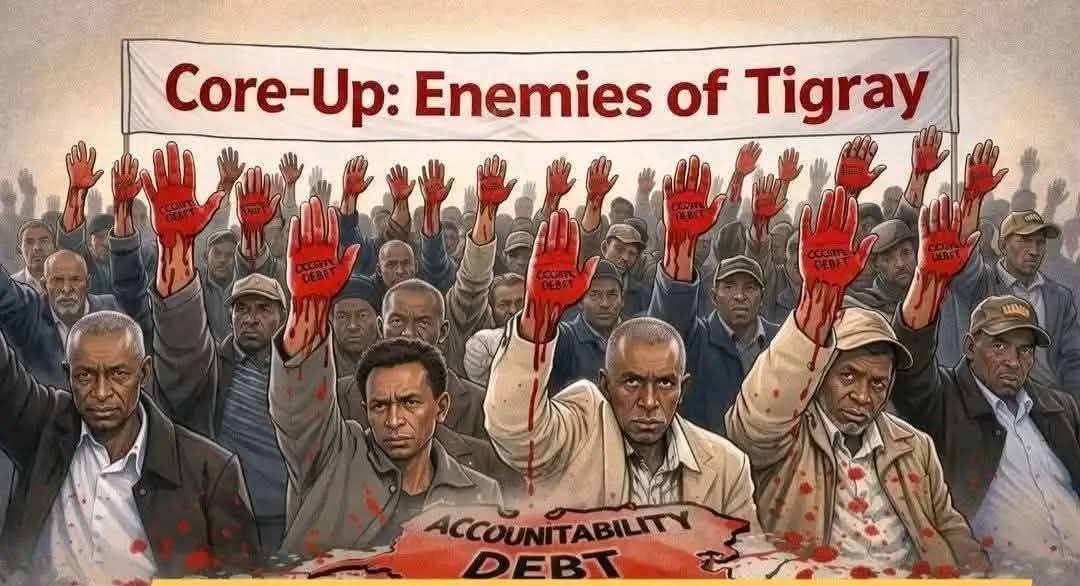
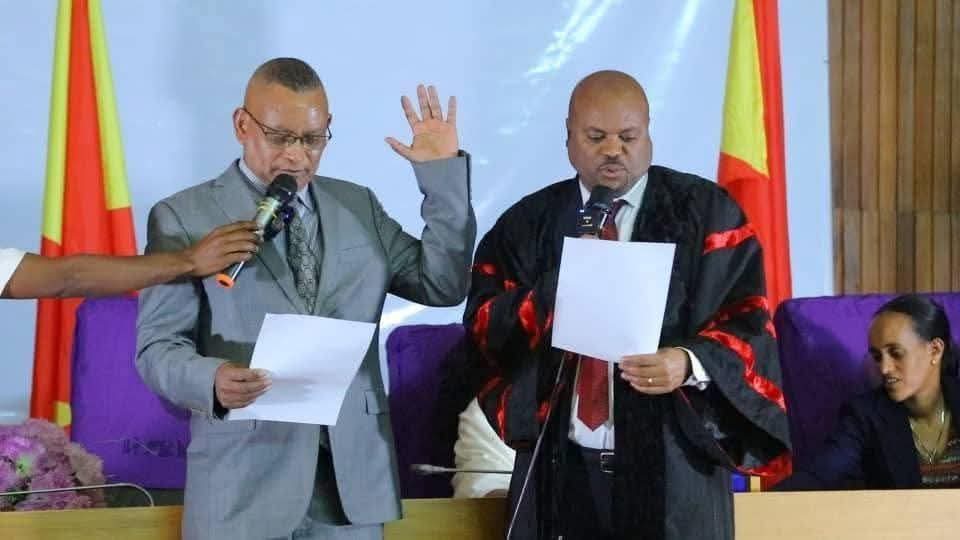
A new and dangerous political rupture is unfolding in northern Ethiopia. The decision by the Tigray People’s Liberation Front to revive the pre-war regional assembly and install Debretsion Gebremichael as president marks more than an internal power struggle. It signals a direct challenge to the fragile post-war order established under the Pretoria Cessation of Hostilities Agreement and raises the risk of renewed conflict.
At the center of the crisis is a fundamental question of legitimacy. The interim administration led by Tadesse Werede Tesfay was established as part of a negotiated transition after two years of devastating war. Its mandate, however imperfect, rests on a broader national and international consensus aimed at stabilizing Tigray and preventing further bloodshed. By contrast, the reconstitution of the 2020 regional assembly by TPLF effectively bypasses that framework, attempting to restore a pre-war political order without a new electoral mandate or inclusive consultation.
This move carries serious implications.
First, it undermines the already fragile peace architecture. The Pretoria agreement was not simply a ceasefire; it was a political roadmap designed to de-escalate tensions, reintegrate Tigray into federal structures, and create space for dialogue. Any unilateral attempt to override that framework risks collapsing the delicate balance it created. The sight of Ethiopian fighter jets over Mekelle during the assembly session underscores how quickly the situation could spiral. Even symbolic military posturing in such a tense environment can trigger miscalculation.
Second, the development exposes deepening fractures within Tigray itself. The interim administration and TPLF now represent competing centers of authority. This dual power structure is inherently unstable. It creates confusion within security forces, divides public institutions, and places civilians in an increasingly uncertain environment. History suggests that such fragmentation often precedes internal confrontation or renewed armed conflict.
Third, the political logic behind TPLF’s move raises critical concerns. The decision to reinstall its leadership outside the agreed transitional framework suggests a prioritization of organizational control over collective recovery. After a war that left hundreds of thousands dead, displaced millions, and devastated infrastructure, the immediate priority for Tigray’s population is reconstruction, humanitarian access, and stability. Any political maneuver perceived as risking a return to war is likely to deepen public frustration and fatigue.
There is also a broader regional dimension. Tigray’s instability does not remain confined within its borders. The Horn of Africa is already facing overlapping crises, from Sudan’s ongoing war to fragile transitions elsewhere. A renewed conflict in Tigray could reopen cross-border tensions, disrupt humanitarian corridors, and draw in regional actors, intentionally or otherwise.
Against this backdrop, the warning issued by Lieutenant General Tadesse Werede carries particular weight. His call for restraint and dialogue reflects a recognition that Tigray stands at a tipping point. His emphasis on youth and women is also telling. These groups have borne the brunt of the war’s human cost, and their mobilization could either push toward peace or be drawn into renewed instability.
The current trajectory suggests escalation rather than de-escalation. By reviving a contested political structure and asserting unilateral authority, TPLF risks transforming a political dispute into a broader security crisis. Whether this is a calculated gamble or a misreading of the current reality, the consequences could be severe.
For the international community, the message is clear. Silence or delayed engagement at this stage could prove costly. The integrity of the Pretoria framework must be upheld, not selectively interpreted. Pressure for inclusive dialogue, respect for transitional mechanisms, and avoidance of unilateral actions will be critical to preventing a relapse into conflict.
For Tigray’s people, the stakes are even higher. After enduring one of the most destructive wars in recent African history, the prospect of returning to violence is not just a political failure. It is a humanitarian tragedy in the making.
What is unfolding now is not merely a contest for power. It is a test of whether Tigray can move beyond war or be pulled back into it.
Editor’s Disclaimer:
The views and opinions expressed in articles published by Horn News Hub are those of the authors and do not necessarily reflect the official position or editorial stance of Horn News Hub. Publication does not imply endorsement.