
Addis Ababa, Ethiopia — May 6, 2026 | Horn News Hub
By Chekole Alemu
Ethiopia’s post-conflict recovery is entering a delicate phase, where political choices made today are likely to shape the country’s long-term stability. In this environment, attention has increasingly turned to the role of senior federal figures such as Dr. Abraham Belay, whose approach reflects an emphasis on national cohesion and institutional recovery following the war in Tigray.
Observers describe his leadership style as pragmatic and policy-driven, with a focus on rebuilding trust between the Tigray region and the federal government. Rather than engaging in confrontational political narratives, his public messaging has largely centered on reconciliation, state functionality, and the restoration of basic services.
At the core of this approach is the implementation of the Pretoria Cessation of Hostilities Agreement, signed in November 2022. The agreement remains the primary framework guiding Ethiopia’s transition from conflict to peace, although its execution has faced ongoing political and security challenges.
Dr. Abreham Belay has repeatedly framed the agreement as a necessary foundation for stability rather than a political compromise. His position aligns with efforts to accelerate the return of internally displaced persons and restore governance structures disrupted during the conflict. The question of Western Tigray remains one of the most sensitive issues, with competing claims and unresolved administrative arrangements continuing to fuel tensions.
In recent statements and policy discussions, he has supported mechanisms that prioritize civilian participation and institutional legitimacy, including proposals that emphasize local representation in determining governance outcomes. Analysts note that such approaches aim to shift the focus from territorial disputes toward civic processes, although practical implementation remains uncertain.
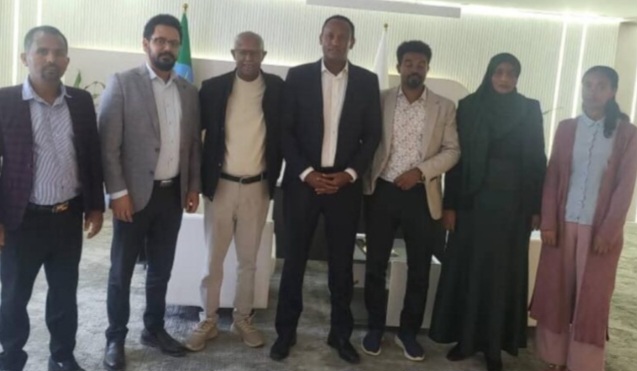
A defining feature of Dr. Belay’s political outlook is the argument that Tigray’s recovery is closely tied to Ethiopia’s broader national trajectory. This perspective challenges more insular political tendencies that have historically shaped regional politics. His engagement with academics, policymakers, and community leaders has sought to promote alignment around a shared national agenda, particularly in the context of reconstruction and economic recovery.
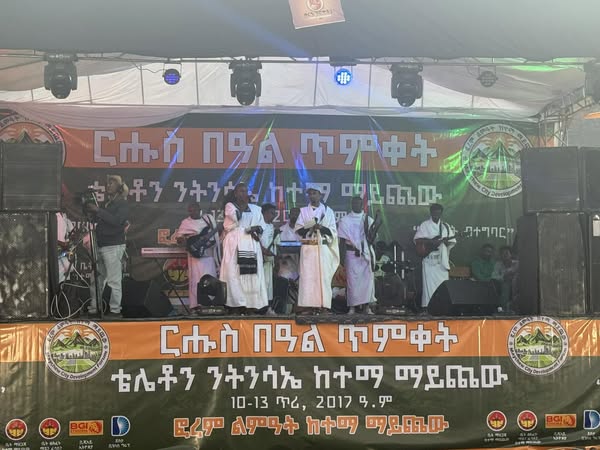
Parallel to political efforts, development initiatives have also been presented as part of a broader stabilization strategy. Tourism and infrastructure projects in Ethiopia, including areas such as Gheralta in Tigray Regon are increasingly highlighted as examples of how economic revitalization could support long-term peace. Federal officials argue that expanding economic opportunities and interdependence between regions may reduce the likelihood of renewed conflict.
However, the political environment remains highly contested. The Tigray People’s Liberation Front has recently taken steps that federal authorities and some analysts view as undermining the Pretoria framework, including unilateral political moves that challenge the interim governance arrangements established after the war. These developments have raised concerns about the fragility of the peace process and the risk of renewed instability not only in Tigray but across Ethiopia and the wider Horn of Africa.
Critics argue that such actions complicate ongoing recovery efforts and delay the normalization process, while supporters of the TPLF maintain that their decisions reflect unresolved grievances and demands for political legitimacy. The divergence highlights the broader struggle between competing visions for Tigray’s future and Ethiopia’s political order.
As Ethiopia navigates this uncertain transition, figures like Dr. Abraham Belay represent one strand of leadership focused on integration, reconstruction, and institutional continuity. Whether this approach can gain sufficient traction in a polarized political landscape remains an open question.
What is clear is that the success or failure of the current peace process will have consequences far beyond Tigray, influencing the stability of Ethiopia and the geopolitical balance of the Horn of Africa in the years ahead.
Editor’s Disclaimer:
The views and opinions expressed in articles published by Horn News Hub are those of the authors and do not necessarily reflect the official position or editorial stance of Horn News Hub. Publication does not imply endorsement.