

Addis Ababa, Ethiopia — May 7, 2026 | Horn News Hub
For decades, Addis Ababa carried a dual identity. It was internationally recognized as Africa’s diplomatic capital, home to the African Union and numerous international institutions, yet much of its urban infrastructure struggled to match its geopolitical importance.
Today, that image is changing rapidly.
Across the Ethiopian capital, massive corridor developments, modern public spaces, cultural landmarks, conference centers, transport upgrades, tourism projects, and digital infrastructure initiatives are reshaping the city’s landscape. What was once viewed primarily as a political and diplomatic center is increasingly evolving into a broader economic, tourism, and conference hub for Africa.
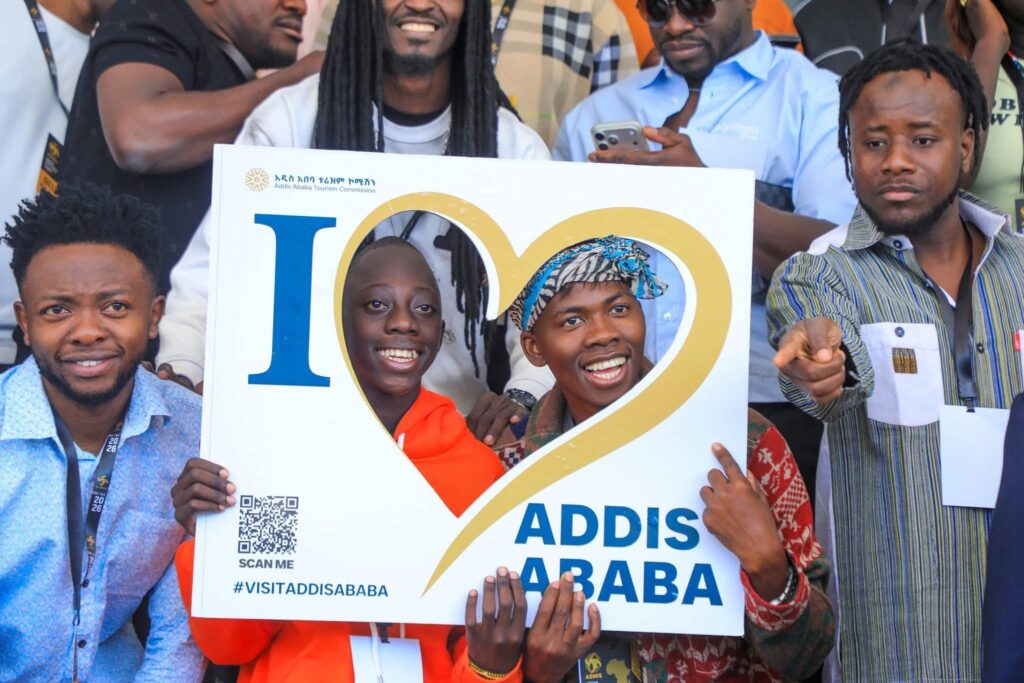
Ethiopia held the first African Social Media Influencers Summit in Addis Ababa, bringing together influencers from across the continent to promote African culture, tourism, and storytelling.The summit included 61 influencers from 30 African countries and 120 Ethiopian content creators, reaching a combined audience of more than 471 million followers.
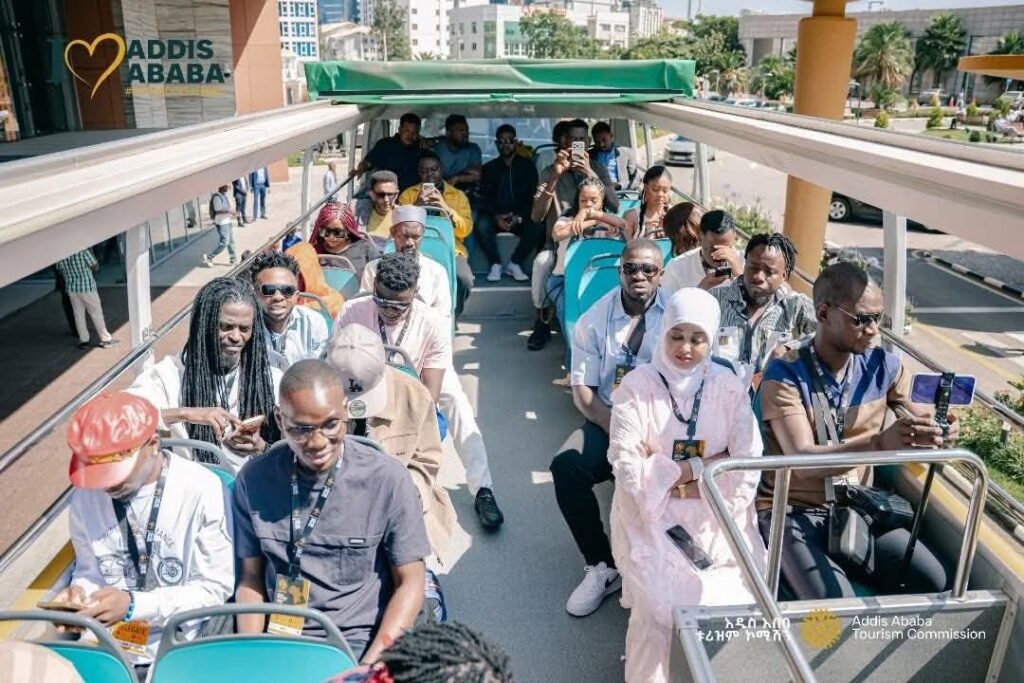
This transformation was visible again this week as participants attending the First African Social Media Influencers Summit (ASMIS 2026) toured major development projects across the city.
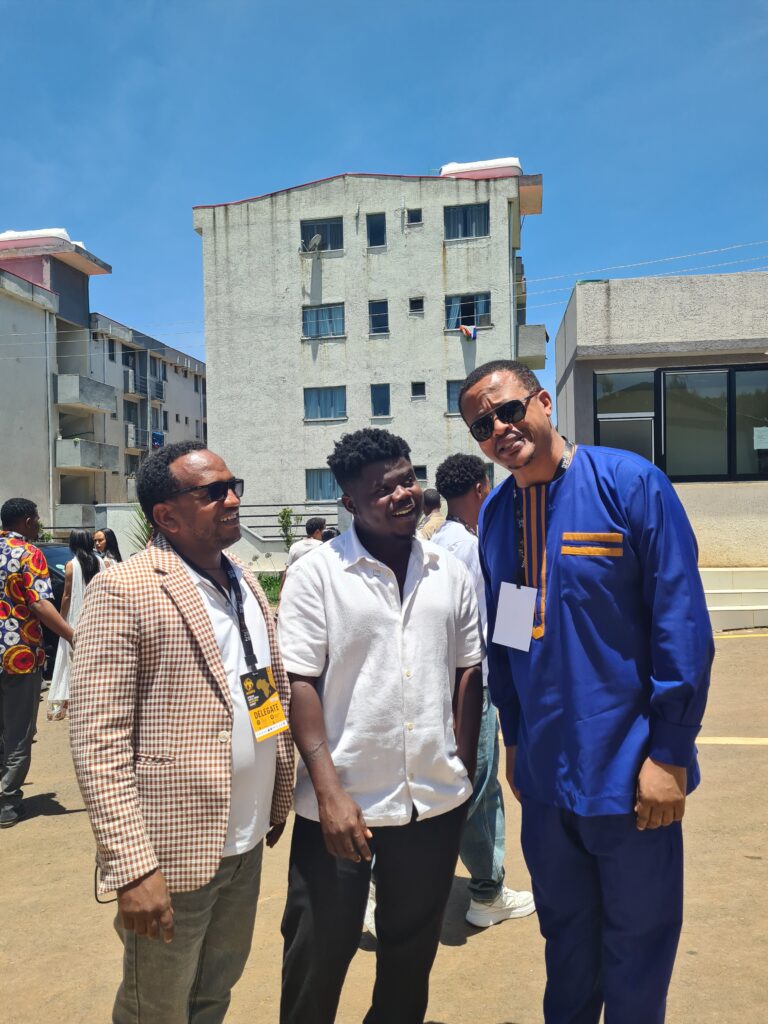
The summit, hosted at the Adwa Victory Memorial Museum, brought together 61 influencers from 30 African countries with a combined audience exceeding 321 million followers. Beyond digital networking and media discussions, the summit became an opportunity for Ethiopia to showcase Addis Ababa’s ongoing urban transformation to influential voices from across the continent.
For the city administration, the symbolism matters.
The effort underway is not only about infrastructure construction. It is also about repositioning Addis Ababa as a modern African metropolis capable of attracting tourism, investment, international conferences, technology events, and cultural diplomacy.

From Diplomatic Capital to Economic Hub
Historically, Addis Ababa’s international role revolved around diplomacy. The city hosted summits, political negotiations, and continental meetings, but the economic spillover from conference tourism remained relatively limited due to infrastructure constraints.
That dynamic is now shifting.
According to international conference tracking platforms, nearly 200 conferences and international events are expected to take place in Addis Ababa throughout 2026 across sectors including artificial intelligence, medicine, banking, engineering, law, youth affairs, tourism, education, and technology.
The expansion of conference tourism reflects a deliberate strategy by city authorities and the federal government to convert Addis Ababa’s diplomatic importance into sustainable economic activity.
Unlike conventional tourism, conference tourism often generates higher spending per visitor. Delegates typically stay in hotels longer, use transportation services more frequently, dine in restaurants, participate in cultural activities, and contribute to local commerce.
This creates a multiplier effect throughout the urban economy.
Hotels, cafes, logistics providers, tour operators, event organizers, traditional clothing businesses, and local transportation sectors all benefit from the influx of international visitors.
In many ways, Addis Ababa is attempting to replicate elements of models seen in cities such as Kigali, Dubai, and Cape Town, where conferences and international events became central drivers of urban economic growth.
The Infrastructure Behind the Transformation
The city’s transformation is most visible through its large-scale infrastructure projects.
Modern landmarks such as the Science Museum, the Addis International Convention Center, and the Adwa Victory Memorial Museum have emerged as symbols of a broader national modernization campaign.
These facilities address one of Addis Ababa’s longstanding weaknesses: the shortage of internationally competitive conference and exhibition venues.
The city’s newly developed corridor projects have also significantly altered the urban environment. Wide pedestrian walkways, landscaped roads, bicycle lanes, improved lighting systems, green spaces, and renovated commercial areas are reshaping how residents and visitors experience the capital.
For many residents, the changes represent the most visible urban transformation in decades.
The modernization campaign also extends into scientific and sports infrastructure.
Recently inaugurated advanced laboratories at the Armauer Hansen Research Institute are expected to strengthen Addis Ababa’s role in scientific research and medical conferences, while the new Addis Ababa Sports Park could position the city to host regional sports exhibitions, conferences, and continental competitions.
Urban planners argue that such investments are essential if Addis Ababa hopes to compete with other African cities for global events and business tourism.
Governance and the Politics of Urban Renewal
At the center of this transformation stands Adanech Abiebie, whose administration has overseen one of the most ambitious urban redevelopment programs in the city’s modern history.

Supporters of the mayor describe the ongoing projects as evidence of decisive governance and long-term planning. They argue that the administration has accelerated implementation speed, improved coordination between federal and city institutions, and pushed large projects that previous administrations discussed but struggled to complete.
The administration’s emphasis on corridor development, public cleanliness, urban beautification, digital governance, and investment-friendly infrastructure reflects a broader vision of turning Addis Ababa into a globally competitive African capital.
Officials frequently frame the projects as part of Ethiopia’s effort to modernize rapidly while preserving cultural identity and historical significance.
Projects like the Adwa Victory Memorial Museum, for example, are designed not only as tourism destinations but also as political and cultural symbols intended to strengthen African historical consciousness and Pan-African identity.
The Digital Era and Africa’s New Narrative
The ASMIS summit itself highlights another important dimension of Addis Ababa’s evolving role: digital influence.
Africa’s digital economy is expanding rapidly, and social media influencers increasingly shape tourism trends, investment perceptions, political narratives, and cultural visibility.
By hosting African digital creators inside newly developed national landmarks, Ethiopia is effectively engaging in modern image diplomacy.
The presence of influencers from across the continent creates an opportunity for Addis Ababa to project a new narrative about Ethiopia and Africa more broadly, one centered on innovation, urban growth, entrepreneurship, culture, and technological transformation rather than conflict or instability.
For Horn News Hub, participation in ASMIS 2026 reflects the growing importance of independent African digital media platforms in shaping continental conversations.
The summit brought together journalists, entrepreneurs, creators, innovators, and technology advocates at a moment when African storytelling is increasingly moving away from external narratives toward locally driven perspectives.
That shift may prove as important as the physical infrastructure itself.
Addis Ababa’s Defining Moment
Addis Ababa now stands at a critical turning point.
Its emergence as a conference tourism destination, diplomatic center, investment hub, and modern African metropolis is no longer merely aspirational. The physical foundations are becoming increasingly visible.
The challenge ahead lies in sustainability.
Can the city maintain rapid development while ensuring social inclusion? Can infrastructure expansion translate into broad economic opportunities for ordinary residents? Can governance reforms keep pace with urban growth?
Those questions remain open.
But what is becoming increasingly clear is that Addis Ababa is undergoing one of the most ambitious urban transformations currently taking place on the African continent.
The city that once symbolized mainly diplomacy is now attempting to redefine itself as a model of African urban modernization, economic integration, and continental connectivity.
Whether that vision fully succeeds or not, Addis Ababa’s transformation is already reshaping how the city is perceived across Africa and beyond.
Editor’s Disclaimer:
The views and opinions expressed in articles published by Horn News Hub are those of the authors and do not necessarily reflect the official position or editorial stance of Horn News Hub. Publication does not imply endorsement.