


Ethiopia’s Immigration Service Pushes Digital Reform as Visitors Report Faster Visa Processing
By Chekole Alemu
Addis Ababa — Ethiopia’s effort to modernize public institutions is becoming increasingly visible at the FDRE Immigration and Citizenship Service, where digital reforms are reshaping how visas, passports, and citizenship services are delivered.
Over the past few years, the agency has introduced technology-based systems that allow travelers and citizens to apply for services online.

Digital visa applications, electronic passport requests, and online complaint platforms are gradually replacing older paper-based procedures that once required repeated visits to government offices.
Vice Director General Bikila Mezgebu says the shift is part of a broader strategy to improve efficiency, transparency, and customer service within one of the country’s most internationally visible institutions.
Foreign visitors are already noticing the changes.
A traveler identified as Cylene shared her experience after applying for an Ethiopian visa through the online system.
“Today I sent my application to apply for a visa for Ethiopia around 12 p.m. or 1 p.m., and when I checked the status at 7 p.m., they had already approved it,” she said. “They approved the visa application in six hours. I have never seen a country approve my visa so fast.”
Such experiences reflect the growing role of digital systems inside the immigration service, where online processing has significantly reduced waiting times that previously took days or even weeks.
At the same time, the agency is warning citizens to avoid intermediaries who claim they can accelerate passport services for a fee.
According to Selamawit Dawit, Director General of the immigration service, the new system allows citizens to complete passport applications on their own through official digital platforms.
“We have introduced a simple and fast system that allows citizens to complete their passport service applications by themselves,” she said in an interview with Fana Broadcasting Corporate. “Citizens should avoid individuals or groups claiming that they can process urgent passports and instead submit their applications directly without the involvement of any third party.”
Selamawit added that citizens can apply through the official website and receive assistance from trained professionals at the office if needed. However, she cautioned that people should not pay brokers or individuals who attempt to exploit the system in cities by promising faster services.
The reforms are also linked to broader institutional changes promoted by Prime Minister Abiy Ahmed, who has placed strong emphasis on modernizing Ethiopia’s public sector. The prime minister has visited the immigration service during reform initiatives and has repeatedly encouraged government agencies to adopt digital platforms and improve service delivery.

Inside the institution itself, a new generation of leadership is playing a central role in the transformation. Many of the officials leading the agency are younger administrators with backgrounds in technology, governance, and management. Their focus has been on streamlining procedures, introducing mobile and web-based applications, and creating direct communication channels for citizens and foreign visitors.
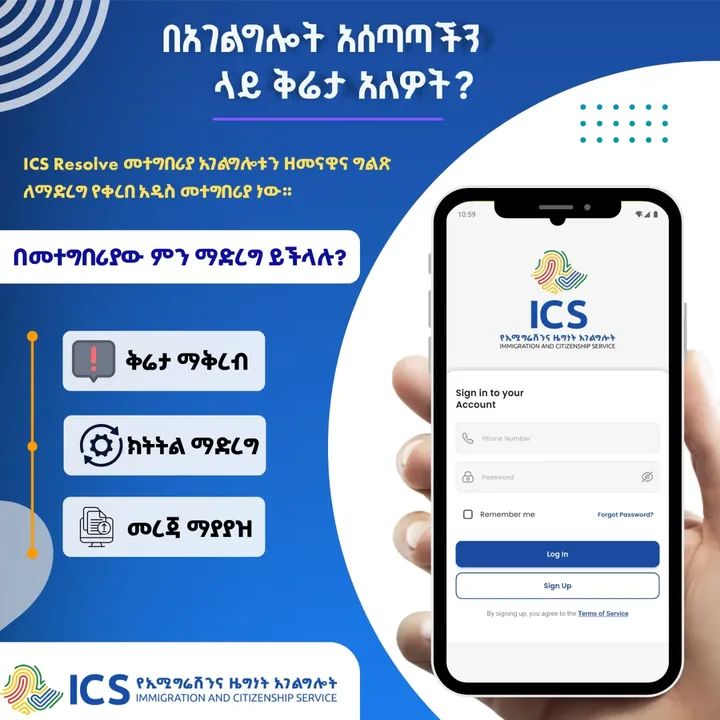
Among the innovations are platforms that allow customers to track visa and passport applications online and submit complaints electronically, enabling the institution to respond more quickly to service issues.
Analysts say the immigration service is becoming one of the most visible examples of Ethiopia’s attempt to build a more efficient and technology-driven public administration.
Although challenges remain, particularly in expanding digital access and maintaining service quality during periods of high demand, the progress at the immigration service offers a glimpse of how institutional reform is beginning to reshape the country’s public services.
Editor’s Disclaimer:
The views and opinions expressed in articles published by Horn News Hub are those of the authors and do not necessarily reflect the official position or editorial stance of Horn News Hub. Publication does not imply endorsement.