
By፡Dr. Dawit Tesfay
A Comprehensive Strategic Analysis of the Jigjiga Forum, Its Geographic Imperative, and Its Historic Potential to Redefine Regional Agency in the Horn of Africa
“Geography is destiny, but only for those wise enough to read it and bold enough to act on it.”
“The Horn of Africa’s problems require Horn of Africa solutions. The region is finally declaring that it will solve its own house.”
Opening: A Declaration Whose Time Has Come
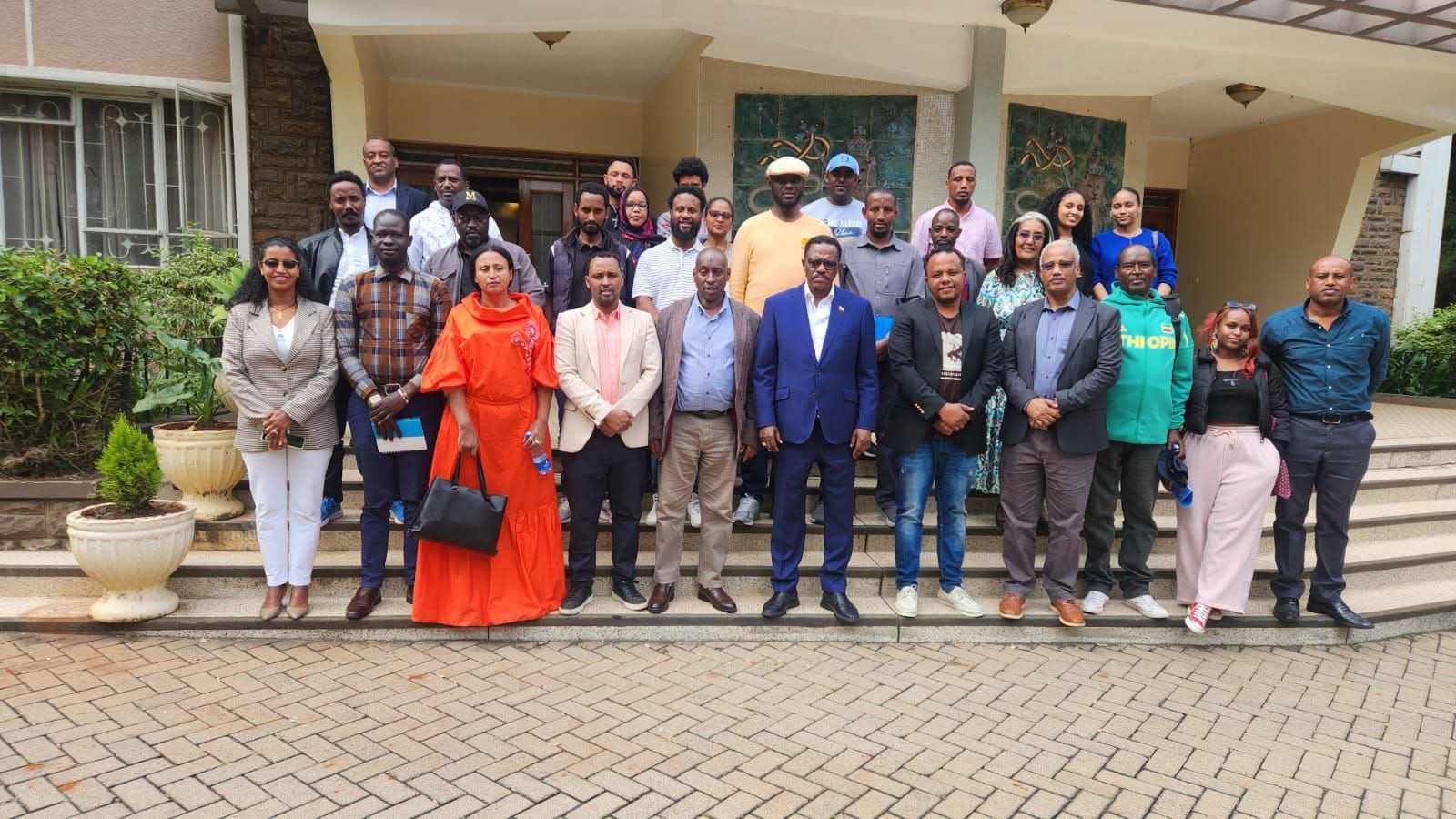
On May 18, 2026, in the city of Jigjiga, capital of Ethiopia’s Somali Regional State and one of the Horn of Africa’s most strategically consequential urban centers, a significant regional political moment unfolded.
Leaders, scholars, security professionals, civil society representatives, and regional elites gathered under the theme:
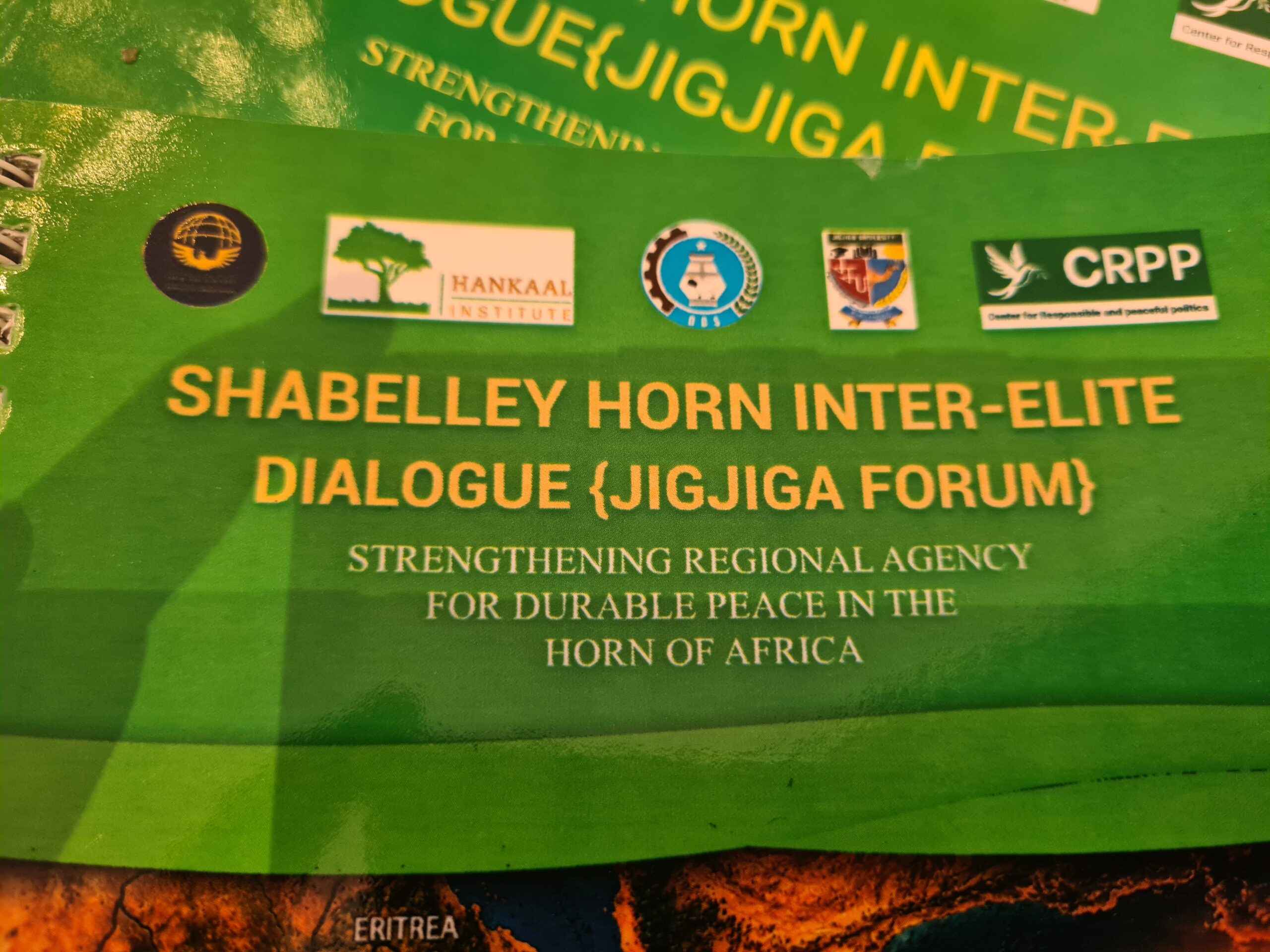
“Strengthening Regional Agency for Durable Peace in the Horn of Africa.”
The meeting did not merely produce another diplomatic communiqué. It established a permanent regional platform: the Jigjiga Forum, an institutional mechanism intended to provide the Horn of Africa with what it has lacked for decades, namely a trusted, inclusive, and locally owned framework for solving regional crises through regional intelligence, regional dialogue, and regional ownership.
If the commitments announced in Jigjiga are implemented seriously, the Forum could evolve into the most important diplomatic institution the Horn of Africa has produced in modern history.
The strategic significance of the Forum lies not only in its mission, but in its location.
Jigjiga is not simply a convenient host city. It is geographically, politically, culturally, and economically positioned at the center of the very forces shaping the future of the Horn of Africa.
To understand the importance of the Jigjiga Forum, one must first understand the strategic meaning of Jigjiga itself.
PART ONE
Geography as Destiny: Why Jigjiga Is the Right Address
The Strategic Heart of the Horn
Jigjiga serves as the administrative capital of Ethiopia’s Somali Regional State, the second largest regional state in Ethiopia by territorial size. The region shares extensive borders with Somalia, Djibouti, and Kenya.
Its strategic relevance extends far beyond Ethiopia’s internal federal geography.
The broader Somali region sits within the operational sphere of one of the world’s most critical maritime corridors. The Bab el Mandeb Strait, through which nearly 15 percent of global trade passes toward the Suez Canal, lies within the wider strategic horizon of the Horn.
The Red Sea, Gulf of Aden, Arabian Sea, and Indian Ocean collectively form a maritime system central to global commerce, energy transportation, and military competition.
Whoever influences this geography influences global trade arteries.
Major powers already understand this reality. The United States, China, France, the United Arab Emirates, India, Turkey, and others have all expanded military and economic footprints across the region. Their engagement is driven not by charity, but by strategic calculation.
Yet for decades, the governments and peoples of the Horn largely remained reactive participants in decisions affecting their own geography.
The Jigjiga Forum represents an institutional attempt to reverse that pattern.
Ethiopia’s Somali Region: From Peripheral Frontier to Strategic Anchor
For much of modern history, Ethiopia’s Somali Regional State was viewed primarily through a security lens.
It was treated as a peripheral buffer zone rather than an economic corridor, a territory to police rather than a region to strategically cultivate.
That perception has changed dramatically over the past decade.
Under the leadership of President Mustafe Mohammed Omer, widely known as Mustafe Cagjar, the Somali Regional State has undergone substantial political and institutional transformation.
Infrastructure expansion, aviation upgrades, road connectivity, agricultural integration projects, and natural gas development initiatives have gradually repositioned the region within Ethiopia’s broader economic and geopolitical architecture.
At the same time, improvements in internal security through institutional reform, local engagement, and coordinated counterterrorism operations have created a more stable environment for investment and governance.
The Somali region is no longer viewed merely as a frontier. It is increasingly emerging as one of Ethiopia’s strategic anchors.
And Jigjiga has risen alongside it.
The Somali People as Strategic Defenders of Ethiopia
There is an argument Ethiopian national discourse has often failed to articulate clearly enough.
The Somali people of Ethiopia are not simply inhabitants of a strategic geography. They are active defenders of Ethiopian sovereignty and national security interests.
The Somali Regional State manages one of Ethiopia’s most operationally difficult borders.
The threat posed by Al Shabaab across the Somalia Ethiopia frontier is not theoretical. It is a continuous operational reality managed daily by local communities, regional institutions, and security structures deeply familiar with borderland realities, clan systems, and local networks.
Their role in maintaining national security has often gone underrecognized.
Beyond security, the Somali region also represents one of Ethiopia’s most important diplomatic and cultural bridges to the broader Islamic world.
Its religious identity, commercial ties, linguistic connectivity, and historical relationships with Djibouti, Somalia, and the Gulf states provide Ethiopia with strategic soft power that formal diplomacy alone cannot manufacture.
This is precisely why locating the Jigjiga Forum’s permanent secretariat in Jigjiga carries strategic significance.
It acknowledges that one of the Horn’s most important new diplomatic institutions belongs in the geography that most directly connects Africa, the Arabian Peninsula, and the Red Sea system.
PART TWO
What the Jigjiga Forum Actually Is and Why It Matters
The Institutional Gap It Seeks to Fill
Africa already possesses regional institutions.
The African Union, Intergovernmental Authority on Development, the East African Community, and numerous multilateral frameworks have operated in the Horn for decades.
So why does the Jigjiga Forum matter?
Because existing institutions remain overwhelmingly state centric.
They are dominated by formal diplomacy, protocol constraints, and political rivalries between governments. They often struggle to meaningfully incorporate civil society actors, borderland communities, traditional authorities, researchers, religious institutions, and informal economic networks.
Yet these actors frequently determine whether peace agreements succeed or collapse.
The Jigjiga Forum attempts to address this structural limitation directly.
Its foundational model emphasizes citizen centered engagement, indigenous knowledge systems, borderland participation, elite dialogue, and institutional inclusivity.
That distinction matters enormously.
There is a fundamental difference between institutions that merely discuss peace and institutions capable of building it.
The Problems the Forum Was Designed to Address
Regional Fragmentation
The Horn of Africa has historically been shaped by mistrust, proxy competition, political interference, and fragmented diplomacy.
The Forum’s emphasis on “Horn solutions to Horn problems” seeks to reduce the region’s long standing vulnerability to external manipulation and strategic fragmentation.
Security and Terrorism
Al Shabaab remains the Horn’s most persistent transnational security threat.
No individual state can defeat such networks alone.
The Jigjiga Forum creates the possibility of sustained multistate intelligence coordination, collective security analysis, and long term strategic cooperation.
Illegal Migration and Human Trafficking
The Horn remains one of the world’s major migration transit zones.
Human trafficking networks exploit weak regional coordination and porous borders.
Addressing these flows requires permanent cross border institutional cooperation rather than temporary crisis management.
Economic Fragmentation
Most cross border trade in the Horn’s borderlands operates informally.
This deprives states of revenue, limits investment confidence, and weakens economic integration.
The Forum’s focus on trade facilitation, infrastructure connectivity, and regional economic cooperation directly addresses this structural problem.
External Power Competition
The Horn’s strategic location attracts constant external competition.
The Forum seeks to create a collective regional voice capable of engaging external actors from a position of institutional coordination rather than fragmented bilateral dependence.
What Makes the Jigjiga Forum Different
A Permanent Institutional Home
The establishment of a permanent secretariat in Jigjiga creates continuity, expertise accumulation, and sustained institutional engagement.
Institutions without physical centers often struggle to maintain strategic momentum.
Permanent institutions develop memory, relationships, and operational credibility.
Inclusivity by Design
The Forum’s openness to institutions, scholars, civil society actors, and indigenous systems distinguishes it from many traditional intergovernmental frameworks.
Its architecture is intentionally broader than formal diplomacy.
Elite Dialogue as Conflict Prevention
The Horn’s political elites have historically driven both conflict and peace.
Creating sustained channels for elite level communication reduces the risks of strategic miscalculation, escalation, and mutual suspicion.
That alone may become one of the Forum’s most important long term contributions.
PART THREE
Ethiopia’s Strategic Interests and the Regional Dimension
Ethiopia’s Red Sea Ambition
No serious analysis of the Jigjiga Forum can ignore Ethiopia’s growing pursuit of sovereign Red Sea access.
As one of the world’s largest landlocked nations, Ethiopia faces enormous economic and strategic costs linked to maritime dependence.
Its search for stable port access through Somaliland, Djibouti, Eritrea, and broader regional arrangements has become a central pillar of national strategy.
The Somali Regional State occupies a critical geographic position within this equation.
Its cross border ties, Somali speaking networks, and strategic location make it central to Ethiopia’s maritime calculations.
The Jigjiga Forum strengthens that positioning by institutionalizing the Somali region as a diplomatic and geopolitical bridge within the Horn.
The Arabian Peninsula Dimension
The Horn of Africa and the Arabian Peninsula form a single interconnected geopolitical space.
The Gulf states increasingly view the Horn through the lenses of maritime security, food security, military positioning, energy logistics, and strategic influence.
Saudi Arabia, the UAE, Qatar, and Turkey have all expanded their engagement across the region.
This engagement has generated investment, but also competition and proxy dynamics.
The Jigjiga Forum offers the possibility of a more coordinated regional approach toward Gulf engagement.
That could eventually strengthen the Horn’s bargaining position significantly.
Religion, Culture, and Indigenous Knowledge
The Horn is one of the world’s most religiously and culturally complex regions.
The Forum’s emphasis on interfaith dialogue and cultural tolerance is therefore not symbolic language. It is operational necessity.
The Somali region’s Muslim majority identity, Ethiopia’s broader religious diversity, and the historical interactions between Christian, Muslim, and indigenous traditions make interfaith cooperation essential for durable peace.
Equally important is the Forum’s recognition of indigenous knowledge systems.
Borderland communities possess deep expertise regarding clan mediation, water management, informal commerce, traditional dispute resolution, and local conflict prevention.
Incorporating this knowledge into formal regional diplomacy represents one of the Forum’s most innovative features.
PART FOUR
What Success Could Look Like
Five Years From Now
If the commitments announced in Jigjiga are implemented seriously, the Horn of Africa could look fundamentally different within five years.
A permanent secretariat in Jigjiga could emerge as the region’s leading center for strategic research, policy analysis, and regional diplomacy.
Cross border economic integration could formalize large portions of informal trade networks.
Regional security coordination could substantially weaken extremist operational capacity through sustained intelligence cooperation.
Interfaith dialogue mechanisms could strengthen coexistence and reduce the appeal of extremist narratives.
Most importantly, the Horn could gradually develop something it has historically lacked:
Institutional trust.
The Flagship Forum the Horn Has Never Had
The Jigjiga Forum possesses the structural potential to become a defining diplomatic institution for the Horn of Africa.
The Bandung Conference helped shape the Non Aligned Movement.
ASEAN transformed Southeast Asia’s regional diplomacy.
The G20 institutionalized coordination among major economies.
The Jigjiga Forum could become the Horn of Africa’s equivalent institutional breakthrough.
A permanent, trusted, regionally owned platform capable of coordinating diplomacy, security, economic integration, and strategic engagement.
That possibility alone makes the Forum historically significant.
Conclusion
The Horn Has Spoken and the World Should Listen
For decades, the Horn of Africa has been described primarily through the language of crisis.
Conflict. Famine. Instability. Fragmentation.
The Jigjiga Forum represents a direct rejection of that narrative.
It declares that the region possesses its own intellectual resources, diplomatic capacity, indigenous systems, and strategic agency.
It declares that the Horn is not merely an arena for external competition.
It is a political actor in its own right.
For the people of Ethiopia’s Somali Regional State, the Forum represents overdue recognition of their strategic importance and regional contribution.
For Ethiopia, it offers a major diplomatic asset aligned with national security, Red Sea strategy, and regional integration ambitions.
For the Horn of Africa as a whole, it may represent the most serious opportunity in a generation to build durable regional architecture capable of converting geography into shared prosperity and sustainable peace.
The Jigjiga Forum is not the conclusion of a process.
It is the beginning of one.
But it is the right beginning, in the right place, at the right historical moment.
For the first time in many years, the Horn of Africa is attempting to write its own geopolitical future.
And this time, it is holding the pen.
Dr. Dawit Tesfay
Post War Military, Security & Transitional Justice Affairs Expert,Strategic Affairs & Regional Diplomacy Series
Editor’s Disclaimer:
The views and opinions expressed in articles published by Horn News Hub are those of the authors and do not necessarily reflect the official position or editorial stance of Horn News Hub. Publication does not imply endorsement.