
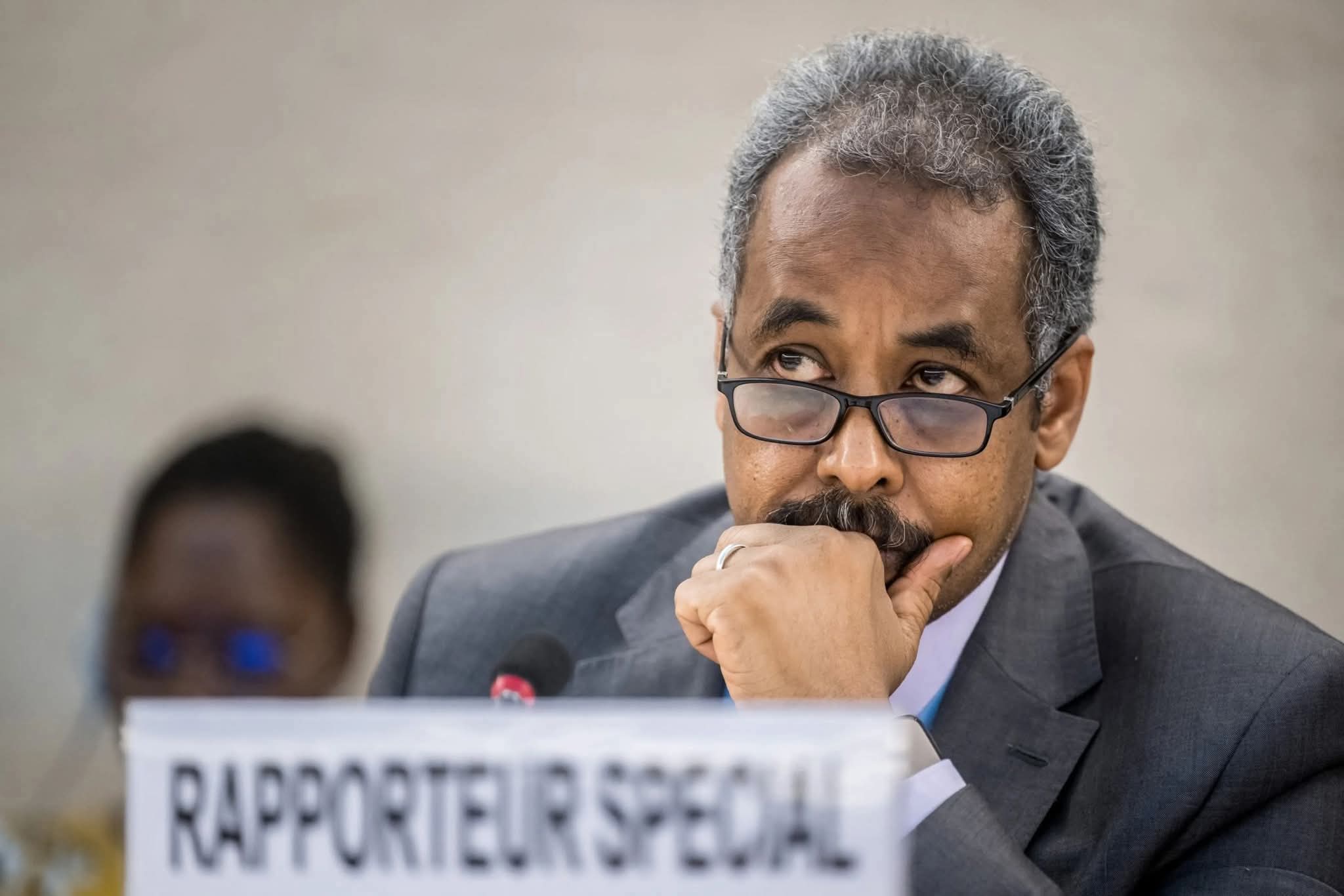
The United Nations Special Rapporteur on the situation of human rights in Eritrea, Mohamed Abdelsalam Babiker, said there are reasonable grounds to believe that crimes against humanity continue to be committed in Eritrea, noting that the human rights situation in the country remains critical and dire, and is characterized by systematic and widespread violations.
Presenting his report to the 62nd session of the UN Human Rights Council, Babiker stressed that ongoing enforced disappearances, prolonged detention without charges or trial, torture, and the targeting of political opponents, journalists, and members of religious communities remain key features of governance in Eritrea.
The UN rapporteur called on the Eritrean authorities to provide answers regarding the fate of forcibly disappeared and arbitrarily detained individuals, noting that the Eritrean government continues to refuse to disclose the fate or whereabouts of detainees and missing persons. He said these practices are not isolated incidents but rather part of a broader state-sponsored policy based on repression and coercion.
Babiker pointed out that, ten years after a UN Commission of Inquiry warned of the possible commission of crimes against humanity in Eritrea, the country still lacks any investigations, prosecutions, or related reforms.
He said the situation has persisted since Eritrea gained independence in 1993, in an environment marked by the absence of the rule of law, democratic institutions, political pluralism, independent media, and civil society organizations.
He also noted that Eritrean authorities continued during the reporting period to detain prominent religious figures, referring to the enforced disappearance of Sheikh Adam Shaban and Sheikh Hassan Shenetti in July 2025.
Babiker further accused the Eritrean authorities of engaging in what he described as transnational repression against Eritreans living abroad through intimidation, threats, and the targeting of opponents outside the country, calling on host states to strengthen protection for Eritrean communities and hold perpetrators accountable.
The UN rapporteur expressed concern over the situation of Eritrean refugees and asylum seekers, noting that many have been subjected to deportation, arbitrary detention, human trafficking, and the suspension of protection and registration procedures, in violation of refugee protection principles and the prohibition of refoulement.
Concluding his remarks, Babiker urged the Human Rights Council to continue monitoring the situation in Eritrea and support efforts aimed at achieving justice and accountability, noting that his repeated requests to conduct an official visit to the country received no response from Eritrean authorities throughout his mandate.