

|Addis Ababa |18 June 2026
By HORN OF AFRICA GEOPOLITICAL REVIEW (HAGR)
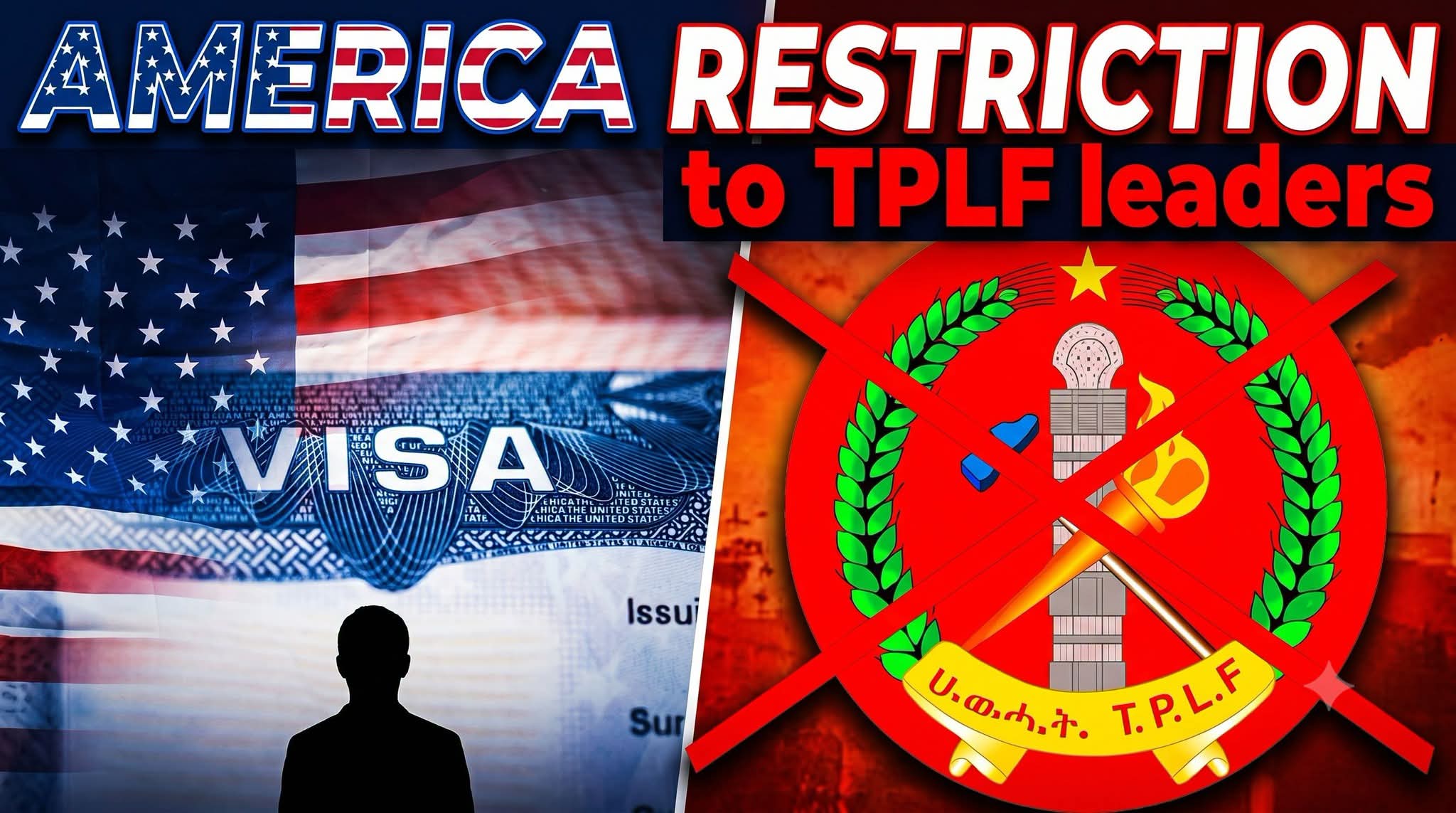
The United States has announced targeted visa restrictions against hardline members of the Tigray People’s Liberation Front (TPLF) and their immediate family members, citing actions that it says threaten to undermine the peace process in northern Ethiopia and increase the risk of renewed armed conflict.
According to the U.S. Department of State, the measures are intended to hold accountable individuals considered responsible for obstructing implementation of the Pretoria Peace Agreement and contributing to renewed instability in the region.
The decision represents one of the most significant diplomatic actions taken by the United States against senior TPLF figures since the signing of the Pretoria Peace Agreement in November 2022.
Security Assessment
According to official U.S. statements, the visa restrictions target individuals considered responsible for, or complicit in, actions that undermine conflict resolution efforts and regional stability. The measures also apply to immediate family members, reflecting Washington’s continued use of visa authorities as a foreign policy instrument.
The announcement follows heightened political tensions after the TPLF leadership declared the restoration of its pre war regional governing structures and announced the election of TPLF Chairman Debretsion Gebremichael as regional president. Critics have argued that these actions bypass the transitional framework established following the conflict.
Operational Developments
Security observers continue to monitor several emerging areas of concern across northern Ethiopia.
Analysts state that political divisions within Tigray, unresolved territorial disputes, and renewed competition over administrative authority have created conditions that could contribute to localized armed confrontations. Reports of armed standoffs in disputed districts have increased concerns among regional observers regarding the fragility of the peace process.
International security analysts have also cautioned that any significant remobilization of armed groups could contribute to broader regional instability involving local militias and neighboring security actors.
Diplomatic Developments
The U.S. decision signals Washington’s willingness to impose targeted diplomatic measures against political and military actors it considers responsible for threatening the post conflict settlement. U.S. officials have reiterated that preventing a return to large scale conflict remains a priority because of the humanitarian consequences experienced during the 2020 to 2022 conflict.
Diplomatic sources indicate that several international partners are closely monitoring developments. However, as of the date of this briefing, there has been no official confirmation that the European Union has adopted comparable restrictive measures against TPLF officials or their immediate family members.
Claims that the European Union has formally approved parallel sanctions remain unconfirmed and should be regarded as unverified diplomatic reporting unless supported by official announcements.
Strategic Outlook
Current developments represent one of the most significant tests of the Pretoria Peace Agreement since its conclusion.
Key developments that continue to warrant close monitoring include:
- Further political consolidation by hardline factions.
- Potential remobilization of armed structures.
- Escalation of localized security incidents into broader confrontations.
- Possible expansion of targeted sanctions by Western governments.
- Responses from the Ethiopian federal government and regional authorities.
- Humanitarian consequences affecting civilian populations.
HAGR Analytical Assessment
The latest U.S. visa restrictions represent a notable increase in diplomatic pressure on individuals accused of undermining Ethiopia’s post conflict transition. Although the measures are diplomatic rather than economic in nature, they reflect growing concern within Washington that recent political developments in Tigray could threaten progress achieved following the cessation of hostilities.
The effectiveness of the restrictions as a deterrent, or whether they become the basis for broader international measures, will depend largely on future actions by political and military stakeholders and on continued implementation of the Pretoria Peace Agreement.
The security and political situation in northern Ethiopia remains dynamic, and the potential for renewed instability continues to warrant close observation.
HORN OF AFRICA GEOPOLITICAL REVIEW (HAGR),Independent Regional and International Geostrategy, Security, Diplomatic, Political, Legal, and Institutional Affairs Analysis


