

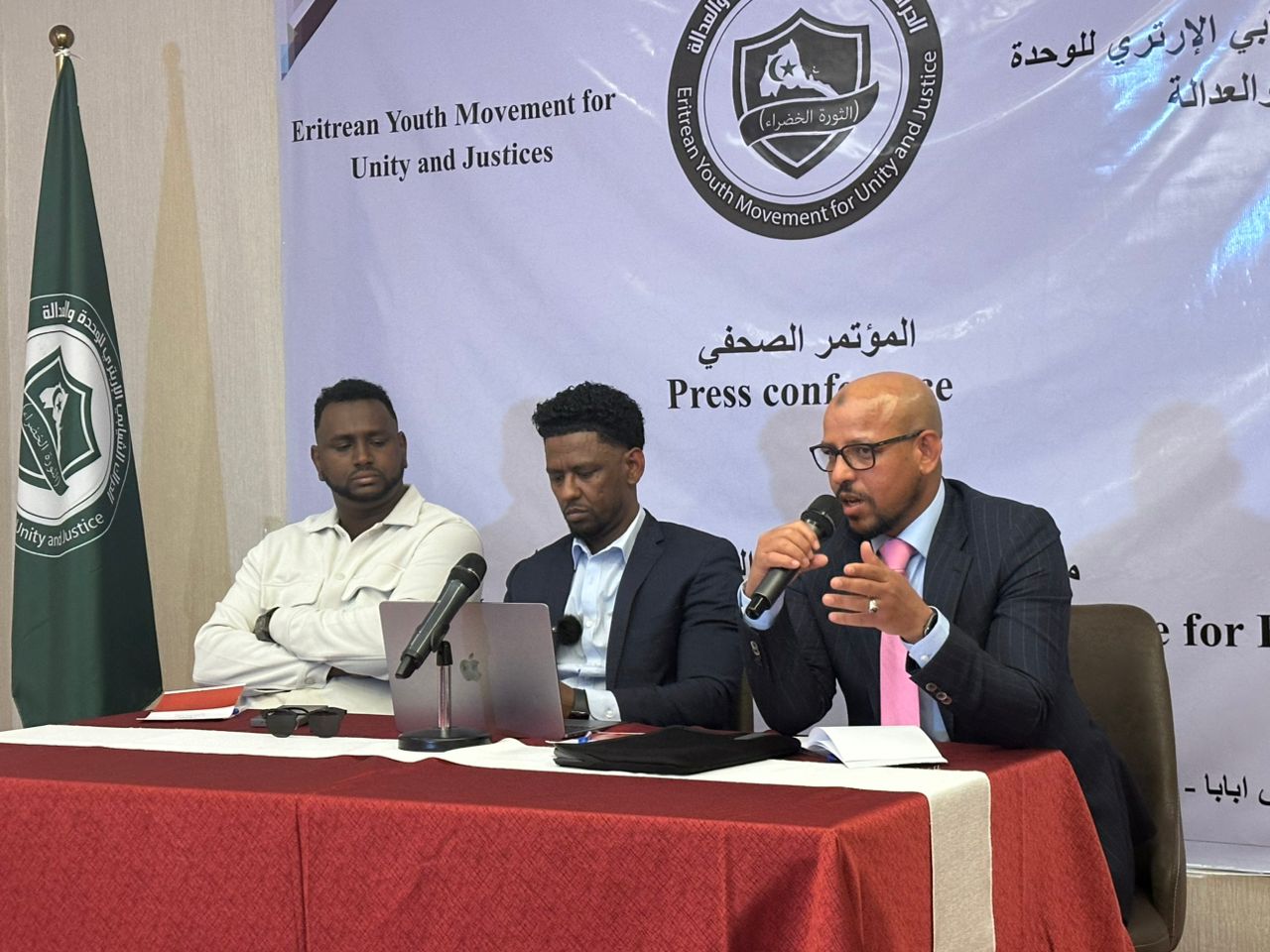
The Eritrean Youth Movement for Unity and Justice, known as the “Green Revolution,” held a press conference Thursday evening in the Ethiopian capital, Addis Ababa, to announce its founding conference, scheduled for Friday in Addis Ababa.
During the press conference, the Green Revolution’s leader, Mohammed Ahmed Asnai, declared that the project is a new political and revolutionary initiative aimed at rebuilding Eritrean national action on the foundations of justice, balance, and genuine partnership.
According to Asnai, the timing of the Green Revolution is due to the failure of previous solutions, as they were not grounded in the realities and specific social structures of Eritrea.
He revealed that the opposition has reached an impasse, necessitating the adoption of alternative solutions through different forms of action.
During a press conference, it was announced that the Eritrean Youth Movement for Unity and Justice, “The Green Revolution,” would launch its founding conference today in Addis Ababa, with the participation of a large number of Eritrean politicians and activists from both inside the country and the diaspora.
The conference is expected to discuss all issues related to the movement’s struggle and activities following its official establishment.
The leader of the Eritrean Green Revolution, an opposition group to the regime in Asmara, Mohammed Ahmed Asnai, had previously revealed the outlines of a political project known as “The Green Revolution” in media interviews from Addis Ababa. He indicated that it aims to bring about change in the political landscape of Eritrea by revitalizing political, social, and economic life and strengthening the role of youth in public affairs.
This came during a media interview with the Ethiopian Monitor website. Asnai explained that the project’s roots trace back to 2016 when it was launched under the name “The Eritrean Muslim Unity Movement,” noting that the project faced challenges at that time that prevented its full realization. He added that organizational work continued in the following years until it was more widely announced at the beginning of 2025.
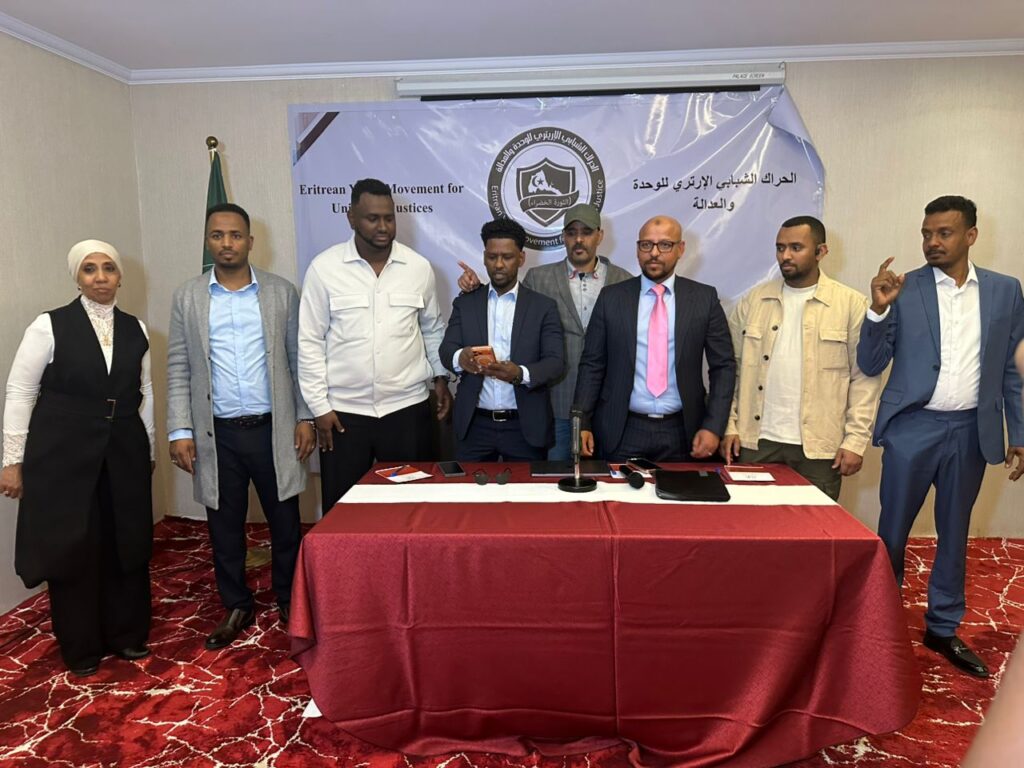
Asnai noted that the movement now has members and supporters within Eritrea, in addition to a presence in several African countries, some Western countries, and the Middle East. He said this expansion reflects a base of supporters who believe the project represents them.
According to Asnai, the movement is based on a vision that identifies an imbalance in the structure of Eritrean society, which has impacted the distribution of power and wealth in the country. He added that the project seeks to address these imbalances by proposing a political vision based on achieving greater balance among the components of society and strengthening political participation.
He added that the Muslim Eritrean community, in his view, has not had direct representation in the political arena since the establishment of the state, whether in government institutions or within some opposition forces. He pointed out that the movement seeks to defend the political rights of this community while emphasizing coexistence among all Eritreans, regardless of their religious affiliations. He stressed that the movement does not adopt any form of extremism or fanaticism, explaining that demanding the rights of Muslims is often classified, according to him, as belonging to extremist Islamic groups, which he considered an inaccurate classification.
Editor’s Disclaimer:
The views and opinions expressed in articles published by Horn News Hub are those of the authors and do not necessarily reflect the official position or editorial stance of Horn News Hub. Publication does not imply endorsement.


