

SEMERA, Afar Region, September 20, 2026 (Horn News Hub)
Ethiopia is seeking to expand date palm cultivation as part of a broader effort to reduce dependence on imported agricultural products, increase rural incomes and develop new horticultural export opportunities.
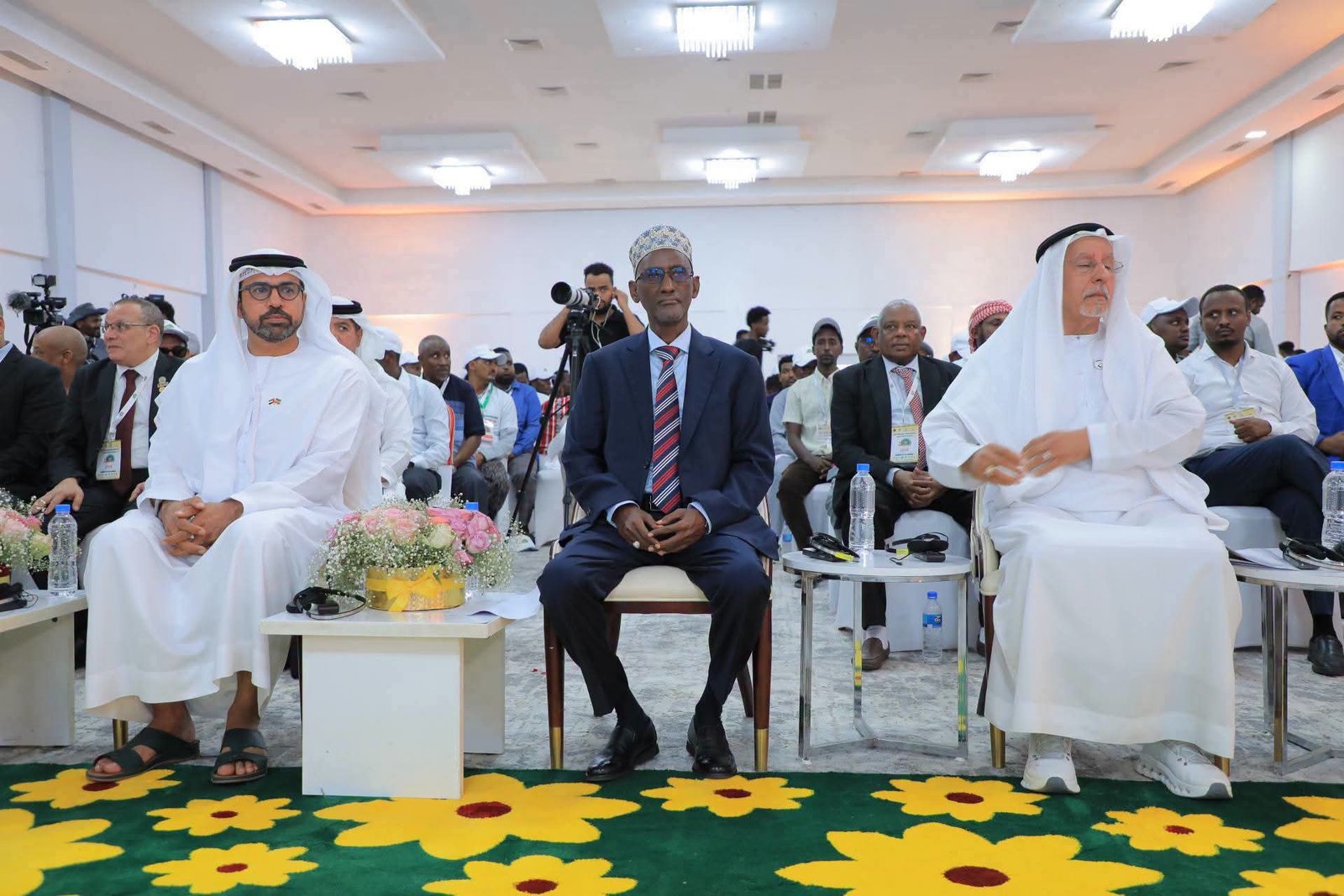
The country’s Second International Date Palm Festival, being held in Semera, capital of the Afar Region, from September 20 to 22, has brought together government officials, agricultural researchers, farmers and representatives of the United Arab Emirates to examine the opportunities and challenges facing the sector.
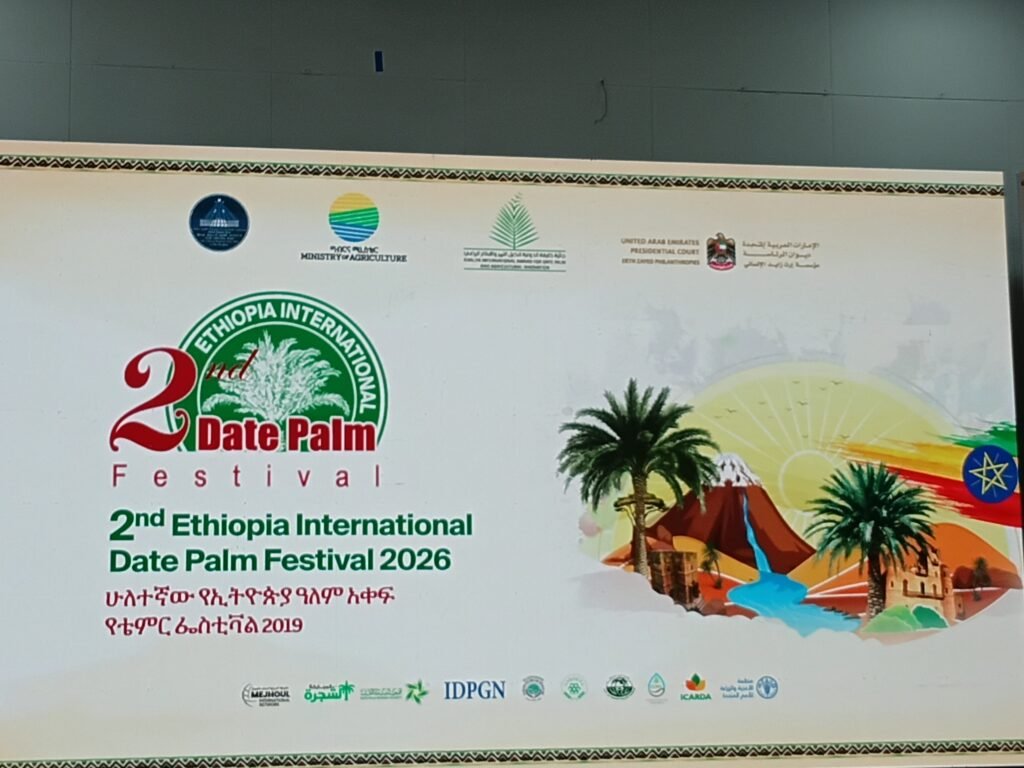
The festival is being organised jointly by Ethiopia’s Ministry of Agriculture and the Khalifa International Award for Date Palm and Agricultural Innovation, with the UAE presenting its experience in date palm production, technology and value chain development.

Speaking at the event, Afar Regional State President Awol Arba said the regional government is undertaking significant activities in the agriculture sector and is working to increase date palm production. He also highlighted the cooperation between the UAE and Ethiopia in developing the sector and expressed appreciation for the UAE government’s support.
Ethiopian authorities say the country has the potential to develop more than 500,000 hectares for date palm cultivation. The figure illustrates the potential scale of the sector, although translating land suitability into commercially productive plantations will depend on irrigation, improved varieties, farmer capacity, infrastructure, investment and access to markets.
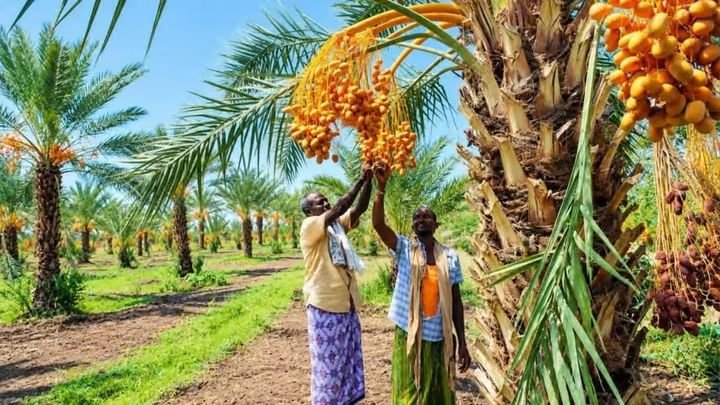
Afar is currently identified as Ethiopia’s leading date producing region, followed by the Somali Region, Gambella, Benishangul Gumuz, parts of Oromia including Borena and Guji, and Dire Dawa.
Afar at the centre of Ethiopia’s date palm expansion
For Afar, date palm cultivation is not a new agricultural activity.
Engineer Yasin Qali Qusban, head of the Afar Regional Agriculture and Natural Resources Bureau, said the region has been working to strengthen the relationship between the Afar people and date palm production. He said efforts are underway to improve current date palm production practices and expand the sector further. He said the crop has traditionally been used for human consumption and livestock feed and remains connected to the livelihoods and cultural practices of Afar communities.

The regional government is seeking to expand production beyond traditional consumption, with the stated objective of reducing imports while developing sufficient output for wider domestic markets and eventually exports.
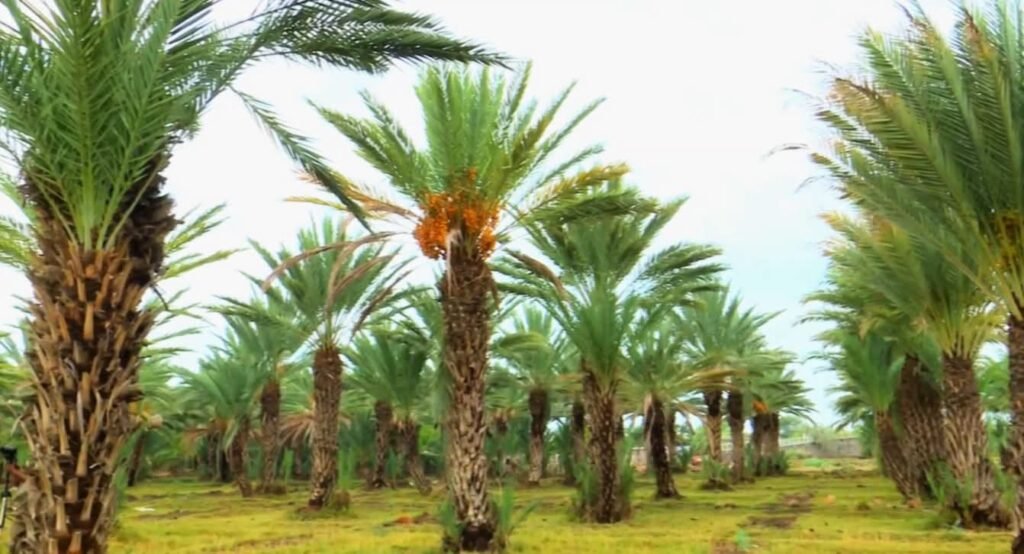
Asayita is among the areas in Afar where date palms are cultivated, providing an existing foundation on which the region hopes to build a larger commercial industry.
The expansion, however, faces practical constraints. Farmers participating in the festival pointed to transportation difficulties and inadequate road infrastructure as significant challenges. For a crop whose commercial value depends not only on production but also on getting harvested dates to processing facilities and markets, weak transport links can increase costs and reduce farmers’ access to buyers.
This highlights a central issue for Ethiopia’s date palm ambitions. Expanding the area under cultivation alone will not necessarily create a competitive industry unless production is accompanied by investment across the entire value chain.
From cultivation to a complete value chain
Dr Abdelouahhab Alboukhari Zaid, secretary general of the Khalifa International Award for Date Palm and Agricultural Innovation, said this year’s programme places greater emphasis on knowledge transfer and capacity building.
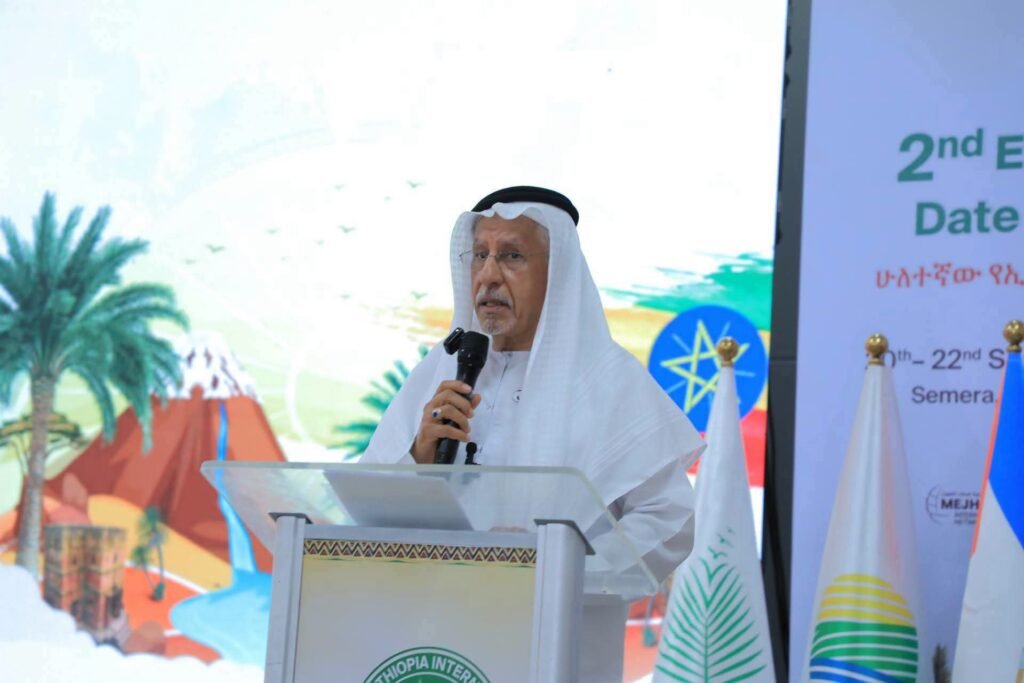
He said the focus includes cultivar selection, production techniques, processing and market access, reflecting an effort to move beyond simply increasing the number of trees planted.
The distinction is important because commercial date production requires specialised knowledge at several stages. Farmers need access to suitable planting materials, irrigation systems and production technologies. Harvested dates also require appropriate handling, grading, storage, processing and transportation before they can reach higher value domestic or international markets.
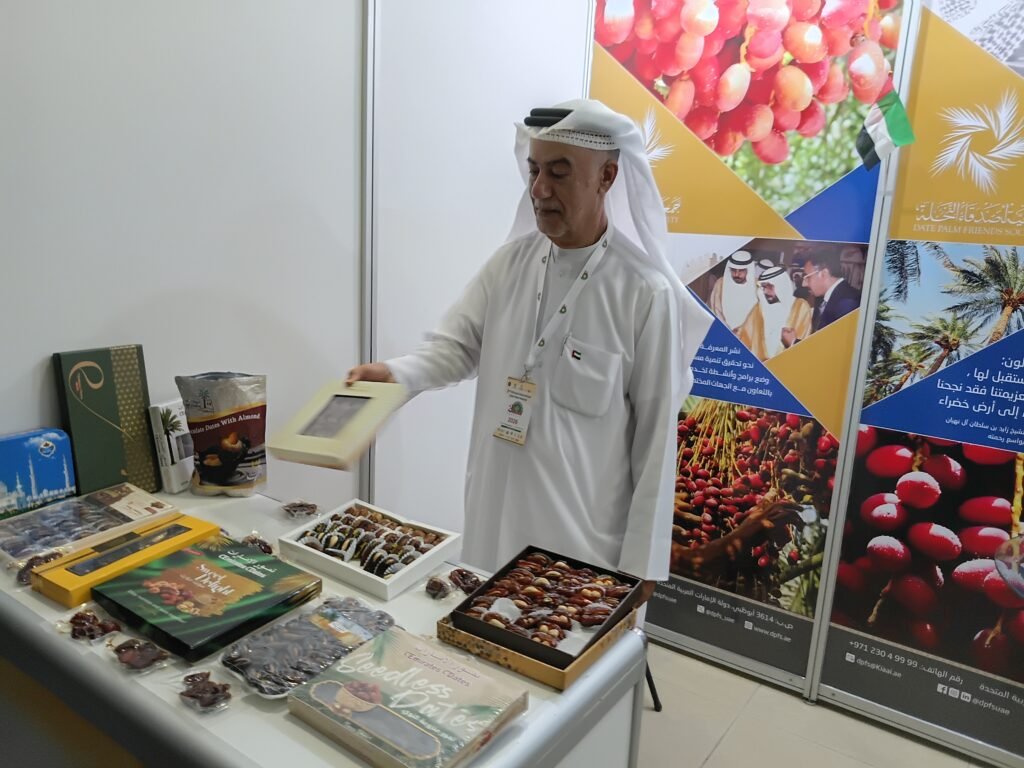
The UAE has positioned its cooperation with Ethiopia as part of a longer relationship between the two countries. UAE Ambassador to Ethiopia Abdullah Hassan Al Shamsi said the festival reflects the agricultural relationship between the two countries and highlighted the UAE’s experience and technology in modernising date production.
The ambassador also said the Afar regional government, under President Awol Arba, had begun capacity building activities for farmers based on lessons from the first festival held in Semera.

The partnership therefore extends beyond an annual festival. Its longer term significance will depend on whether training, technology transfer and investment translate into measurable improvements in productivity and farmer incomes.
Imports fall, but the figures require context
One of the strongest indicators presented by Ethiopian authorities is the decline in the country’s official date import bill.
According to figures presented by the Ministry of Agriculture at a September 17 press conference in Addis Ababa, Ethiopia’s legal date import bill declined from about $9.8 million five years ago to approximately $650,000 last year, representing a reduction of more than 90 percent.
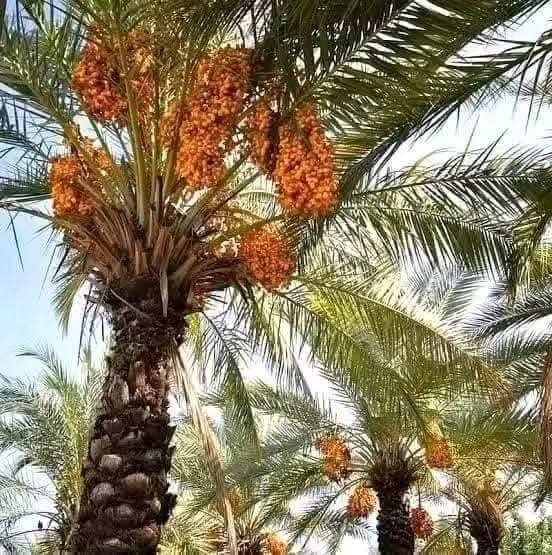
The ministry presented the decline as evidence of expanding domestic production capacity.
The figure, however, needs to be interpreted carefully.
The reported import value covers legally recorded imports and does not capture dates entering the country through informal channels or individual purchases. As a result, the official import figure does not necessarily represent total Ethiopian demand for imported dates.

Nevertheless, the decline in recorded imports, if sustained, provides an indication of changing supply conditions in the domestic market.
The more important question for policymakers is whether reduced imports are primarily the result of increased domestic production, changes in consumption, changes in prices, or a combination of factors.
Reliable production, consumption and trade data will therefore become increasingly important as Ethiopia develops its date palm strategy.
Research will determine the scale of the opportunity
Dr. Wondale Habtamu, Deputy Director of the Ethiopian Agricultural Institute, said Ethiopia is working to become a model in agricultural production in Africa and beyond. He noted that Ethiopia has significant potential for date palm production and said festivals such as this provide an opportunity to assess date production and productivity while contributing to the future development of the sector.

Wondale Habtamu, vice director of the Ethiopian Agricultural Institute and a representative of the Ministry of Agriculture, said Ethiopia’s diverse agricultural ecology provides opportunities for developing horticultural crops such as dates.
He linked the development of horticulture to the government’s broader agricultural transformation and food sovereignty objectives and called on researchers to give greater attention to date palm production.
The government is also preparing a 10 year research and development programme intended to modernise production methods and expand output for both domestic consumption and export.
Research will be particularly important because Ethiopia’s potential 500,000 hectares cannot automatically be treated as commercially viable land for date production.
Questions surrounding water availability, varieties suited to different environments, productivity per hectare, pest management, climate conditions, post harvest losses and market demand will determine how much of that potential can ultimately be developed.
The research agenda will also need to establish which production systems are most appropriate for smallholder farmers and which are better suited to larger commercial investments.
Infrastructure could become the critical bottleneck
The concerns raised by farmers at the festival provide an important counterpoint to the optimistic projections surrounding the sector.
Road infrastructure and transportation may appear to be broader development issues, but they directly affect the economics of agricultural production.
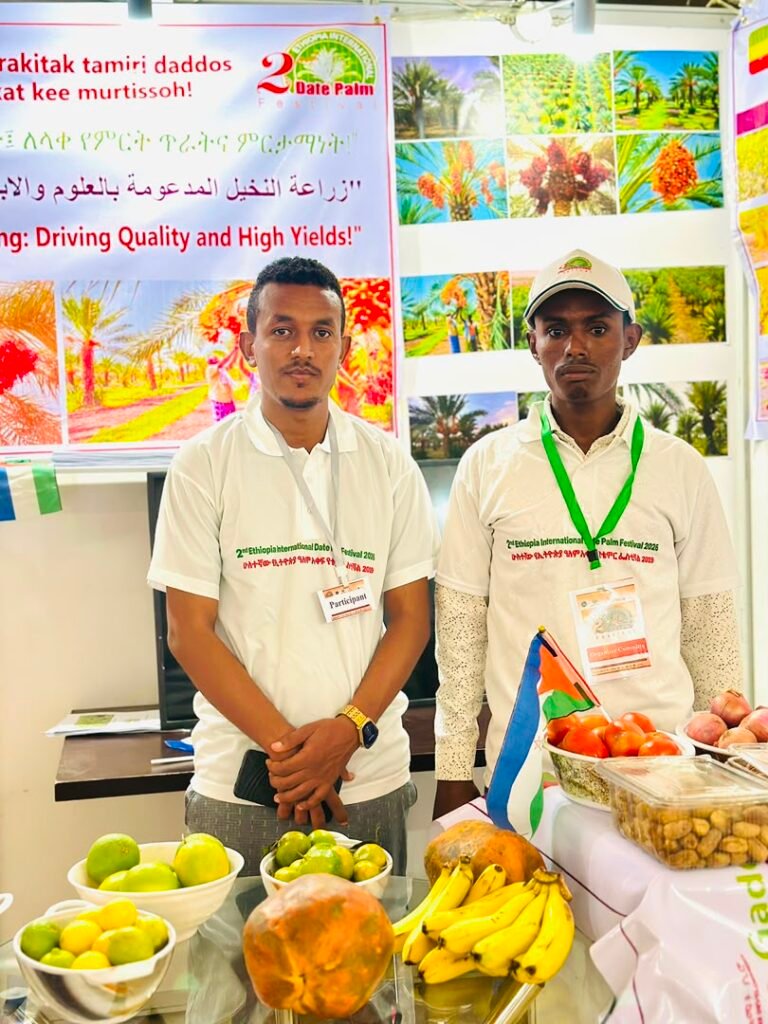
If farmers cannot reliably transport dates from production areas to urban markets, processing facilities or export centres, higher logistics costs can reduce the price received by producers while increasing the final price paid by consumers.
The same challenge applies to agricultural inputs. Access to improved seedlings, fertilisers, irrigation equipment and technical services depends partly on the ability of suppliers and extension workers to reach production areas.
For Afar, therefore, the development of date palm production is closely connected to investment in rural infrastructure.
From import substitution to exports
Ethiopia’s immediate opportunity may be to strengthen domestic supply and reduce reliance on imports, but officials and organisers are also looking toward export markets.
Moving into exports would require Ethiopia to compete with established global producers on quality, consistency, price, packaging and reliability of supply.
That means the development of the industry cannot end at the farm gate. Processing, grading, certification, cold or appropriate storage, packaging, branding and market information will become increasingly important if Ethiopian dates are to enter international markets at competitive prices.
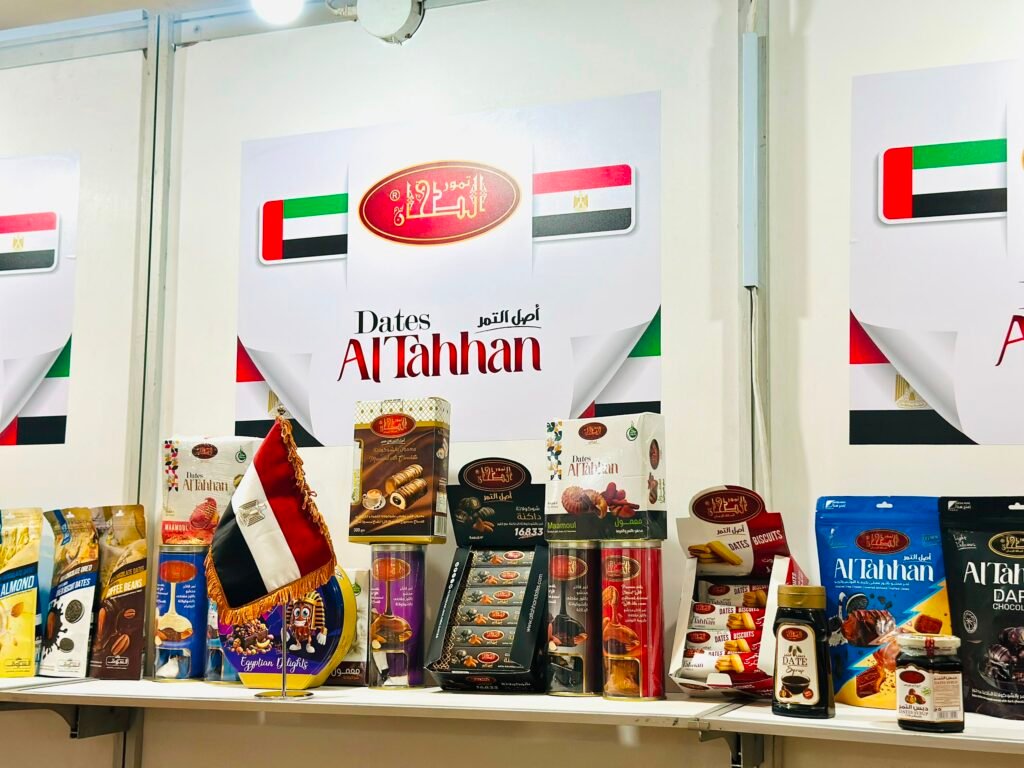
The UAE partnership could provide access to technical experience and potentially wider commercial networks, but the long term performance of Ethiopia’s date sector will ultimately depend on domestic production systems and the ability of Ethiopian institutions and businesses to sustain investment.
A sector with potential, but a long development path
The Second International Date Palm Festival has placed Ethiopia’s emerging date industry at the centre of discussions about agricultural diversification, technology transfer and rural economic development.
The country has substantial ecological potential, an established tradition of date cultivation in Afar and other regions, and government interest in expanding the crop. Official import figures also show a significant decline in recorded spending on imported dates.
At the same time, the sector remains at an early stage of commercial development. Farmers continue to face infrastructure and transportation constraints, while questions remain about productivity, irrigation, processing capacity, market access and the reliability of national production data.

The next stage will therefore be measured less by the number of trees planted or the size of land identified as suitable and more by whether farmers can produce commercially viable quantities, reach markets efficiently and obtain sustainable returns.
For Ethiopia, the date palm opportunity is potentially significant. Turning that potential into a competitive agricultural industry will require coordinated investment in research, farmers, infrastructure, processing and markets over many years.