
Scholar Praises Interim Tigray President’s Infrastructure Push as Political Debate Continues
Addis Ababa, Ethiopia — April 16, 2026 | Horn News Hub
A senior civil engineering scholar and public enterprise chief has publicly praised Interim Administration President General Tadese Werede for what he described as significant progress in water and infrastructure development in Tigray, adding a new voice to the ongoing political and institutional debate surrounding the region’s leadership.
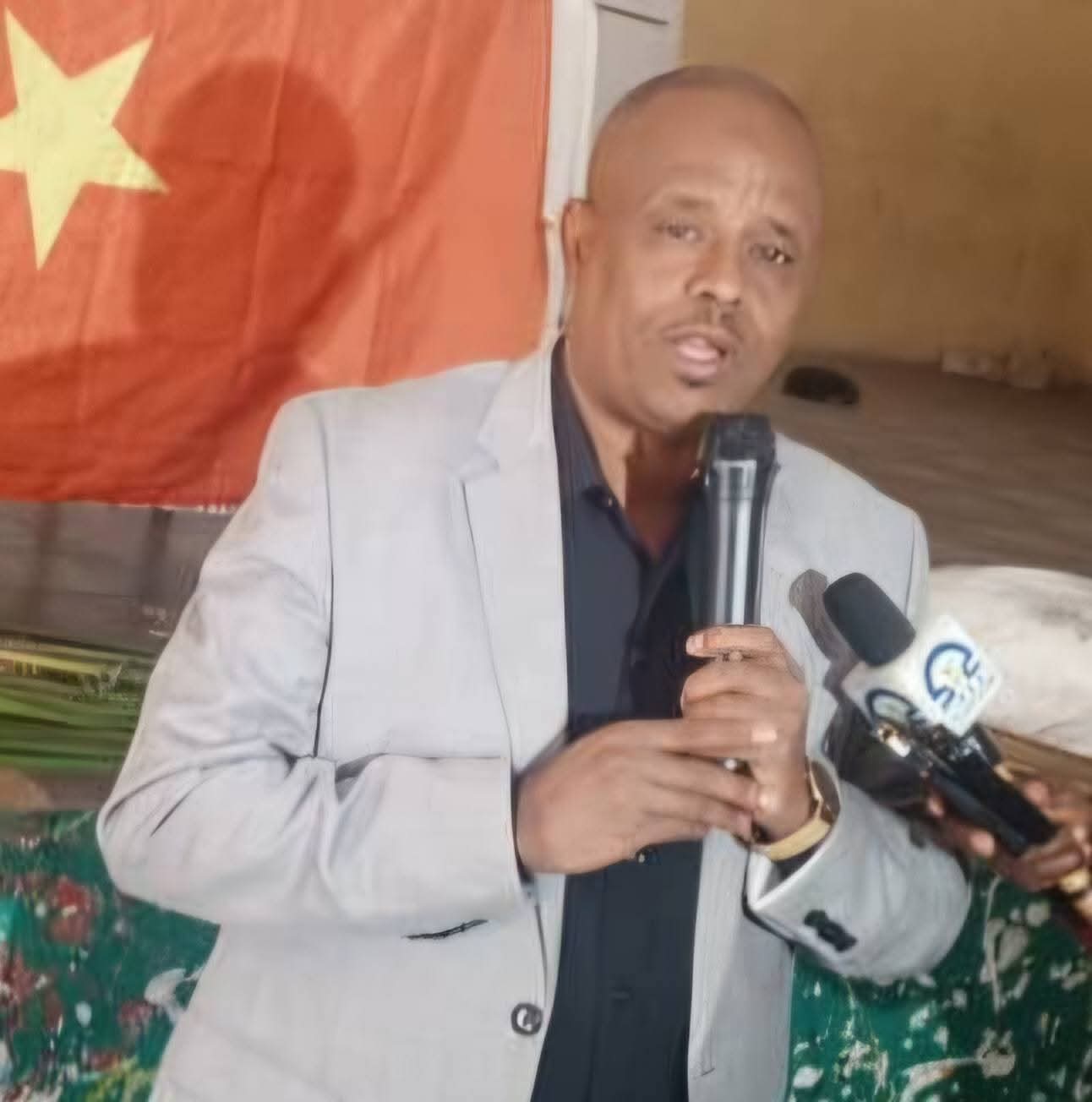
Dr. Mehari Gebreyohannes Hiben, Chief Executive Officer of the Tigray Water Works Study, Design and Supervision Enterprise and Associate Professor of Practice in Civil Engineering specializing in hydraulic engineering, said his assessment is based on professional observation rather than political alignment.
“I am not a politician. I am a dedicated scholar of science and engineering,” Dr. Mehari stated, noting his academic and professional background in civil engineering, including experience in roads, buildings, real estate development, water supply systems, wastewater and fecal treatment, as well as dam and hydraulic engineering.
Speaking from what he described as a professional and technical standpoint, Dr. Mehari credited the interim administration under General Tadese with establishing key water and irrigation institutions that had remained unrealized for decades.
According to him, institutions such as the Tigray Irrigation Bureau and the Tigray Water and Energy Research Institute were long-standing proposals during the TPLF and EPRDF administrations, spanning more than 27 years. He said these institutions were established within one year of the current interim leadership.
Dr. Mehari also claimed that more than 24 billion birr in civil engineering and water related projects were secured within a single year, describing the figure as an extraordinary milestone in the context of post conflict recovery and institutional rebuilding.
He further noted that a documentary detailing these developments is currently under preparation, adding that it will rely on technical documentation, project records, and verified engineering data.
From a humanitarian and technical perspective, Dr. Mehari described the developments as transformative for Tigray, emphasizing the importance of infrastructure in post conflict recovery, food security, and long term development.
“This is General Tadese Werede embraced by the true love and appreciation of real scholars,” Dr. Mehari said, portraying the interim president’s leadership as one that prioritizes engineering expertise, research, and technical planning in governance.
The remarks come amid growing political tensions within Tigray’s interim administration, where disagreements between factions and political actors have intensified in recent weeks, including debates over leadership performance, institutional reform, and governance priorities.
Analysts note that endorsements from technical experts and institutional leaders may shape the evolving political narrative, particularly as reconstruction, water management, and agricultural recovery remain central issues for the region.
At the same time, observers caution that claims regarding project funding, institutional establishment, and development outcomes typically require independent verification, particularly in a region still undergoing post conflict reconstruction and administrative transition.
General Tadese Werede, a former senior military figure, assumed leadership of the interim administration during a critical recovery period, with expectations focused on stabilizing governance, rebuilding infrastructure, and facilitating the return of displaced populations.
Dr. Mehari’s remarks reflect growing recognition among some technical professionals that engineering driven policy and infrastructure development may play a decisive role in shaping Tigray’s recovery trajectory.
However, the broader political debate over the interim administration’s performance continues, with supporters highlighting institutional progress and critics raising concerns over governance, transparency, and political direction.
As the anticipated documentary is prepared for release, the discussion surrounding development achievements and leadership performance in Tigray is likely to intensify in the coming weeks.
Editor’s Disclaimer:
The views and opinions expressed in articles published by Horn News Hub are those of the authors and do not necessarily reflect the official position or editorial stance of Horn News Hub. Publication does not imply endorsement.