

Addis Ababa, Ethiopia — May 19, 2026 | Horn News Hub
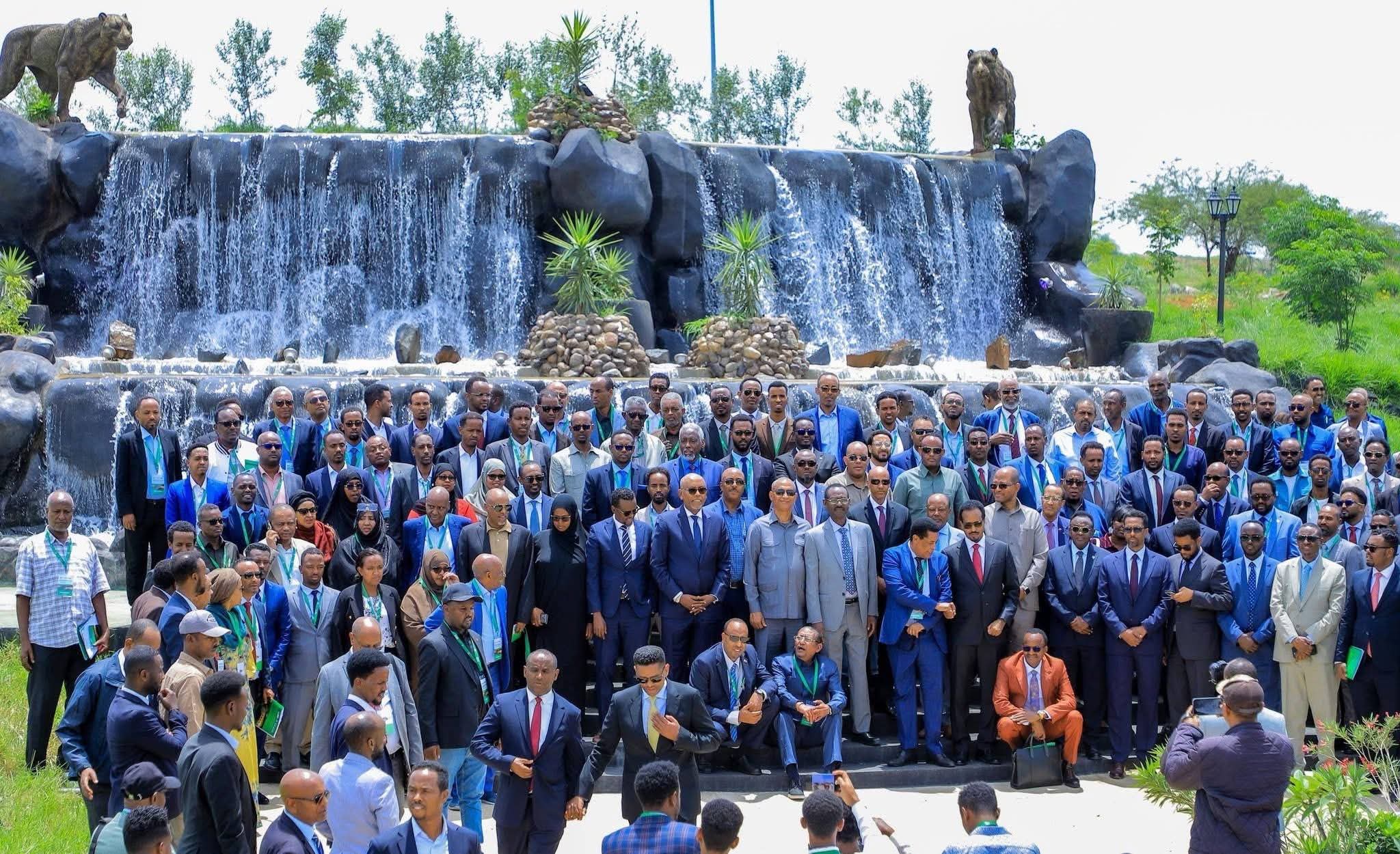
Regional leaders, policy experts, diplomats, and scholars gathered in Jigjiga this week for the Horn Inter-Elite Dialogue, where discussions focused heavily on the role of trade, economic engagement, and regional cooperation in addressing the Horn of Africa’s persistent instability.
Held under the theme “Strengthening Regional Cooperation to Ensure Sustainable Peace in the Horn of Africa,” the forum explored how deeper economic integration could become a practical pathway toward long-term peace and political stability across the region.
Participants argued that regional integration should no longer be viewed solely through an economic lens. Instead, they described economic cooperation as a strategic instrument for reducing political tensions, building mutual interests, and preventing conflict among states in the Horn.
A recurring concern throughout the discussions was the limited level of intra-regional trade within the Horn of Africa despite strong geographic proximity and shared economic potential. Speakers noted that cross-border trade networks remain underdeveloped, while infrastructure and policy coordination continue to lag behind regional ambitions.
Several participants stressed that borderland communities have historically been marginalized from national economic and political systems. Yet many of these communities already maintain deep social and commercial ties across borders regardless of state divisions.
The forum highlighted that these local networks could become critical drivers of peacebuilding and regional integration if governments adopt more inclusive economic policies.
Discussions also underlined the direct connection between political stability and economic cooperation. Participants noted that sustainable regional integration cannot succeed in an environment marked by mistrust, insecurity, and fragmented political relations.
According to speakers, stronger institutional cooperation, coordinated policies, and improved governance mechanisms are necessary to transform regional integration from political rhetoric into practical implementation.
Infrastructure development emerged as another major focus area during the forum. Participants identified transport corridors, logistics networks, and cross-border connectivity projects as potential “peace dividends” capable of creating shared economic interests among neighboring countries.
The need for coordinated regional investment, joint infrastructure financing, and harmonized development planning was repeatedly emphasized as essential for unlocking the Horn’s economic potential.
The role of regional organizations, particularly Intergovernmental Authority on Development and the East African Community, also featured prominently in the discussions.
Participants called for stronger institutional coordination between regional blocs, warning that overlapping mandates and fragmented initiatives risk weakening collective regional efforts.
Another major theme was accountability. Delegates stressed that regional integration efforts require stronger monitoring systems, policy harmonization, and measurable implementation mechanisms to ensure commitments translate into action.
Beyond governments and political elites, speakers emphasized that sustainable regional cooperation must actively involve youth, business communities, civil society actors, and local economic networks.
Several participants described inclusive participation as essential for building public ownership of regional integration projects.
The Jigjiga Forum itself was widely recognized as an important platform for policy dialogue and regional engagement. Participants said such forums create space for difficult conversations, exchange of ideas, and the development of practical solutions to the Horn of Africa’s interconnected political and economic challenges.
The discussions come at a time when the Horn of Africa continues to face overlapping crises including armed conflicts, economic pressures, displacement, and geopolitical competition. Despite these challenges, the forum projected cautious optimism that deeper regional cooperation and economic connectivity could provide a more sustainable foundation for peace and stability across the region.
Editor’s Disclaimer:
The views and opinions expressed in articles published by Horn News Hub are those of the authors and do not necessarily reflect the official position or editorial stance of Horn News Hub. Publication does not imply endorsement.