
Addis Ababa, Ethiopia — May 18, 2026 | Horn News Hub
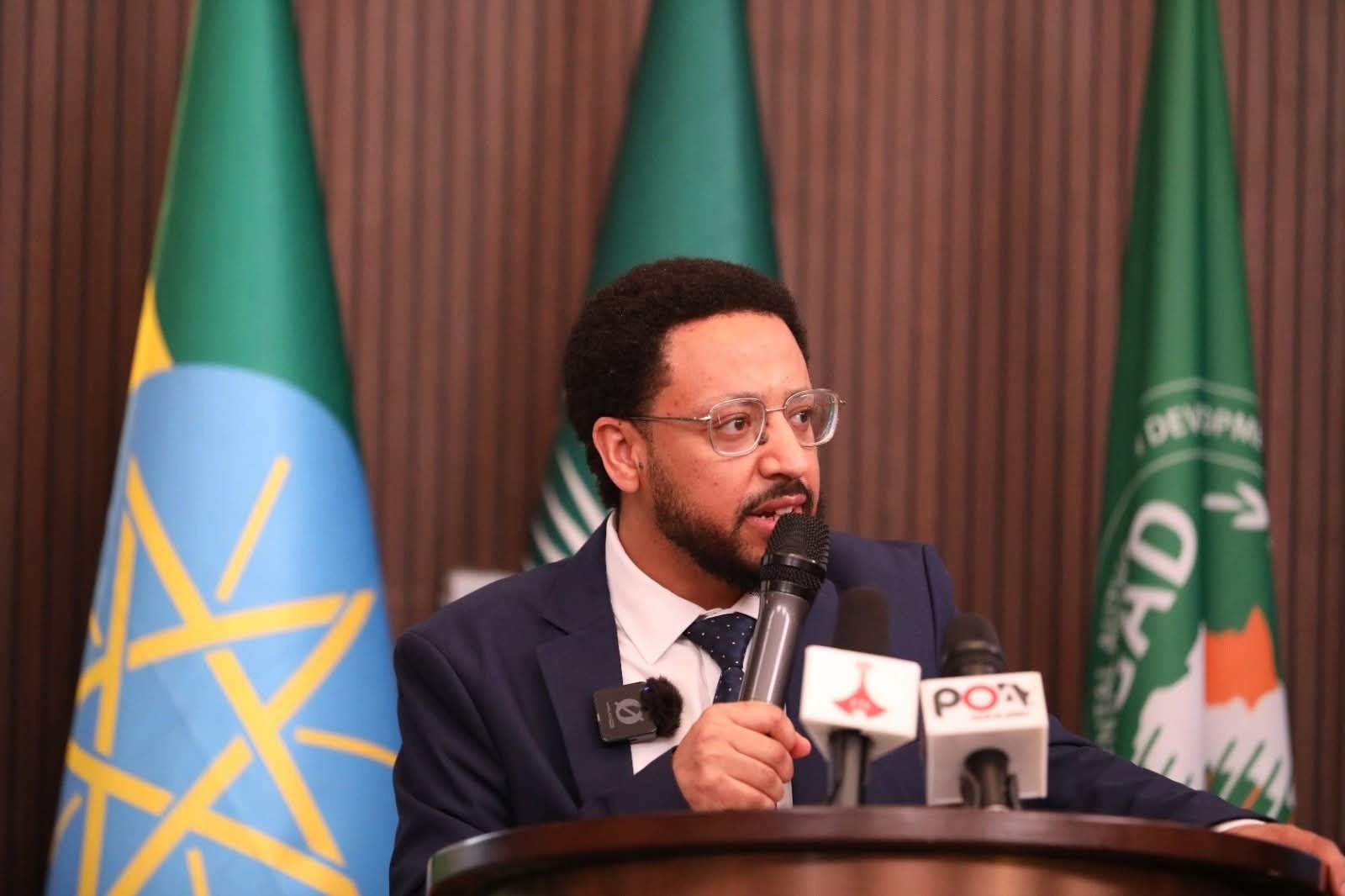
The 2026 Horn Inter-Elite Dialogue opened Monday in Jigjiga with a pointed and reflective address from Jaffar Bedru, who urged political leaders, diplomats, and scholars from across the Horn of Africa to confront what he described as the region’s long-standing dependence on external actors in resolving internal disputes.
Speaking at the opening session of the forum hosted in Jigjiga, the Executive Director of the Institute of Foreign Affairs framed the gathering not simply as another diplomatic conference, but as a test of whether regional elites are prepared to rethink the political habits that have shaped the Horn for decades.
The event brought together senior government officials, regional leaders, diplomats, academics, and policy experts from across the Horn of Africa. Among those present were Tagesse Chafo, Mustefa Mohammed Oumer, and Zerihun Teshome.
Jigjiga as a Symbol of Regional Interconnection
In his remarks, Jaffar Bedru described Jigjiga as a historically interconnected city shaped by trade routes, migration, and cross-border exchange long before modern state boundaries emerged.
He argued that regional integration in the Horn is not a new political invention, but a social and economic reality that local communities have practiced for generations through commerce, mobility, and shared cultural ties.
By presenting Jigjiga as both a borderland and a meeting point, the speech positioned the city as a symbolic venue for discussions on regional cooperation, trade connectivity, and political dialogue.
Criticism of Regional Political Elites
The strongest section of the address focused on the role of regional political actors in inviting external influence into the Horn’s internal affairs.
Without naming specific countries or administrations, Jaffar argued that competing political factions across the region have repeatedly sought foreign backing during domestic disputes, weakening regional sovereignty in the process.
He challenged a commonly repeated political narrative in Africa — “African solutions to African problems” — by questioning whether regional elites themselves have consistently acted in ways that support strategic autonomy.
According to the speech, foreign involvement in the Horn has often not been imposed externally, but enabled internally through political fragmentation, diplomatic competition, and reliance on outside patrons for leverage.
The remarks reflected a growing debate among policymakers and analysts in the region over the long-term consequences of external dependency, particularly in relation to security partnerships, mediation efforts, and geopolitical competition around the Red Sea and Gulf of Aden corridor.
Call for Regional Trust and Collective Action
A recurring theme throughout the address was the need for greater trust and coordinated regional thinking despite political differences between states.
Referencing a Somali proverb, “Ilko wadajir bay wax ku gooyaan” — translated as “Teeth bite only when they bite together” — the speech argued that cooperation does not require political uniformity among countries in the Horn.
Instead, the message emphasized alignment around shared regional interests, particularly economic development, security stability, trade integration, and protection of sovereignty.
Jaffar warned that as long as countries in the region remain focused on internal rivalries and cross-border political competition, external powers will continue to shape the region’s political direction and strategic calculations.
He also linked the region’s internal divisions to broader structural challenges, including poverty, youth migration, unemployment, and instability despite the Horn’s strategic geographic position connecting Africa, the Red Sea, and the Middle East.
A Broader Reflection on the Horn’s Political Future
The opening remarks set a reflective and at times uncomfortable tone for the three-day forum.
Rather than presenting the Horn’s problems solely as the result of foreign interference, the speech emphasized internal political responsibility and elite decision-making as central factors shaping the region’s trajectory.
Analysts attending the forum noted that the address appeared aimed at encouraging more candid regional discussions on sovereignty, governance, and cross-border political competition, particularly at a time when the Horn faces overlapping security transitions, economic pressures, and intensifying geopolitical attention from global powers.
The Horn Inter-Elite Dialogue is expected to focus on regional integration, external engagement, fragile political transitions, trade and connectivity, and the role of borderland communities in shaping future cooperation across the region.
Editor’s Disclaimer:
The views and opinions expressed in articles published by Horn News Hub are those of the authors and do not necessarily reflect the official position or editorial stance of Horn News Hub. Publication does not imply endorsement.