
By Adisu Bahta
Addis Ababa, Ethiopia — May 23, 2026 | Horn News Hub
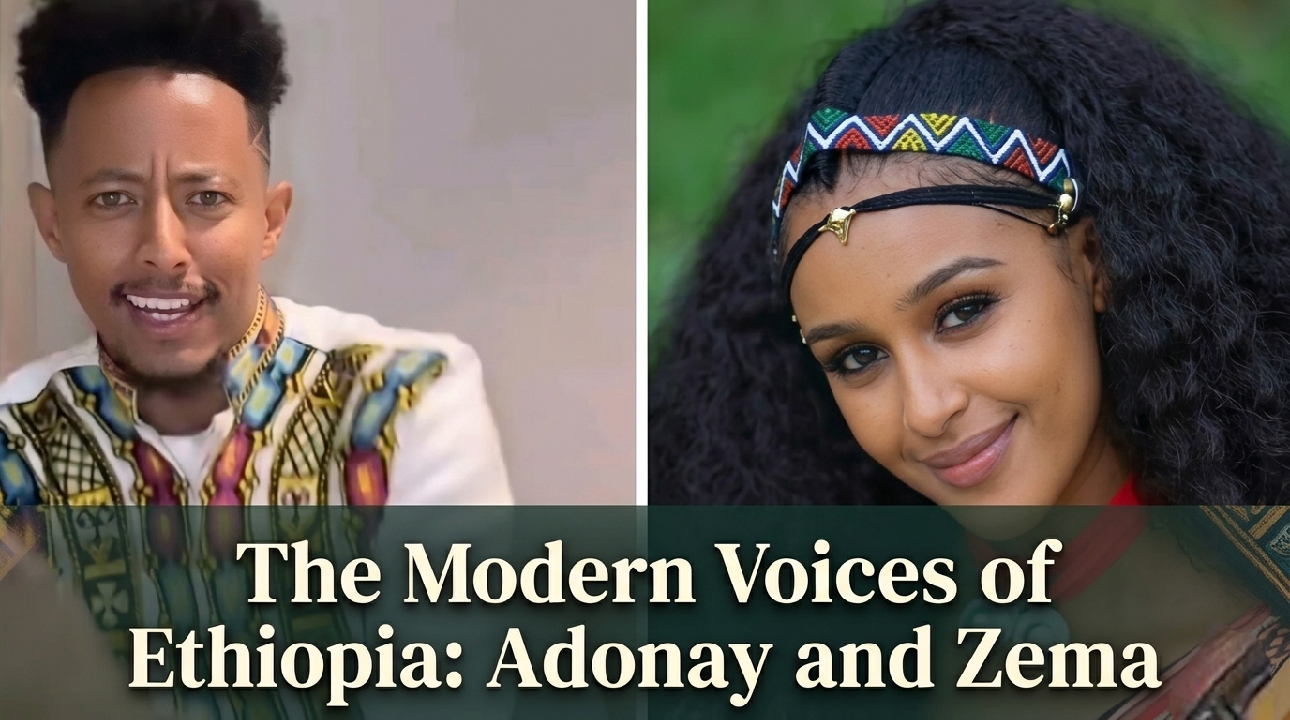
At a time when Ethiopia continues to recover from one of the darkest chapters in its modern history, a new generation of voices is beginning to reshape the national conversation. Among them are two young Tigraian Ethiopians, Adonay and Zema, whose growing public influence reflects a broader shift among sections of Ethiopia’s youth toward dialogue, connection, and national coexistence.
Through social media platforms and public engagement, the two have promoted Ethiopia not through politics or ideological confrontation, but through culture, history, tourism, and human connection. Their message has attracted attention across the country and beyond, particularly because it emerges from a region deeply affected by conflict and trauma.
The war in Tigray left devastating consequences. Hundreds of thousands of lives were lost, communities were shattered, and mistrust deepened between Ethiopians. For many young people in Tigray, years of political polarization and conflict created emotional and psychological distance from the broader Ethiopian identity. Narratives built around division, historical grievance, and isolation became deeply embedded within parts of society.
Against this backdrop, the emergence of figures like Adonay and Zema carries political and social significance beyond entertainment or online popularity. Their approach represents a generation that increasingly seeks to move beyond rigid ethnic narratives and rediscover shared national space.
Unlike older political movements that often framed Ethiopia primarily through ethnic competition and historical resentment, many young Ethiopians today are growing up in a highly interconnected digital world. Exposure to different cultures, perspectives, and experiences through platforms like TikTok, YouTube, and Instagram has created a generation less confined by the ideological structures that shaped previous decades.
For Adonay and Zema, Ethiopia is not merely a political system or a temporary government. It is an ancient civilization shaped by generations of people from every region and background. It is the land of Axum, Lalibela, Harar, Gondar, and countless cultural traditions that belong collectively to all Ethiopians.
Their message also reflects an important reality often overlooked in polarized discourse: governments are temporary, but nations endure. Political leaders rise and fall, policies change, and administrations come and go. Yet the social fabric connecting millions of Ethiopians remains far deeper than any single political organization.
This perspective is particularly important for the youth of Tigray. Many young Tigraians have spent years exposed primarily to narratives portraying Ethiopia exclusively through oppression, hostility, and exclusion. While legitimate grievances and wartime suffering cannot and should not be dismissed, reducing an entire country and its people to a singular political narrative risks prolonging isolation and mistrust for another generation.
National healing cannot emerge through permanent separation between peoples who have shared centuries of history, trade, culture, religion, and family ties. Rebuilding trust requires engagement, openness, and the willingness to see one another beyond political propaganda.
In that sense, Adonay and Zema symbolize more than online personalities. They reflect the possibility of reintegration between the youth of Tigray and the broader Ethiopian society. Their popularity demonstrates that many young people are increasingly interested in coexistence rather than perpetual hostility.
Their advocacy for tourism, cultural pride, and peaceful interaction may appear simple on the surface, but in Ethiopia’s current context, it carries profound meaning. Promoting the beauty of Ethiopia after years of conflict is also, in many ways, an attempt to restore belief in a shared future.
This does not erase accountability for crimes committed during the war. Justice, recognition of suffering, and political responsibility remain essential for lasting peace. But reconciliation also requires voices willing to rebuild bridges after destruction.

The emergence of a new generation that refuses to remain trapped in inherited political bitterness could become one of Ethiopia’s most important developments in the years ahead.
For many observers, Adonay and Zema represent precisely that possibility.
Editor’s Disclaimer:
The views and opinions expressed in articles published by Horn News Hub are those of the authors and do not necessarily reflect the official position or editorial stance of Horn News Hub. Publication does not imply endorsement.