

Nairobi — Human Rights Watch has called on authorities in Ethiopia’s Tigray region to withdraw a recently issued security and mobilization proclamation, saying it grants broad powers for compulsory military service and introduces severe penalties for a range of offenses.
According to the organization, the proclamation was issued in early June 2026 by the Tigray People’s Liberation Front (TPLF) after it regained control of the regional administration following the removal of officials previously backed by Ethiopia’s federal government. Human Rights Watch said the measure establishes a legal framework for compulsory military mobilization and includes penalties ranging from fines and imprisonment to the death penalty for offenses related to security, military service, and collaboration with opposing forces.
The rights organization said the proclamation was introduced amid heightened political tensions between the TPLF and the Ethiopian federal government, raising concerns about renewed instability in the region.
The conflict in northern Ethiopia between 2020 and 2022 ended with the signing of the Pretoria Agreement in November 2022, bringing an end to active hostilities between Tigrayan forces and Ethiopian federal forces and their allies. Despite the ceasefire, disagreements over the implementation of the agreement and the governance of Tigray have continued.
Since 2025, the federal government and the TPLF have remained divided over the implementation of the peace agreement and the administration of the region. Internal divisions within the TPLF also emerged in 2024, contributing to political uncertainty.
On May 5, 2026, the TPLF reestablished control over Tigray after removing the federally supported interim administration. The party stated that the federal government had withheld budget allocations, including funding for civil servant salaries, and had unilaterally extended the mandate of the interim regional administration.
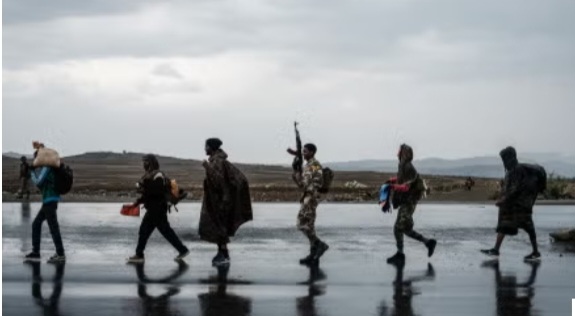
Human Rights Watch cited reports from local human rights organizations and media outlets alleging that authorities have launched an extensive recruitment campaign involving former fighters and civilians. The reports also allege that local authorities have conducted door to door recruitment operations and mass roundups of potential recruits, including children. The organization further said it had received reports that relatives of people avoiding recruitment had faced punitive measures, prompting some residents to leave the region.
According to Human Rights Watch, the proclamation provides for compulsory military mobilization for individuals considered fit by age and health. It also introduces criminal penalties for evading military service, desertion, and actions interpreted as opposing the recruitment campaign, including lengthy prison terms and financial penalties.
The organization also expressed concern that the mobilization framework shares characteristics with Eritrea’s national service system, which has been criticized by international human rights bodies for coercive recruitment practices and restrictions on individual freedoms.
Human Rights Watch called on the African Union and international partners supporting the implementation of the Pretoria Agreement, including Kenya, South Africa, the United States, and European Union member states, to encourage Tigrayan authorities to suspend forced recruitment and withdraw the proclamation. The organization also urged the African Union monitoring mechanism established under the Pretoria Agreement to investigate allegations of forced recruitment and remobilization of former combatants and to make its findings public.
The Tigray authorities had not publicly responded to the Human Rights Watch statement at the time of publication.