
Horn News Hub | November 10, 2026
The formal establishment and legal recognition of the Nile and Red Sea Forum has been described as a strategically significant development in Ethiopia’s efforts to advance its long term national interests, according to an editorial published by the Horn of Africa Geopolitical Review (HAGR), a London based publication focused on regional geostrategic.
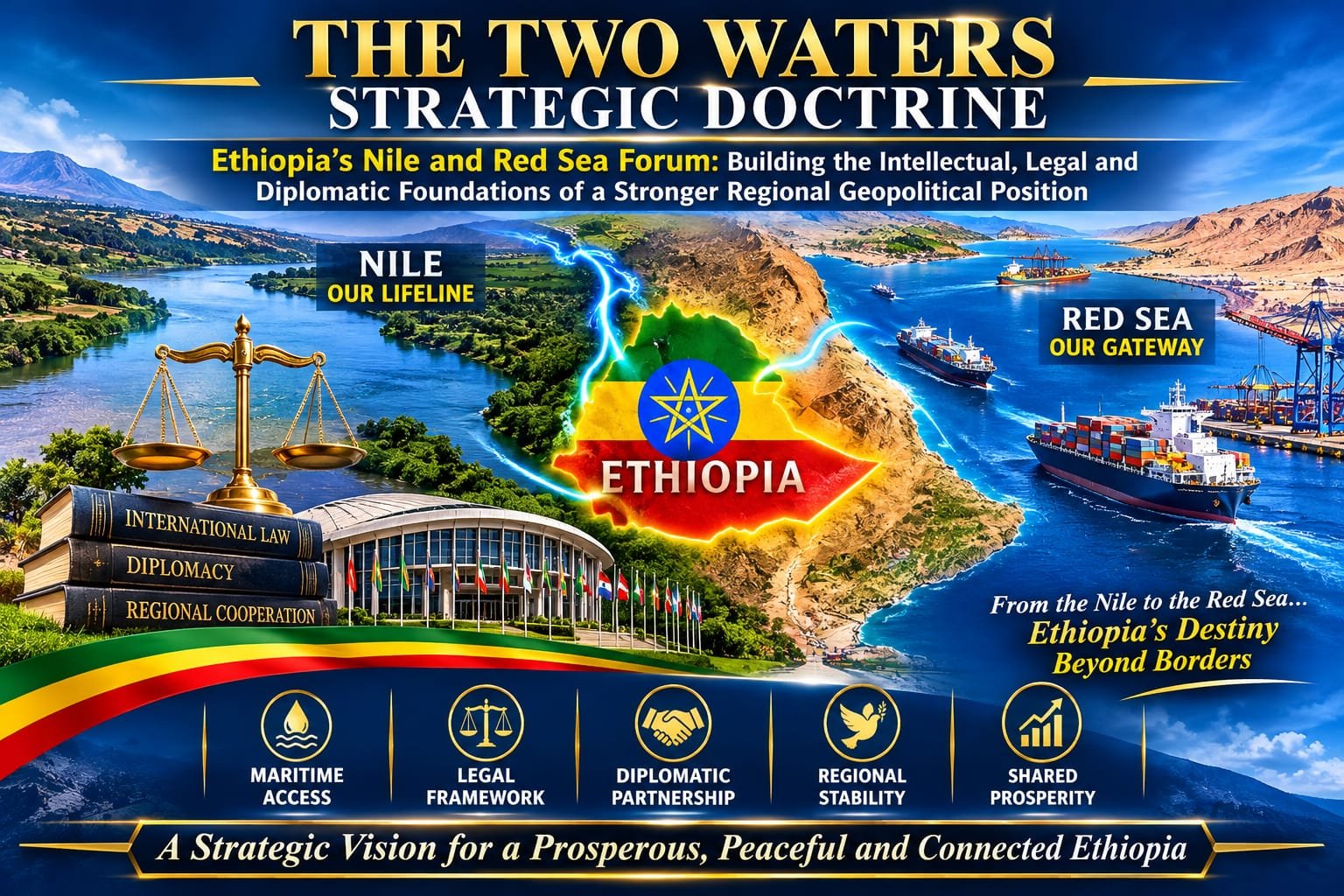
In its special editorial titled “The Two Waters Strategic Doctrine,” HAGR argues that the forum represents more than the registration of a new organization. The publication says water security, maritime connectivity and regional competition are increasingly shaping the future of the Horn of Africa, and that Ethiopia needs institutions capable of turning national priorities into credible intellectual, legal and diplomatic initiatives.
Two waters, one national interest
HAGR describes the Abay (Blue Nile) and the Red Sea as two connected pillars of Ethiopia’s economic security and geopolitical position. The Abay, which the editorial says contributes approximately 85 percent of the Nile’s water flow, is presented as central to agriculture, electricity generation and industrial growth. HAGR notes that the inauguration of the Grand Ethiopian Renaissance Dam in September 2025 marked a historic milestone, while stressing that the next phase should be guided by international law, equitable and reasonable utilization, transparency and the obligation to avoid significant harm to other riparian states.
On the Red Sea, the editorial points to Ethiopia’s historical links with the region, including the ancient trading Centre of Adulis. It notes that Eritrea’s separation in 1993 left a country of more than 130 million people without direct sea access, and that Ethiopia’s reliance on the Djibouti corridor makes reliable and diversified maritime access a major economic consideration. HAGR says such access should be pursued through peaceful negotiation, international law and mutually beneficial commercial arrangements with coastal states.
The case for institutional capacity
A central argument of the editorial is that diplomacy should not rest on government statements and periodic political initiatives alone. HAGR says modern geopolitical influence relies on research institutions, historical documentation, international legal expertise, economic analysis and academic partnerships. It maintains that the strongest diplomatic arguments are developed long before formal negotiations begin.
The publication says it has consistently advocated a permanent, multidisciplinary and professionally organised platform bringing together scholars, legal practitioners, economists, historians and security analysts. It describes the forum as an opportunity to move Ethiopia from reactive diplomatic communication toward a more systematic and evidence based approach.
Proposed areas of work
HAGR identifies several areas where the forum could contribute:
- International legal research on equitable utilisation, transboundary water governance and the legal framework for maritime access and transit.
- Historical and geographical documentation that separates documented evidence from contemporary political interpretation.
- Study of maritime policy and international practice, including landlocked state rights, transit freedoms and port agreements.
- Economic research on the costs of maritime dependence, trade diversification and alternative corridors.
- Partnerships with universities, research centres and professional associations in Africa and internationally.
- Regional diplomatic engagement and regular publication of research papers, legal assessments and policy briefs.
The editorial says the forum’s proposed engagement with the African Union, IGAD and the United Nations deserves particular attention, but adds that international credibility must be earned through independence, professional standards and verifiable evidence rather than advocacy alone.
Strategy without confrontation
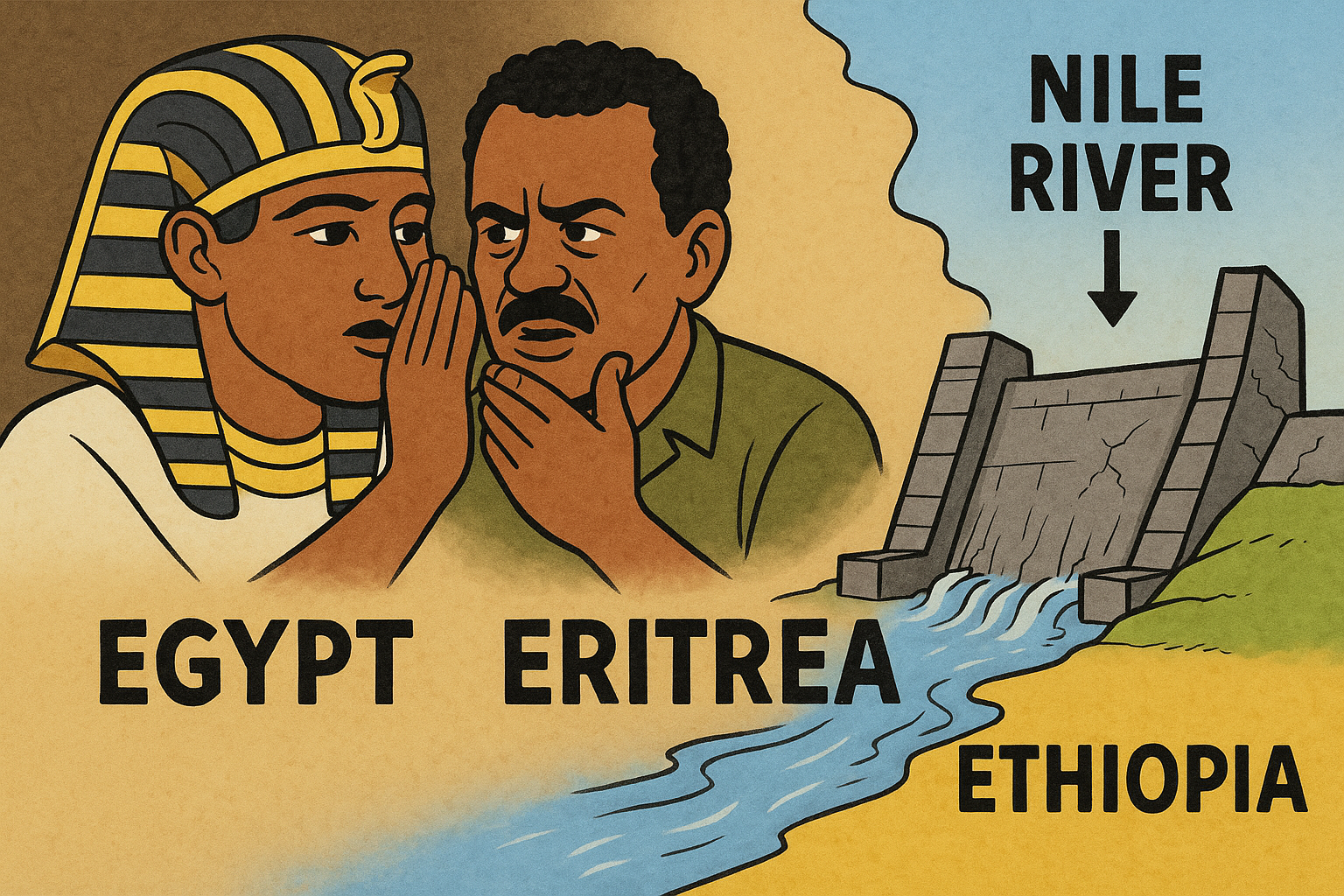
HAGR acknowledges that Egypt, Eritrea, Somalia, Djibouti, Sudan and other actors have their own interests in water governance, maritime security and sovereignty, and says these must be understood realistically. The publication argues that Ethiopia should neither dismiss the legitimate concerns of neighbouring states nor subordinate its own interests to the preferences of others.
It also draws a legal distinction between the responsibilities of Red Sea coastal states in maritime governance and the commercial interests of landlocked Ethiopia in securing access to trade. According to the editorial, Ethiopia’s pursuit of negotiated access does not require undermining the sovereignty or territorial integrity of coastal states. HAGR calls for regional economic diplomacy linking trade, investment, port development, logistics and collective maritime security.
Five priorities for the forum
The editorial sets out five priorities it says should guide the forum’s development:
- Institutional independence and credibility: transparent governance, qualified leadership, accountable financial management and protection from partisan interference.
- Legal preparedness and historical documentation: evidence based research that distinguishes legal rights, historical claims, political positions and economic interests.
- International partnerships: joint research, professional exchanges, academic conferences and sustained policy dialogue.
- National participation: involvement of professionals, business communities, farmers, young researchers, universities and the diaspora.
- Peaceful regional cooperation: practical solutions on water cooperation, trade corridors, port development and maritime security.
Judged by results
HAGR cautions that the forum’s success should not be measured by registration documents, announcements or inaugural ceremonies. It says the real test will be the quality of its research, the independence of its work, the credibility of its partnerships and its contribution to peaceful diplomatic engagement. In the publication’s words, registration provides the legal foundation, while research establishes credibility and measurable contributions establish institutional value.
The editorial concludes that Ethiopia must build the intellectual and institutional capacity not only to state its national interests but also to explain, defend and advance them before the international community. It envisions the Nile as a foundation for shared prosperity and the Red Sea as a corridor for trade, integration and collective security.
The editorial was published by HAGR in London on November 10, 2026.