
Horn News Hub | November 15, 2026 | Addis Ababa
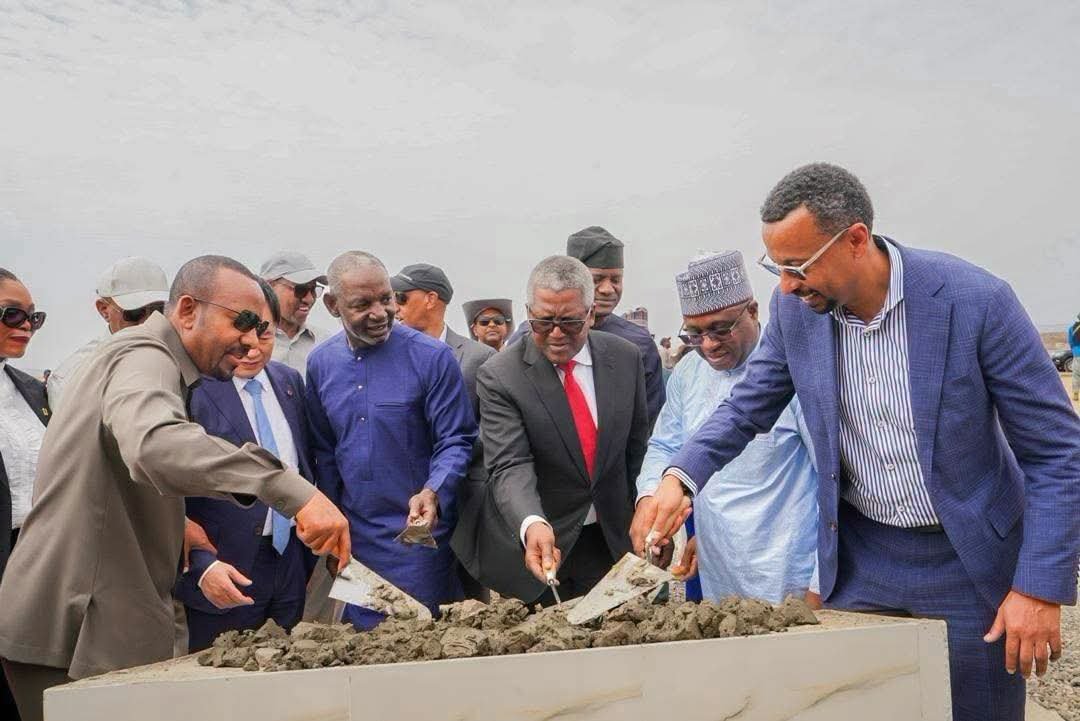
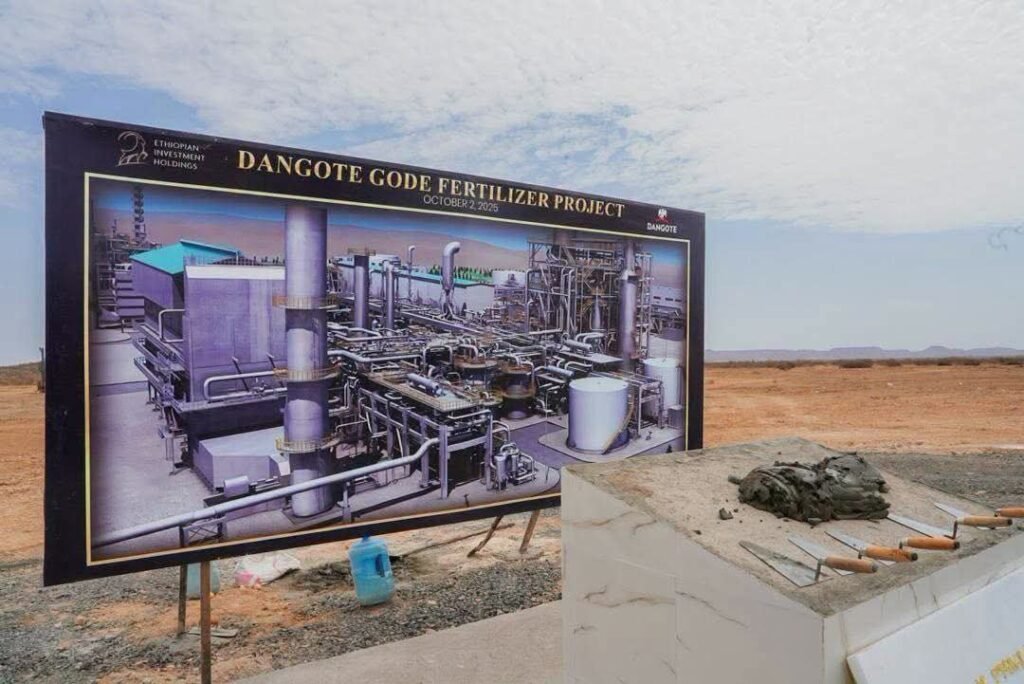
Ethiopia is constructing a large-scale urea fertilizer production plant in Gode, Somali Regional State, in partnership with Nigeria’s Dangote Group, with an annual production capacity of three million metric tonnes.
The project, whose construction began in August last year, is expected to play a significant role in strengthening Ethiopia’s domestic fertilizer production capacity, reducing dependence on imports and supporting agricultural productivity.
Agriculture remains a major pillar of Ethiopia’s economy, contributing to food security, supplying raw materials to industries and generating foreign exchange. However, the country’s agricultural development has long faced challenges related to the availability, affordability and timely distribution of fertilizer.
The Gode fertilizer project is intended to address some of these challenges by establishing domestic production capacity and reducing the country’s exposure to fluctuations in international fertilizer prices and disruptions in global supply chains.
Once operational, the facility is expected to supply a substantial share of Ethiopia’s domestic fertilizer requirements. Its planned annual capacity of three million metric tonnes could also create opportunities for exports to neighbouring countries and other regional markets, depending on domestic demand and production levels.

The project is also expected to support Ethiopia’s efforts to reduce foreign currency expenditure on fertilizer imports. The country has traditionally relied heavily on international suppliers to meet its agricultural input requirements, exposing the sector to external market conditions and geopolitical disruptions.
Improved access to fertilizer could contribute to higher agricultural productivity by helping farmers obtain essential inputs at more predictable prices and within appropriate planting seasons. It could also support the expansion of irrigation-based and cluster farming initiatives aimed at increasing agricultural output.
Beyond agriculture, the project is expected to contribute to the development of Ethiopia’s chemical and manufacturing industries. By using domestic natural gas resources and other locally available inputs, the facility could support greater value addition and strengthen links between the country’s energy and industrial sectors.
Construction and subsequent operations are also expected to generate direct and indirect employment opportunities for Ethiopian citizens. The development could further encourage investment in agro-processing and related industries by improving the availability of agricultural inputs and strengthening the country’s industrial supply chain.
The Gode project forms part of Ethiopia’s broader efforts to expand domestic manufacturing, strengthen economic self-reliance and reduce dependence on imported industrial and agricultural products.
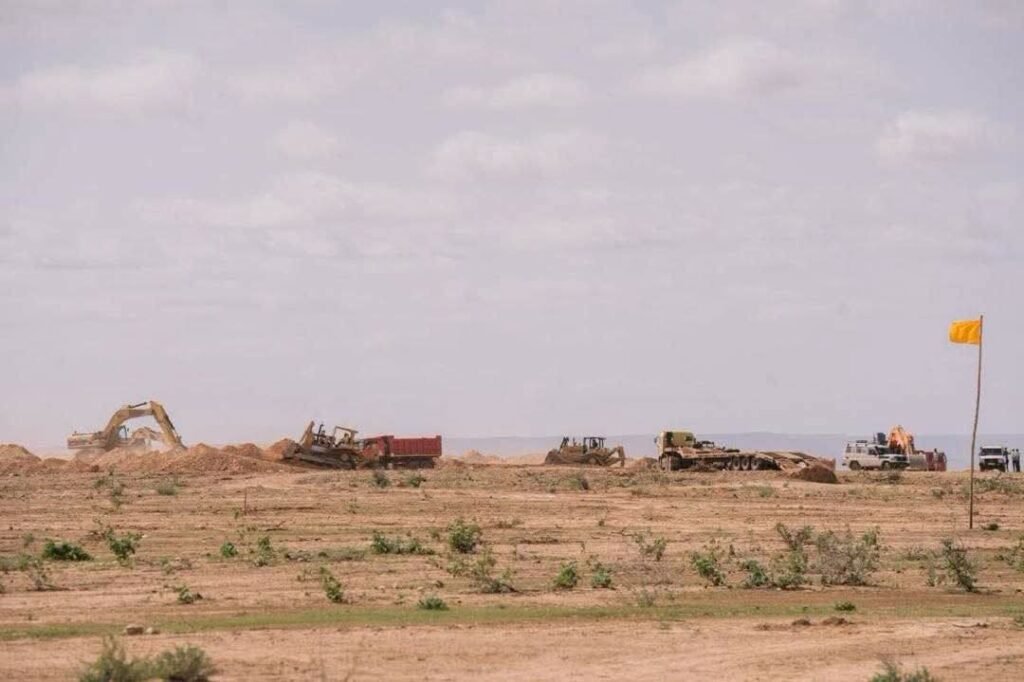
However, the project’s broader economic impact will depend on its timely completion, operational efficiency, access to reliable infrastructure, competitive production costs and the effective distribution of fertilizer to farmers across the country.
With an annual production capacity of three million metric tonnes, the facility represents a major industrial investment that could reshape Ethiopia’s fertilizer supply system and strengthen its position in the regional agricultural inputs market.