
Axum Flashpoint Raises Fears of Renewed Instability in Tigray
Addis Ababa, Ethiopia — April 24, 2026 | Horn News Hub
By HAGR
Recent political developments in Axum are drawing growing concern among observers and analysts, who warn that the situation could mark a dangerous turning point for Tigray’s fragile post-war stability.
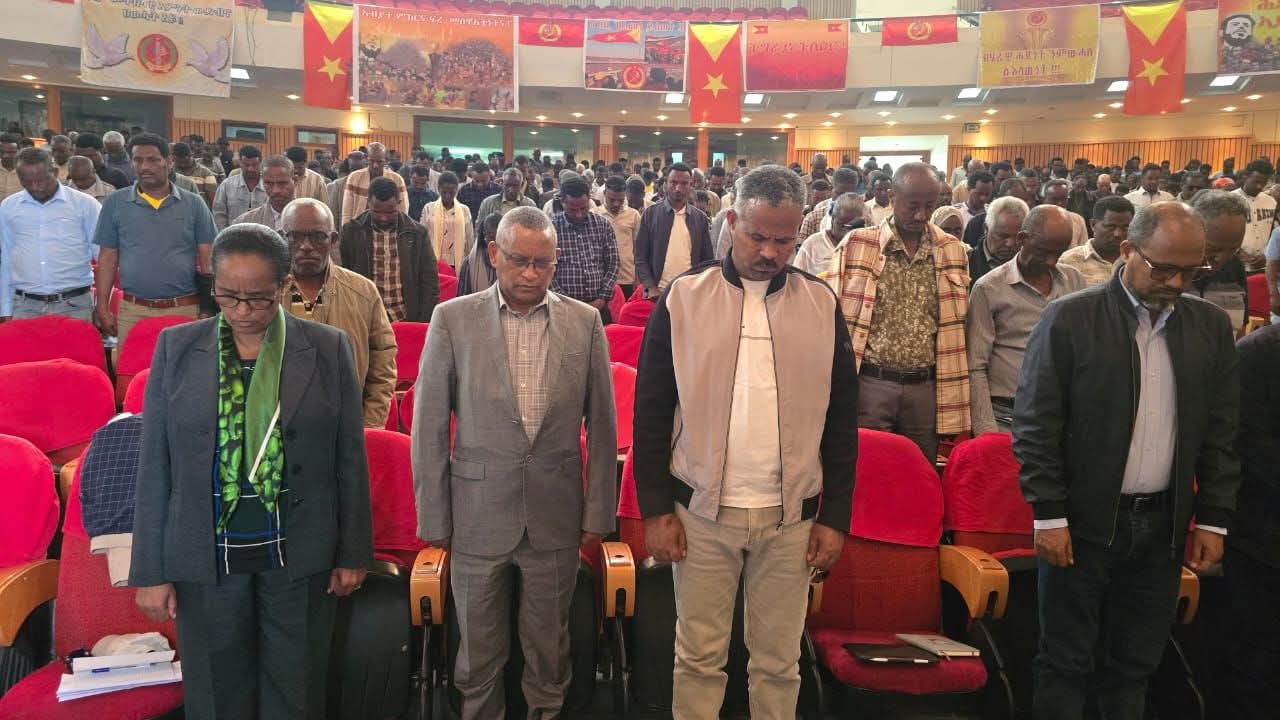
At the center of the tension is a move by the Tigray People’s Liberation Front Central Committee to convene in Axum and assert authority. Analysts describe the decision as a significant escalation rather than a routine political process, with potential implications for the broader security landscape.
Lieutenant General Tadesse Worede has publicly cautioned that such actions risk pushing the region back toward full-scale conflict. His warning reflects wider concerns that current political dynamics may be ignoring the fragile balance established after the war.
Many analysts see parallels with the lead-up to the Tigray War in 2020, when escalating political tensions ultimately gave way to a devastating military confrontation. The current trajectory, they argue, follows a similar pattern of rising defiance, political isolation, and potential miscalculation.
The developments in Axum are also viewed in the context of the Pretoria Peace Agreement, which formally ended large-scale hostilities. Observers warn that unilateral political moves could undermine the agreement and destabilize an already fragile recovery process.
Analysts point to several structural challenges facing the TPLF leadership. These include questions over public legitimacy, internal cohesion, diplomatic backing, and military capacity. Taken together, these factors suggest that the current political approach may face significant limitations in sustaining authority.
The unfolding crisis is also being interpreted as a broader leadership challenge. Experts highlight concerns over decision-making processes that may be influenced by internal consensus rather than shifting realities on the ground. There are also indications of ideological rigidity and strategic overreach, particularly in efforts to reassert centralized control in a complex post-conflict environment.
The potential consequences are significant. Observers warn of risks to the peace framework, the possibility of renewed multi-front conflict, and deepening divisions within Tigray’s political and military structures. Humanitarian conditions, already strained, could deteriorate further if instability intensifies.
Attention is also turning to the role of the interim administration, where hesitation or delayed decision-making is seen as a risk factor. Analysts note that in volatile situations, a lack of clear direction can create space for escalation and reduce the chances of maintaining stability.
Regional dynamics further complicate the situation. Some observers point to the influence of Eritrea, suggesting that external pressures may be contributing to internal fragmentation. While interpretations differ, the broader concern centers on how regional interests intersect with local political tensions.
As of April 2026, Tigray faces a critical moment. The durability of the peace framework is under strain, political leadership remains fragmented, and the risk of renewed conflict is increasingly part of the conversation among analysts.
For many, the concern is not simply about current events but about the possibility of repeating past patterns. The coming weeks are likely to be decisive in determining whether the region stabilizes or moves closer to another cycle of confrontation.
Editor’s Disclaimer:
The views and opinions expressed in articles published by Horn News Hub are those of the authors and do not necessarily reflect the official position or editorial stance of Horn News Hub. Publication does not imply endorsement.