
Addis Ababa, Ethiopia — May 9, 2026 | Horn News Hub
By Chekole Alemu
The conclusion of the inaugural African Social Media Influencers Summit (ASMIS) 2026 in Addis Ababa marks more than the end of a two-day gathering. It represents the beginning of a continental digital movement aimed at redefining how Africa tells its own story to the world.
For decades, the African narrative in global media spaces was largely shaped by outsiders, often dominated by conflict, poverty, migration crises, and instability. ASMIS 2026 challenged that pattern directly. The summit brought together more than 200 influencers, digital entrepreneurs, communication strategists, policymakers, and content creators from across Africa with a shared mission: to build an African-owned digital ecosystem capable of shaping the continent’s image, economic future, and cultural influence.
Co-organized by Pulse of Africa and AGA Tech Enterprise, the summit transformed Addis Ababa into what many participants described as a “continental hub” for African digital collaboration.
Held at the historic Adwa Victory Memorial Museum, the event carried strong symbolic meaning. The venue itself represents African resistance, sovereignty, and self-determination. Hosting Africa’s first continental influencers summit there reinforced the summit’s central message: Africans must reclaim ownership of their narrative in the digital era.
Beyond a Summit: Building a Pan-African Digital Infrastructure
Unlike many conferences focused on branding and visibility alone, ASMIS 2026 attempted to move beyond symbolic speeches. Discussions consistently focused on creating long-term continental structures for digital collaboration.
Participants repeatedly emphasized that Africa’s digital creators are no longer merely entertainers or online personalities. They are increasingly becoming economic actors, cultural diplomats, tourism promoters, political communicators, and informal ambassadors of African identity.
The summit demonstrated a growing realization that social media influence now holds geopolitical significance. In an era where digital narratives shape tourism, foreign investment, diplomacy, elections, and international public opinion, African creators are beginning to understand the strategic power they collectively possess.
This shift was captured strongly in remarks by Gemeda Olana, who stated that social media has not only changed communication but has “rewritten the rules of power.”
That message became one of the defining themes of the summit.
Day One: Showcasing Ethiopia’s Development and Innovation Agenda
The summit opened with extensive field visits across Addis Ababa aimed at exposing African creators to Ethiopia’s urban transformation projects, innovation centers, tourism destinations, and social development initiatives.
One of the key destinations was the Ethiopian Artificial Intelligence Institute, where participants explored Ethiopia’s ambitions in artificial intelligence and digital innovation.
The visit reflected a broader effort to position Ethiopia as an emerging technological and innovation center within Africa. For many creators attending the summit, the AI institute symbolized a changing African reality often absent from international coverage.
Delegates also toured Addis Ababa’s expanding corridor development projects, tourism sites, and urban modernization programs.
Among the most impactful visits was the Gullele Integrated Injera Center near Entoto.
The center stood out not simply as a production facility but as a social transformation project. Built to empower low-income mothers previously dependent on collecting and selling firewood, the initiative represents a model of economic inclusion tied to dignity and sustainability.
Equipped with modern electric baking systems capable of producing up to 6,000 injera daily, the center now supplies institutions including universities, hospitals, and hotels. For many summit participants, the project illustrated how localized development initiatives can become powerful storytelling models for Africa.
The visit also aligned with the summit’s broader argument that Africa possesses numerous underreported success stories capable of reshaping global perceptions if amplified effectively through digital platforms.
Participants further toured the Addis International Convention Center and the Addis Sports Park, both presented as symbols of Ethiopia’s infrastructure ambitions and growing role as a continental conference and sports destination.
Day Two: Africa’s Digital Future Takes Center Stage
On May 8, the summit formally convened at the Adwa Victory Memorial Museum, opening with the singing of the African Union anthem, setting a distinctly pan-African tone for the discussions that followed.
The first major panel focused on artificial intelligence and its implications for African content creators under the provocative theme:
“AI: Power of the Future or a Risk to Our Survival?”
The discussion reflected growing uncertainty across Africa’s creative industries regarding AI’s rapid expansion.
Panelists explored both opportunity and risk.
On one hand, AI was presented as a revolutionary tool capable of democratizing content creation, expanding educational access, improving productivity, and enabling African creators to compete globally with limited resources.
On the other hand, concerns emerged regarding digital dependency, algorithmic bias, misinformation, cultural erasure, job displacement, and Africa’s limited role in shaping global AI governance frameworks.
A recurring concern throughout the panel was whether Africa would become merely a consumer of foreign AI systems or actively participate in building its own technological future.
The debate highlighted a wider continental anxiety: Africa risks falling behind in the next technological revolution unless governments, innovators, and digital creators collaborate strategically.
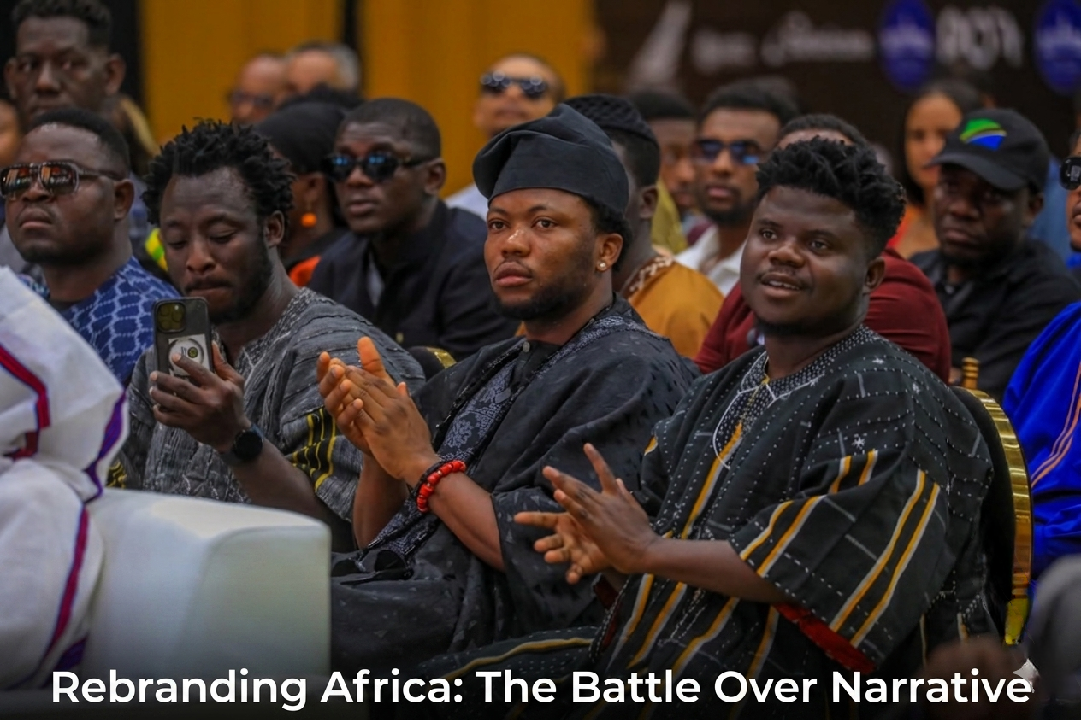
Rebranding Africa: The Battle Over Narrative
The summit’s second major panel shifted toward one of the event’s central themes: how African influencers can reshape global perceptions of the continent.
Discussions focused on media stereotypes, government regulation, security restrictions, visa barriers, and the challenges African creators face while working across borders.
Prominent Ghanaian influencer Wode Maya became one of the summit’s strongest voices for borderless African mobility.
Drawing from personal experience, he recounted being arrested in some countries while filming content, highlighting the difficulties African creators face despite advocating for continental visibility and tourism.
His message resonated strongly with participants.
Wode Maya argued that Africa’s image for decades has been filtered through narratives centered on war, famine, and instability. He stressed that a new generation of African digital storytellers is now challenging those portrayals by documenting innovation, culture, entrepreneurship, tourism, and everyday African success stories.
He further called for easier movement across Africa, arguing that visa restrictions remain one of the biggest barriers to building a truly interconnected African digital ecosystem.
The discussion connected directly with broader African Union ambitions surrounding continental integration and free movement.
Influencers as Cultural Diplomats
Another defining moment came from Hasset Dereje, who emphasized that African influencers carry responsibilities beyond commercial branding.
According to her, African creators are not simply promoting products online. They are actively dismantling stereotypes about the continent.
Her remarks touched on an important psychological dimension often overlooked in discussions about African development: internal perception.
Hasset argued that Africans themselves must first believe in the value of their continent before expecting the world to change its perception of Africa.
Her statement reflected one of the summit’s deepest themes: the struggle over Africa’s image is not only external but also internal.
The summit repeatedly returned to this question of mindset.
Can Africa build confidence in its own identity, creativity, innovation, and future?
Many participants argued that social media now provides the first truly democratized platform through which Africans can answer that question for themselves without waiting for validation from traditional Western media institutions.
The Political and Economic Significance of ASMIS
Beyond influencer culture, ASMIS 2026 revealed how governments and private sector actors increasingly view digital creators as strategic development partners.
This marks a major shift in how African states are engaging with the digital economy.
Influencers are now being recognized as contributors to tourism growth, investment attraction, public diplomacy, youth mobilization, and continental branding.
The summit also demonstrated Ethiopia’s growing interest in positioning itself as a center for continental dialogue, innovation, and digital diplomacy.
Hosting creators with a combined audience reaching hundreds of millions across Africa carries significant soft power implications for Addis Ababa.
At the same time, ASMIS exposed unresolved tensions.
Discussions surrounding regulation, security restrictions, online freedom, misinformation, and cross-border mobility revealed the complex realities facing Africa’s digital future.
While creators increasingly possess influence, many still operate within fragile regulatory environments where digital freedoms remain inconsistent across countries.
What Comes Next: Annual Summit and Continental Awards
Perhaps the summit’s most important announcement came from organizers themselves.
Gemeda Olana confirmed that ASMIS will become an annual continental event.
In addition, organizers unveiled plans to launch African Social Media Awards aimed at recognizing outstanding digital creators across multiple categories.
The planned awards system could become a major institutional development for Africa’s digital industry.
If implemented effectively, the awards may help establish continental standards for digital storytelling, innovation, ethical influence, tourism promotion, education content, cultural preservation, and youth empowerment.
It also signals a shift toward formalizing Africa’s creator economy into a more organized continental sector rather than a fragmented collection of individual influencers.
The announcement indicates that ASMIS is positioning itself not as a one-time conference but as the foundation of a long-term African digital movement.
A Turning Point for Africa’s Digital Identity
The true significance of ASMIS 2026 may only become fully visible in the coming years.
But the summit already demonstrated one clear reality: Africa’s digital generation is no longer waiting for permission to define itself.
The conversations in Addis Ababa revealed a continent increasingly aware that narrative itself is power.
Control over storytelling influences economics, politics, diplomacy, tourism, culture, and global influence.
ASMIS 2026 showed that African creators are beginning to organize around that understanding collectively.
What emerged in Addis Ababa was not simply an influencer summit.
It was the early architecture of a continental digital consciousness.
Editor’s Disclaimer:
The views and opinions expressed in articles published by Horn News Hub are those of the authors and do not necessarily reflect the official position or editorial stance of Horn News Hub. Publication does not imply endorsement.