

A Commander at War With His Own Homeland
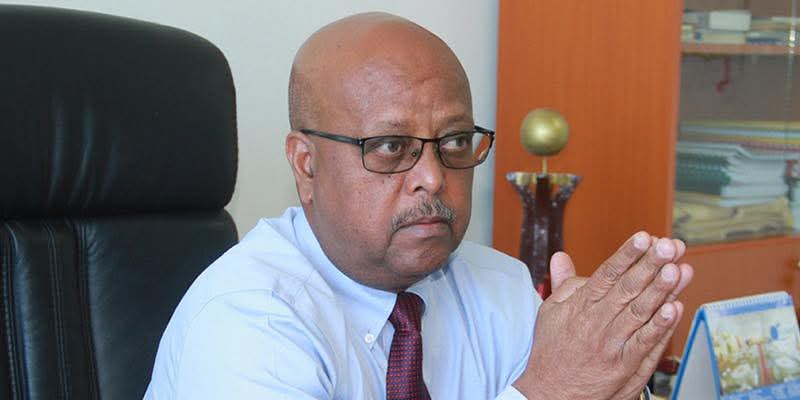
In the fragile and volatile aftermath of war in Tigray, Brigadier General Megbey Haile has become a controversial figure in public debate about the region’s military leadership and the management of natural resources.
Once entrusted with protecting one of Tigray’s most exposed frontiers, the general is now widely accused by critics and observers of being associated with the expansion of an illegal gold economy operating across Northwestern Tigray. Allegations circulating in political and media discussions claim that mining activities in the area have grown rapidly under military jurisdiction, raising concerns about governance, environmental protection, and accountability.
For many residents and commentators, the issue goes beyond politics. They describe a deep sense of betrayal tied to the belief that institutions meant to defend the population may now be linked to the exploitation of the region’s natural wealth.
Public attention intensified after a series of recent media interviews by Megbey Haile began circulating widely on social media. In those interviews, viewers observed remarks that critics described as dismissive and confrontational, particularly toward civilians who had fled Tigray amid fears of renewed conflict.
Some commentators summarized the reaction using a phrase that has spread widely online: “a little mind with a big mouth.” The phrase reflects frustration among critics who argue that the tone of the interviews lacked the restraint and humility expected from senior military leadership during a fragile postwar recovery period.
Analysts note that leadership in post-conflict environments often demands caution and sensitivity, especially when communities remain traumatized by war, displacement, and economic collapse.
Arrogance and the Question of Competence
Observers examining the interviews say the tone and content of Megbey Haile’s remarks reflect what psychologists sometimes describe as cognitive overconfidence. This pattern occurs when individuals with limited expertise overestimate their knowledge or authority.
According to analysts, such behavior can manifest through exaggerated confidence, hostility toward criticism, dismissal of evidence, and aggressive displays of authority.
Critics argue that instead of offering a careful strategic assessment of Tigray’s fragile security environment, the interviews frequently turned into rhetorical statements and defensive responses to public criticism.
Particularly controversial were comments criticizing civilians who left the region due to fears of renewed war. For many residents, those departures were driven by memories of recent conflict, widespread destruction, and the possibility that violence could return.
For Tigrayans who endured the war, fear of renewed fighting remains deeply rooted. Many families experienced displacement, famine conditions, and extensive civilian casualties.
Political observers also point to growing concerns about regional security dynamics. Discussions within the region have increasingly referenced the potential involvement of actors such as the government of Eritrea, factions within the Tigray People’s Liberation Front, and irregular armed groups sometimes referred to as “Ximdo.”
Within that context, critics argue that blaming civilians for leaving their homes overlooks the insecurity that continues to shape everyday life.
Allegations of a Militarized Gold Economy
One of the most serious allegations surrounding Northwestern Tigray involves the growth of unregulated gold mining operations.
Local observers and political analysts claim that mining activity has expanded significantly in areas under military influence. These operations are reportedly conducted outside formal regulatory frameworks and often rely on highly hazardous chemicals such as mercury and cyanide.
Environmental specialists warn that such substances can cause long-term damage when used without proper containment systems or environmental safeguards. Mercury and cyanide contamination can pollute rivers, groundwater, agricultural soil, livestock, and nearby communities.
The consequences can persist for decades. In some cases, environmental damage from poorly managed mining operations becomes permanent.
Critics therefore describe the issue not only as illegal resource extraction but also as a potential environmental crisis affecting the long-term health of the region.
Networks Behind the Trade
Analysts studying the gold trade in Northwestern Tigray say the activity appears to have evolved beyond isolated illegal mining sites. Instead, it resembles a structured informal economy involving multiple actors.
According to observers, such systems often include armed protection units, cross-border smuggling routes, informal mining syndicates, and political facilitators.
When these networks operate under the shadow of military authority, analysts warn that the consequences can be severe. Security institutions originally established to defend citizens may become entangled in the management or protection of illicit resource flows.
For local communities still recovering from war, the perception that certain elites are benefiting from natural resources while ordinary citizens struggle to rebuild has generated deep resentment.
In public discourse, critics increasingly describe the situation as the emergence of a “warlord economy,” where military authority intersects with private resource extraction.
Questions About Military Capacity
Megbey Haile’s interviews also addressed the readiness of Tigray’s military forces. In several remarks, he expressed confidence in their ability to confront advanced threats, including drone warfare.
Security analysts, however, say such claims require careful scrutiny. Modern counter-drone capabilities typically require sophisticated technological infrastructure, including integrated radar systems, electronic warfare platforms, layered air-defense networks, and substantial financial investment.
Developing such capabilities normally takes years of technological development and billions of dollars in funding.
Analysts therefore caution that declarations of military strength in fragile postwar settings may reflect political messaging rather than verified operational capacity.
Wealth, Inequality, and Public Anger
Another source of growing public concern relates to allegations that individuals connected to illegal gold extraction have accumulated significant wealth.
In a region still recovering from massive wartime destruction, widespread poverty, and damaged infrastructure, such reports have fueled anger among many residents.
For critics, the contrast is stark. Communities struggle to rebuild homes and livelihoods while certain figures are believed to be profiting from mineral resources that legally belong to the public.
This perception has intensified debates about accountability, governance, and the future direction of Tigray’s political institutions.
A Test of Accountability
Political analysts increasingly describe the illegal gold economy as a major test for postwar governance in Tigray.
Beyond the economic dimension, the issue touches on military ethics, environmental protection, and the credibility of regional institutions.
Observers warn that if allegations of militarized resource extraction remain unaddressed, the consequences could be far-reaching. These include erosion of public trust, internal fragmentation within security institutions, long-term environmental damage, and significant economic losses for the region.
Tigray’s population endured years of devastating war, humanitarian crisis, and social disruption. Many residents now view the management of the region’s natural resources as a critical question for the future.
For them, the central issue is whether accountability will emerge within the region’s institutions, or whether the legacy of war will give way to new forms of political and economic predation.
At its core, the debate reflects a simple principle frequently invoked in discussions about leadership and public duty. Power carries an obligation to defend the homeland and its people, not to exploit them.
Editor’s Note: Dr: Dawit Tesfay
Institutional Policy and Religion–State Relations Researcher
Post-War Military, Security and Transitional Justice Affairs Expert