
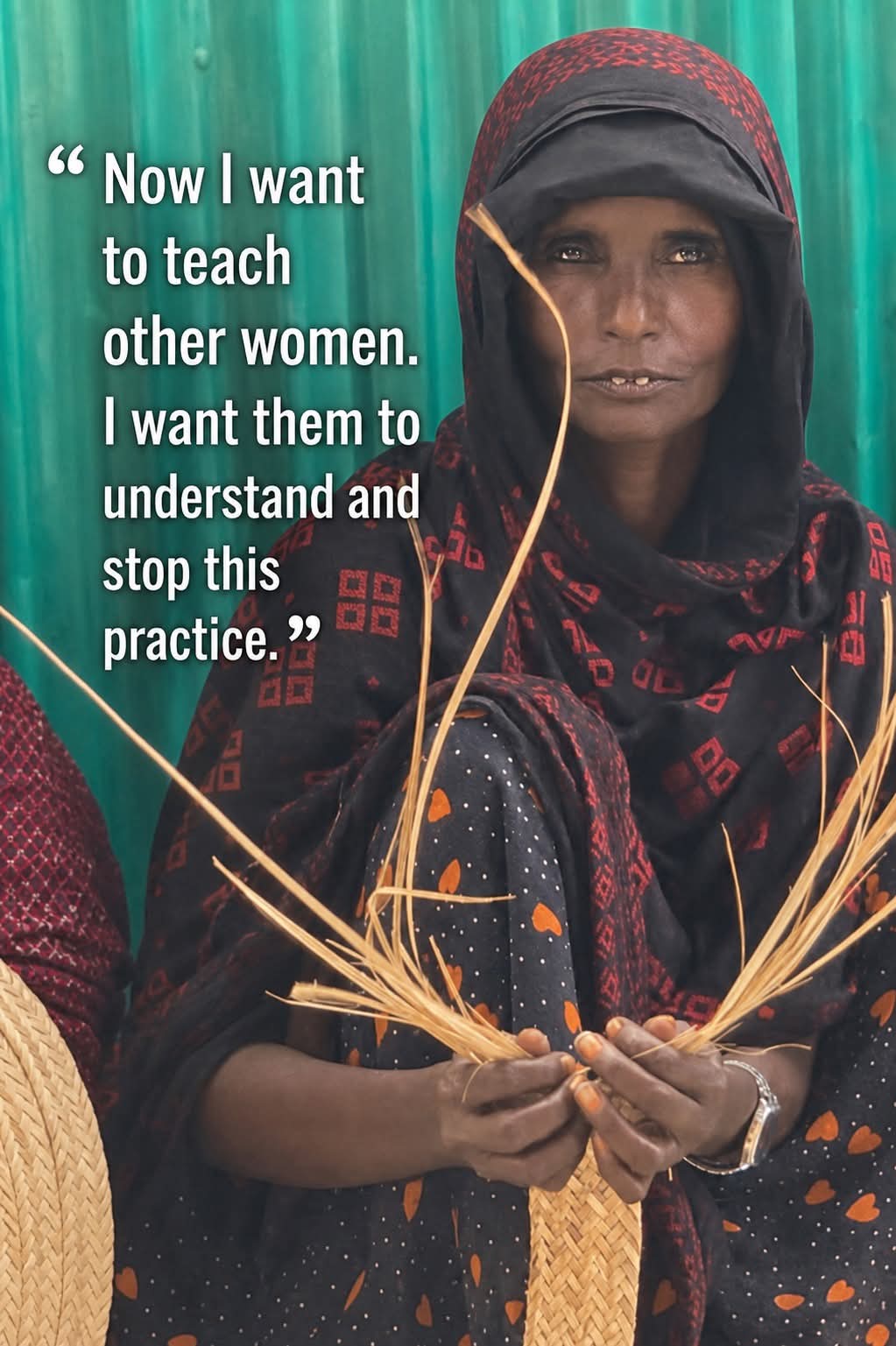
Semera, Afar Region — The transformation of Fatuman Dimsi from a trusted practitioner of female genital mutilation/cutting (FGM/C) to an outspoken advocate against the practice reflects a broader shift taking place in parts of Ethiopia’s Afar Region, where sustained community engagement is challenging deeply rooted social norms that have persisted for generations.
For years, Fatuman occupied a respected position within her community. Families entrusted her with performing FGM/C, believing the practice was an essential cultural obligation and a prerequisite for a girl’s acceptance into society. Like many women who carried out the practice, she did not initially perceive it as harmful. Instead, it represented a tradition inherited from previous generations and reinforced by collective expectations.
Her admission that she once believed the practice was “normal” illustrates one of the greatest challenges facing efforts to eliminate FGM/C. The continuation of the practice has often been driven less by individual intent to cause harm than by powerful social norms that define what communities consider acceptable. In such environments, abandoning the practice requires more than legal prohibition or public awareness campaigns; it requires communities to collectively reconsider long-held beliefs and expectations.
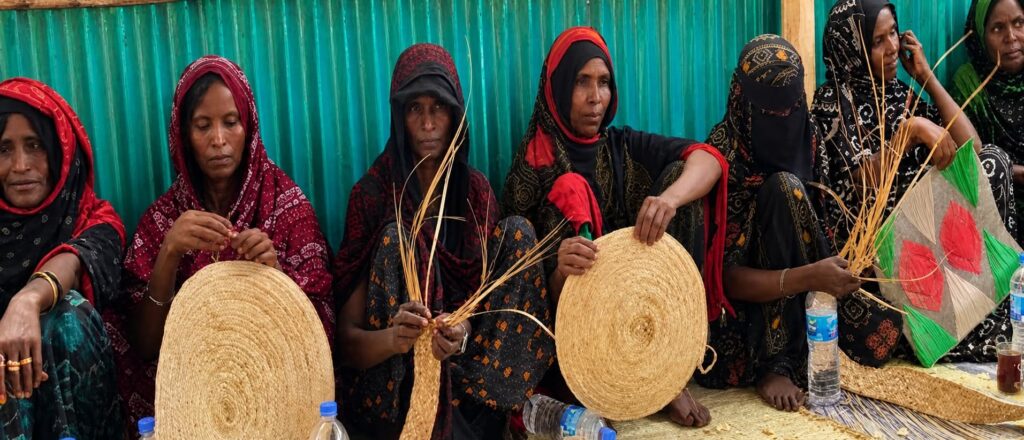
Fatuman’s change in perspective emerged through repeated participation in community dialogue, safe space discussions, and awareness-raising sessions that encouraged open reflection on the physical, emotional, and psychological consequences of FGM/C. Rather than approaching practitioners with blame or condemnation, these discussions created an environment where participants could examine the impacts of the practice with dignity and mutual respect. The gradual process of dialogue allowed individuals to question traditions that had rarely been challenged within their own communities.
Her reflection “Why am I deciding for these girls to suffer?” marked a turning point. It signified a transition from preserving tradition to prioritizing the rights, health, and dignity of girls. Such personal transformation is significant because it reflects a change rooted in conviction rather than compliance. Research and experience from community-based protection programs consistently demonstrate that behavioral change is more sustainable when individuals internalize new values instead of responding solely to external pressure.
Today, Fatuman has abandoned the practice and now encourages other women and families to do the same. Her voice carries particular influence because it comes from lived experience. Former practitioners often possess a unique ability to engage communities, address misconceptions, and demonstrate that abandoning harmful practices does not mean abandoning cultural identity or community cohesion. Their experiences help build trust and encourage dialogue among those who may otherwise resist messages delivered by outsiders.
Her story also underscores the central role of women in driving social transformation. While women have often been expected to uphold traditional practices, they are equally capable of leading efforts to redefine those traditions in ways that protect children and promote gender equality. When equipped with knowledge, support, and opportunities to participate in community decision-making, women become powerful advocates for lasting change.
This transformation has been supported through a child protection and gender-based violence prevention intervention implemented by ASDEPO in Berhale and Erebti Woredas over the past 20 months with funding from Global Affairs Canada through Save the Children International. The initiative has focused on strengthening community dialogue, creating safe spaces, promoting awareness of harmful practices, and encouraging collective responsibility for protecting children and preventing gender-based violence.
The initiative has also benefited from close collaboration with the Afar Region Women and Social Affairs Bureau, which continues to play a critical role in advancing efforts to eliminate FGM/C and other harmful traditional practices across the region. Through community mobilization, awareness campaigns, coordination with local administrations, engagement of religious and clan leaders, support for community conversations, and promotion of child protection and women’s rights, the Bureau has helped create an enabling environment for behavioral and social change. Its leadership has reinforced national commitments to ending harmful practices by ensuring that prevention efforts are integrated into local governance structures and community development initiatives.
The experience in Berhale and Erebti demonstrates that meaningful progress is achieved when government institutions, civil society organizations, community leaders, and local residents work together toward a shared objective. Partnerships between ASDEPO, the Afar Region Women and Social Affairs Bureau, Save the Children International, Global Affairs Canada, and community stakeholders have strengthened local ownership of the process, making change more likely to endure beyond the lifespan of the project.
Fatuman’s story stands as a powerful reminder that communities possess the capacity to transform themselves. Her journey illustrates that when dialogue replaces silence, information replaces misconceptions, and compassion replaces harmful tradition, women who once upheld practices such as FGM/C can become some of the strongest advocates for the protection of girls. It is through these community-led transformations, supported by committed institutions and sustained partnerships, that the vision of an Afar free from FGM/C moves closer to reality.This version follows a feature journalism style commonly used by UN agencies, NGOs, and development partners, combining storytelling with analysis while acknowledging the contributions of ASDEPO, the Afar Region Women and Social Affairs Bureau, Save the Children International, and Global Affairs Canada.