

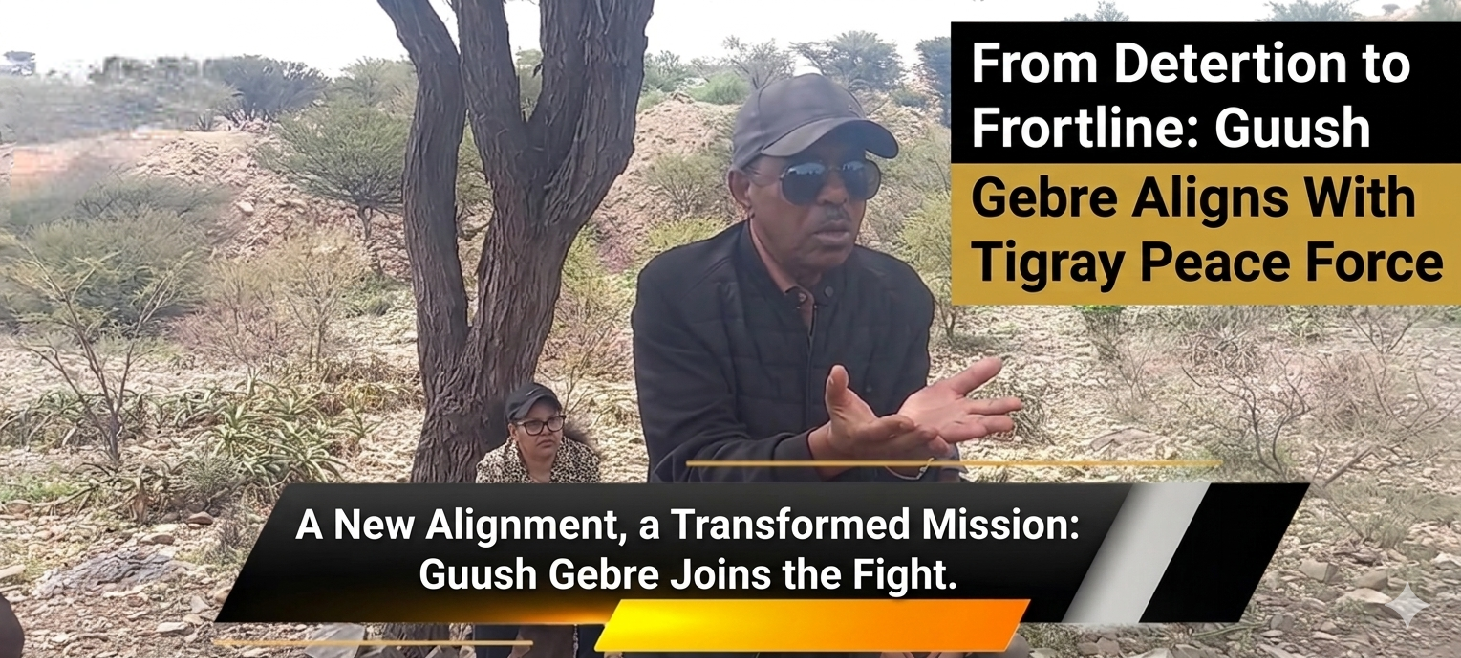
From Detention to the Frontlines: Major General Guush Gebre Joins Tigray Peace Force Amid Shifting Political Landscape
March 30, 2026፡(HNH)
By Chekole Alemu
Major General Guush Gebre has announced that he has joined the Tigray Peace Force, marking a significant development in the evolving political and military dynamics of post war Tigray.
Speaking from what supporters describe as liberated areas, the senior commander stated that he had decided to join the armed struggle after efforts to pursue a peaceful political path failed.
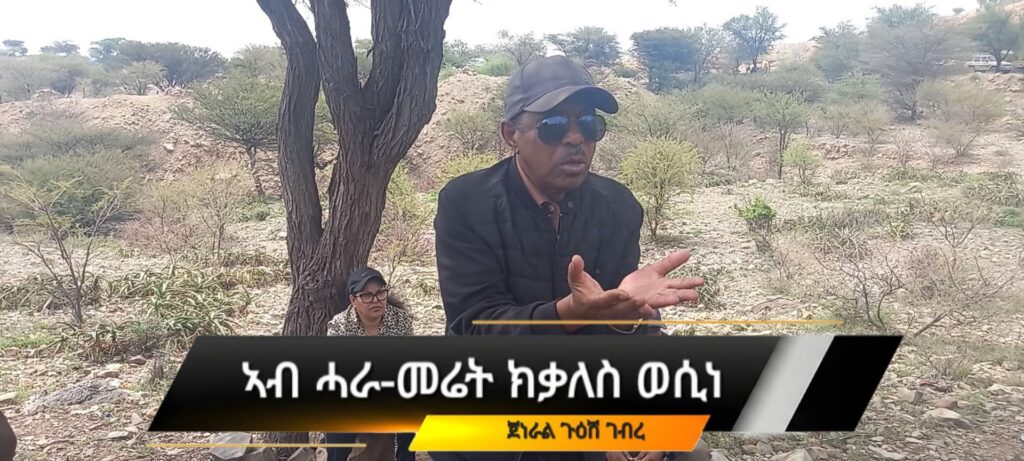
“I have decided to join the Tigray Peace Force and struggle alongside the Tigray army in the liberated areas,” he said.
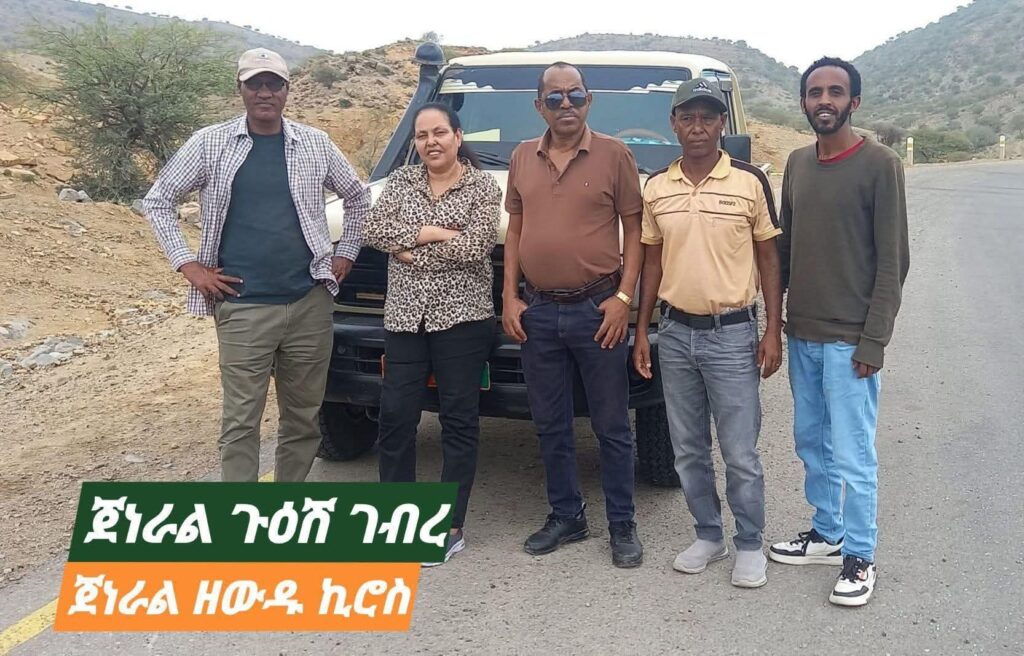
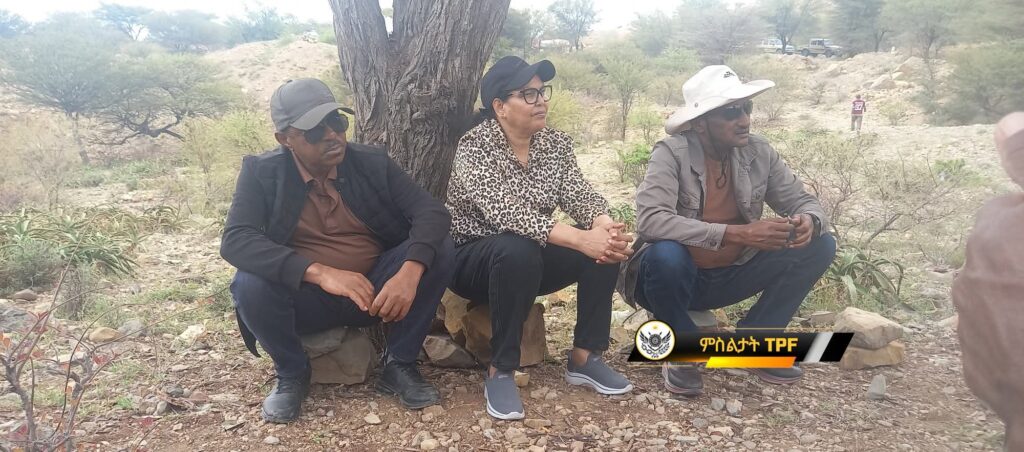
According to statements released by the Tigray Peace Force, Major General Guush Gebre and General Kebede Fikadu recently moved to areas under the control of the force and were received by fighters during a visit to front line positions on March 30, 2026. The announcement said both generals have now formally joined the force and begun organized operations.
Their arrival adds experienced senior leadership to the Tigray Peace Force, which is currently led by Brigadier General Gebre Egzabhier Beyene, widely known as Wedi Antiru, alongside female General Zewdu Kiros and other commanders.
From Silence to Political Reemergence
The move comes weeks after Guush Gebre reappeared publicly following a controversial disappearance that had triggered concern among Tigrayan communities and observers.
In early March 2026, Guush Gebre appeared in a diaspora organized Zoom forum after what supporters described as a period of detention and political pressure. The event, organized by the diaspora advocacy group I Can’t Be Silent About Tigray, quickly gained attention and sparked debate over Tigray’s political future.
His appearance marked the first public statement since his disappearance, which had raised questions about internal tensions within Tigray’s political and military structures.
Observers described the incident as emblematic of deeper institutional strain. Security analysts noted that the detention of a senior military figure outside formal legal procedures reflected broader governance challenges in post war Tigray.
Following public pressure and a social media campaign, Guush Gebre was later released on bail reportedly set at 60,000 birr. His release further intensified political debate about accountability, leadership and the direction of Tigray’s reconstruction.
Veteran of Long Military Struggles
Major General Guush Gebre is considered one of the experienced commanders shaped by decades of armed struggle. He participated in the 17 year insurgency that brought the Tigray People’s Liberation Front to power in 1991 and later served in senior military roles within Ethiopia’s defense establishment.
During the two year war in northern Ethiopia from 2020 to 2022, Guush Gebre was among the senior commanders involved in Tigray’s military operations. Sources describe him as playing a role in coordinating defense efforts during some of the most intense phases of the conflict.
His military background and experience have made his recent political positioning particularly significant for observers monitoring internal realignments in Tigray.
Escape to Addis Ababa and Political Revelations
After the war, Guush Gebre reportedly left Tigray and traveled to Addis Ababa, where he began speaking more openly about internal disagreements and political tensions.
During this period, he made a series of remarks that drew attention across political circles. In public discussions, he criticized leadership structures and raised allegations about what he described as a covert alignment between the TPLF and Eritrea’s ruling party, the People’s Front for Democracy and Justice.
These claims generated debate and controversy, as analysts noted that accusations of cooperation between long time adversaries reflected the complexity of post war political dynamics.
His statements also highlighted growing dissatisfaction among some former commanders and political figures, many of whom have called for reform, accountability and new political leadership in Tigray.
Failed Peace Efforts and Decision to Join Armed Struggle
Despite his political engagement, Guush Gebre said his attempts to promote peaceful political solutions did not succeed.
He stated that after pursuing peaceful approaches without results, he decided to join forces in the liberated areas and continue the struggle alongside fellow commanders.
This decision marks a shift from political advocacy to renewed military involvement and reflects ongoing divisions over Tigray’s future direction.
A Growing Coalition of Former Commanders
Guush Gebre’s move also comes alongside General Kebede Fikadu and other senior officers who have recently joined the Tigray Peace Force.
The presence of multiple former commanders suggests the emergence of an alternative military and political alignment within Tigray.
The Tigray Peace Force leadership, including Brigadier General Gebre Egzabhier Beyene and General Zewdu Kiros, has increasingly attracted attention as new actors seek to influence Tigray’s post war trajectory.
Analysts say the addition of experienced commanders could reshape internal power balances, while also raising questions about fragmentation within Tigray’s political and military landscape.
A Turning Point in Tigray’s Political Contest
Guush Gebre’s transition from detention to political activism and now to armed alignment illustrates the fluid nature of post war Tigray.
The war may have ended, but debates over leadership, accountability and governance continue to shape the region’s future.
Whether the emergence of new alliances such as the Tigray Peace Force leads to political reform or deepens divisions remains uncertain. What is clear, however, is that the return of senior commanders like Major General Guush Gebre signals that the contest over Tigray’s future is entering a new and potentially decisive phase.
Editor’s Disclaimer:
The views and opinions expressed in articles published by Horn News Hub are those of the authors and do not necessarily reflect the official position or editorial stance of Horn News Hub. Publication does not imply endorsement.


