

Writen by Horn of Africa Geopolitical Review (HAGR)
How Influencer Power, Youth Media, and Digital Narratives Are Reshaping Ethiopia’s Global Image
Addis Ababa, Ethiopia — May 24, 2026 | Horn News Hub
The rise of digital diplomacy in Ethiopia represents more than a communications strategy. It reflects the emergence of a new geopolitical arena where influence, perception, identity, and national image are increasingly contested in real time through algorithms, viral storytelling, and mass audience engagement.
Across Africa and the wider Global South, governments are beginning to recognize that military strength and traditional diplomacy alone no longer determine international relevance. In the modern information age, perception itself has become a form of strategic power. Nations capable of shaping narratives, mobilizing digital communities, and projecting cultural confidence are gaining significant geopolitical advantages.
Ethiopia has gradually moved to understand and adapt to this transformation.
At the center of this shift stands a new generation of digital creators, influencers, and online personalities who operate not simply as entertainers, but as unofficial cultural ambassadors influencing how millions of people perceive Ethiopia, Africa, and the Horn of Africa.
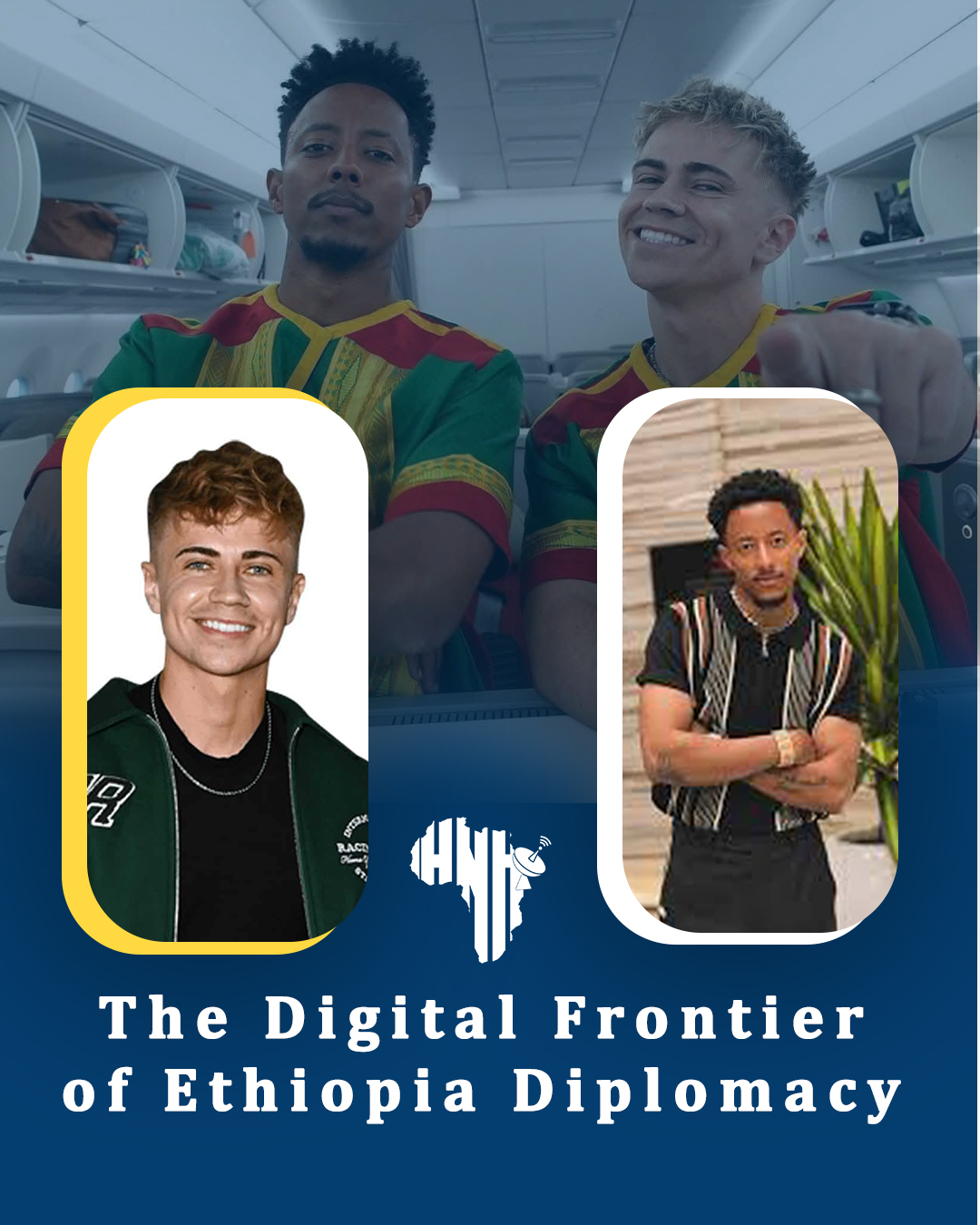
Among the most visible figures in this space is Ethiopian digital personality Adonay Berhane Hailemichael, whose growing online presence has positioned him among the most recognizable voices connected to Ethiopia’s youth-driven digital culture.
The Rise of a New Digital Power Class
For decades, African narratives were largely filtered through external institutions, foreign newsrooms, humanitarian frameworks, and crisis-focused reporting systems. Conflict, famine, instability, and poverty often became the dominant lenses through which the continent was viewed internationally.
The expansion of digital media disrupted that structure.
Platforms such as TikTok, Instagram, YouTube, and X fundamentally changed who controls visibility. For the first time in modern African history, young Africans gained the ability to communicate directly with global audiences without depending on traditional media gatekeepers.
This transformation created an entirely new geopolitical actor: the digital influencer as a strategic soft power asset.
In Ethiopia, the phenomenon has evolved rapidly. Creators like Adonay increasingly represent a hybrid form of influence that combines celebrity culture, youth mobilization, cultural branding, tourism promotion, diaspora engagement, and national image projection.
Their audiences frequently surpass those of traditional television platforms. Their content spreads faster than official government messaging. Their emotional influence among younger audiences often carries greater resonance than formal political communication.
This reflects a broader transformation in the architecture of modern influence.
Ethiopia’s Emerging Influencer Diplomacy Strategy
Ethiopia’s engagement with continental and international social media influencers reflects a wider strategic calculation centered on narrative control and perception management.
By hosting digital gatherings, creator forums, tourism campaigns, influencer summits, and Pan-African media collaborations, Ethiopia appears to be attempting to reposition itself internationally through visibility and cultural projection rather than conventional state propaganda.
This strategy operates across several interconnected dimensions.
Reclaiming the African Narrative
For years, Ethiopia’s international image was shaped heavily by conflict-centered reporting, humanitarian crises, political instability, and polarized geopolitical narratives.
Digital diplomacy seeks to counterbalance those portrayals.
Government institutions and associated media initiatives increasingly recognize that creators possess the ability to humanize Ethiopia beyond crisis headlines. Through lifestyle content, cultural storytelling, music, fashion, cuisine, tourism showcases, urban development imagery, and youth culture, digital creators present Ethiopia as modern, ambitious, dynamic, and globally connected.
Analysts describe this as a form of strategic narrative reconstruction aimed at replacing outdated stereotypes with aspirational imagery.
The broader objectives appear to include positioning Addis Ababa as a diplomatic and technological gateway to Africa, strengthening Pan-African cultural solidarity, and presenting Ethiopia as a cultural and economic power rather than solely a geopolitical crisis zone.
Addis Ababa as Africa’s Digital Capital
Under the administration of Mayor Adanech Abebe, Addis Ababa has increasingly projected itself as a metropolitan center associated with diplomacy, infrastructure expansion, innovation, and digital transformation.
Urban redevelopment projects, transport corridors, public spaces, hospitality expansion, and modernization initiatives increasingly function not only as development programs, but also as visual geopolitical instruments.
In the era of social media, cities compete visually for global attention.
Drone footage, skyline imagery, influencer livestreams, international conferences, cultural festivals, and tourism campaigns all contribute to a larger competition for visibility within the global attention economy.
Analysts note that Addis Ababa is no longer competing only regionally. It is increasingly competing algorithmically.
The Creator Economy as National Strategy
One of the most important dimensions of Ethiopia’s digital diplomacy strategy is the recognition that the creator economy extends beyond entertainment and increasingly functions as economic infrastructure.
Ethiopia’s large youth population represents one of Africa’s most significant demographic forces. Digital platforms now offer pathways for entrepreneurship, branding, commerce, tourism marketing, international monetization, and diaspora engagement.
This creates strategic opportunities in several areas, including youth employment, tourism promotion, export branding, digital entrepreneurship, foreign investment visibility, and Pan-African media influence.
Governments across the world increasingly view creators as decentralized media institutions capable of shaping national narratives at scale. Ethiopia appears to be moving in a similar direction.
The Symbolic Power of Adonay Berhane Hailemichael
The rise of Adonay Berhane Hailemichael reflects more than internet popularity. It illustrates the emergence of a new form of Ethiopian digital identity.
Widely recognized for motivational content, cultural messaging, and youth engagement, Adonay has become one of the strongest symbols associated with Ethiopia’s expanding digital culture.
His influence operates on several levels simultaneously.
In cultural representation, he presents Ethiopian identity with confidence, humor, accessibility, and modern style to international audiences.
In diaspora engagement, his content resonates emotionally with Ethiopian communities abroad and helps maintain cultural connection through digital storytelling.
In youth mobilization, his platform encourages younger audiences to view social media as a tool for creativity, opportunity, entrepreneurship, and self-expression.
From a soft power perspective, his visibility indirectly contributes to Ethiopia’s broader cultural relevance internationally.
In modern geopolitics, visibility itself increasingly functions as a form of power. Countries that dominate digital attention often shape cultural trends, investment interest, and international curiosity.
The Arrival of Global Digital Figures in Ethiopia
The arrival of globally recognized TikTok creator Dylan Page, widely known as “News Daddy,” has been viewed by observers as a symbolic moment within Ethiopia’s expanding digital diplomacy efforts.
The significance lies in the geopolitical value of attention.
When major online personalities travel to Ethiopia, millions of global viewers are exposed to images, conversations, urban spaces, and cultural experiences they may never encounter through traditional international media coverage.
This creates a significant strategic effect. Ethiopia becomes visible outside the framework of crisis-oriented narratives.
That shift carries considerable importance.
Countries invest heavily in public diplomacy campaigns aimed at reshaping international perception. Influencers increasingly achieve similar outcomes through audience trust, relatability, and viral reach.
The Realities and Contradictions of Digital Diplomacy
Despite its growing effectiveness, Ethiopia’s digital diplomacy strategy also faces structural contradictions and criticism.
Some observers argue that international content frequently focuses on highly developed zones of Addis Ababa while giving less visibility to broader political, economic, and security complexities across the country.
This creates an ongoing tension between curated digital optimism and uneven realities on the ground.
The polished online image of a modernizing Ethiopia does not always fully align with conditions experienced across all regions.
Analysts caution that if digital diplomacy becomes excessively performative without corresponding structural reforms, balanced development, governance credibility, and nationwide stabilization, international audiences may eventually perceive a widening disconnect between branding and reality.
Soft power tends to be most effective when supported by institutional credibility and long-term structural strength.
Otherwise, narrative management strategies risk becoming vulnerable to backlash and skepticism.
Hybrid Diplomacy and the New Geopolitical Model
Ethiopia’s evolving digital strategy increasingly reflects what analysts describe as hybrid diplomacy.
This model merges traditional state diplomacy with media influence, public relations, cultural projection, diaspora mobilization, digital engagement, and real-time social media communication.
In this environment, diplomacy no longer occurs only through embassies or international summits.
It increasingly unfolds through TikTok feeds, livestreams, podcasts, viral videos, digital campaigns, and algorithm-driven information ecosystems.
The geopolitical battlefield has become psychological as much as territorial.
Energy Power and Digital Power
Ethiopia’s broader geopolitical approach increasingly combines two major pillars.
The first is energy diplomacy, centered around the Grand Ethiopian Renaissance Dam and regional electricity integration projects.
The second is digital diplomacy, focused on narrative control, investment promotion, tourism visibility, and Pan-African cultural projection.
Together, these strategies represent a modern hybrid model of state power.
Energy diplomacy creates physical regional leverage.
Digital diplomacy creates psychological and cultural leverage.
The combination reflects an emerging understanding that influence in the 21st century depends not only on territory, military capability, or economic size, but also on the ability to shape perception at scale.
Conclusion
Ethiopia’s digital diplomacy strategy represents one of the most significant political and cultural transformations currently unfolding in the Horn of Africa.
The country increasingly appears to recognize a defining reality of the modern era: global influence no longer belongs exclusively to governments, armies, or traditional institutions.
Influence now also belongs to those capable of shaping attention, perception, emotion, and narrative across digital ecosystems.
Digital creators have become geopolitical actors. Influencers increasingly function as instruments of soft power. Algorithms themselves have become strategic terrain.
Despite ongoing contradictions and national challenges, Ethiopia is positioning itself to compete within this evolving global battlefield of visibility, narrative, and influence.
Editor’s Disclaimer:
The views and opinions expressed in articles published by Horn News Hub are those of the authors and do not necessarily reflect the official position or editorial stance of Horn News Hub. Publication does not imply endorsement.