

Addis Ababa, Ethiopia — May 22, 2026 | Horn News Hub
By Horn African Geopolitical Review
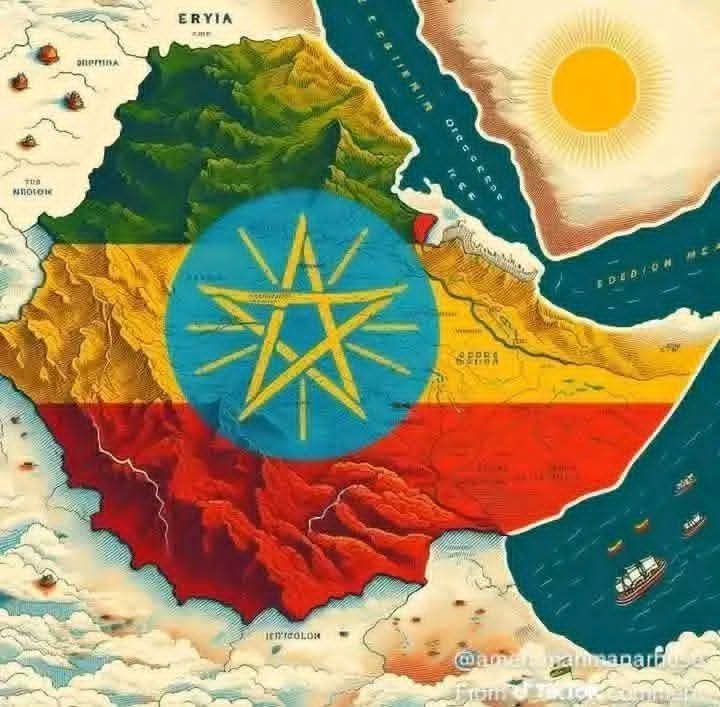
For decades, Ethiopia’s loss of direct access to the Red Sea has remained one of the most consequential and emotionally charged issues in the country’s modern political history. Once a coastal state with strategic access through Assab and Massawa, Ethiopia became landlocked following Eritrea’s independence in 1993. Since then, the question of maritime access has evolved far beyond historical grievance. It now sits at the center of debates surrounding economic sovereignty, regional security, migration, cyber resilience, and Ethiopia’s long-term geopolitical future in the Horn of Africa.
Today, with a population approaching 130 million and an economy aspiring to become one of Africa’s industrial and digital powerhouses, the implications of remaining permanently dependent on external ports are increasingly viewed through a strategic rather than emotional lens.
Analysts across political, military, and economic circles argue that the issue is no longer about recovering the past. Instead, it concerns whether Ethiopia can sustainably secure its future in one of the world’s most militarized and geopolitically contested corridors.
From Historical Decision to Strategic Debate
The most debated period remains the years between 1991 and 2000, when Ethiopia underwent a profound political transformation under the Ethiopian People’s Revolutionary Democratic Front.
During that transition, Eritrea’s independence was accepted without a binding long-term sovereign maritime arrangement for Ethiopia. Critics of that process argue that while political realities at the time were complex, the absence of enforceable guarantees for sea access created a structural vulnerability whose consequences are still unfolding today.
The issue resurfaced prominently during the 1998–2000 Ethiopia-Eritrea war. Ethiopian forces reportedly advanced near Assab before the conflict concluded through the Algiers Agreement. Since then, questions have persisted regarding whether battlefield leverage translated into long-term strategic advantage.
Within Ethiopia, some political commentators and former officials have also faced scrutiny over past public statements viewed by critics as placing ideological or factional considerations above broader national interests. However, many scholars caution that revisiting this period requires careful historical analysis rather than politically driven accusations.
“There is a growing demand for institutional clarity, not political revenge,” said one Addis Ababa-based geopolitical researcher. “The issue is whether Ethiopia can objectively study strategic decisions that reshaped its regional position.”
Economic Sovereignty and the Cost of Being Landlocked
Ethiopia’s maritime challenge is deeply connected to economic development.
As Africa’s second most populous country and one of the continent’s largest emerging markets, Ethiopia relies heavily on external port infrastructure for imports, exports, fuel supply chains, industrial manufacturing, and agricultural trade.
Dependence on foreign ports significantly increases logistics costs and reduces competitiveness. Economists argue that this dependency affects everything from inflation and foreign currency reserves to industrial productivity and investor confidence.
For a country pursuing large-scale manufacturing, digital infrastructure expansion, and continental trade integration under the African Continental Free Trade Area, secure and diversified maritime access has become a strategic economic necessity.
Some Ethiopian policy analysts now frame the Red Sea issue within the broader concept of “economic sovereignty,” arguing that long-term development cannot rely exclusively on external logistical lifelines vulnerable to political shifts, regional instability, or external pressure.
The discussion has also intensified as Ethiopia positions itself as a regional aviation, energy, telecommunications, and technology hub.
Cybersecurity, Digital Trade, and Strategic Vulnerability
The debate is no longer limited to physical access to ports.
As Ethiopia expands digital governance systems, financial technologies, cloud infrastructure, e-commerce, and telecommunications modernization, experts warn that maritime dependence intersects directly with cybersecurity and national digital resilience.
Submarine internet cables crossing the Red Sea carry a significant portion of global digital traffic. Control, protection, and access to these routes increasingly shape geopolitical influence.
Security analysts note that in the 21st century, maritime sovereignty is not only about shipping lanes but also about data infrastructure, cyber defense, digital trade security, and strategic communications.
For Ethiopia, which seeks to become a major digital economy in East Africa, secure integration into Red Sea infrastructure networks is viewed by some strategists as essential for technological independence and cyber resilience.
Ethiopia as an Anchor State in the Horn of Africa
Regional observers increasingly describe Ethiopia as the demographic, economic, and security anchor of the Horn of Africa.
The country borders six nations, hosts the headquarters of the African Union, and plays a central role in regional peacekeeping, counterterrorism operations, migration management, and continental diplomacy.
Because of this position, instability inside Ethiopia rarely remains contained within its borders.
European and Middle Eastern governments closely monitor developments in the Horn due to concerns over maritime security, refugee flows, terrorism, piracy, and disruptions to global trade routes.
Migration experts argue that Ethiopia’s long-term stability directly affects migration trends toward Europe. Economic stagnation, conflict, or state fragility in a country of nearly 150 million people could generate significant regional displacement pressures.
For this reason, some geopolitical analysts believe that Ethiopia’s economic sustainability and strategic integration into Red Sea security frameworks are not only national concerns but international ones.
“Europe cannot discuss migration security without discussing Ethiopia’s economic future,” one regional analyst noted. “A stable Ethiopia stabilizes the Horn. An unstable Ethiopia affects the Red Sea, the Gulf, North Africa, and eventually Europe.”
Red Sea Security and Ethiopia’s Emerging Maritime Doctrine
The Red Sea has become one of the world’s most contested geopolitical spaces.
Global powers including the United States, China, Gulf states, Turkey, Russia, and European countries maintain strategic interests or military presence across the corridor.
The war in Sudan, instability in Yemen, piracy threats, arms trafficking, and competition over maritime influence have further elevated the region’s significance.
Within this context, discussions inside Ethiopia increasingly focus on whether the country should eventually develop limited naval and coast guard capabilities tied to regional security cooperation.
Supporters argue that Ethiopia, given its population size, economic weight, and regional influence, cannot remain absent from long-term Red Sea security architecture.
Rather than framing the issue through territorial rhetoric, some analysts advocate for a cooperative regional doctrine based on economic partnerships, anti-piracy coordination, trade security, and maritime stabilization.
This approach emphasizes negotiated access arrangements, joint economic zones, and multilateral security partnerships rather than military confrontation.
Calls for Historical Review and Institutional Safeguards
Amid growing public debate, some Ethiopian scholars and strategic commentators have proposed the establishment of an independent national review mechanism to study historical decisions related to maritime access and regional diplomacy.
Advocates say such a process could help create an objective historical record while strengthening institutional accountability for future generations.
Others caution that reopening historical disputes without careful political management could inflame polarization in an already fragile region.
Still, there is broad agreement among many observers that Ethiopia’s maritime question will continue shaping national policy discussions for decades.
A Strategic Question That Will Not Disappear
For Ethiopia, the Red Sea debate is ultimately becoming a discussion about state survival in a rapidly changing geopolitical environment.
The issue now intersects with economic growth, digital transformation, regional security, migration management, energy corridors, cyber infrastructure, and continental influence.
Whether through negotiated access, regional partnerships, or broader diplomatic frameworks, many analysts believe Ethiopia will continue searching for ways to reduce what they describe as “strategic confinement.”
The broader challenge for policymakers is balancing national ambition with regional stability in one of the world’s most sensitive geopolitical theaters.
As Ethiopia advances deeper into the 21st century, the central question is no longer simply about access to the sea.
It is about whether Africa’s emerging giant can sustain economic sovereignty, strategic resilience, and regional leadership while remaining permanently dependent on external gateways to the world.
———-
Editor’s Disclaimer:The views and opinions expressed in articles published by Horn News Hub are those of the authors and do not necessarily reflect the official position or editorial stance of Horn News Hub. Publication does not imply endorsement.


