
HNH-May 18, 2026
The industrial development strategy currently being implemented in Addis Ababa has broken away from past practices to embrace a holistic, inclusive, and diversified approach.
Accordingly, the previous exclusive focus on foreign investors has been restructured. Domestic investors are now receiving significant priorities, including expansive plots within industrial zones and robust incentive packages a shift that has created major opportunities to build homegrown industrial capacity.
To ensure that economic growth benefits the wider community rather than a select few, large-scale factories are now mandated to source raw materials and inputs directly from local small-scale cooperatives.
Furthermore, farmers and residents relocated for development projects are no longer compensated solely through financial payouts. Instead, they are given preferential access to lucrative commercial opportunities arising within the industrial zones, such as logistics, catering, and security services.
Reports indicate that these new industrial parks and villages are generating permanent employment for thousands of young people. Notably, women’s participation has grown exponentially, particularly in the textile, leather products, and food processing sectors. To maximize workforce productivity and benefit, newly built industrial hubs are designed as integrated ecosystems. They incorporate staff residential housing, reliable transport services, and essential social infrastructure to create a highly conducive working environment.
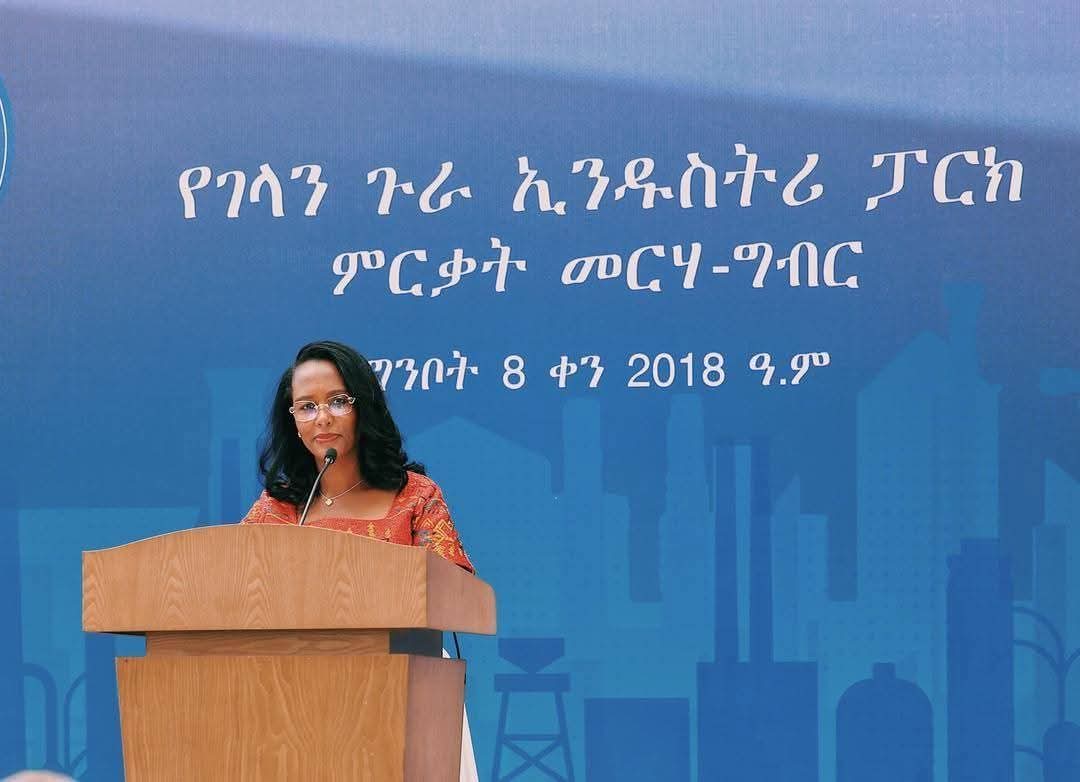
Broadly speaking, the industrial development in Addis Ababa today operates under the motto “Development for the People.” It aims to establish an inclusive system that transitions residents from subsidiary roles, such as security guards or assistants, into primary producers and owners of the development.The recently inaugurated Gelan Gura Industrial Park stands as a prime example of the successes registered as a result of the works carried out following the introduction of the national reforms. Sprawling across 93.9 hectares of land, this massive industrial park is projected to significantly boost domestic manufacturing and accelerate technology transfer.
The Mayor of Addis Ababa, Adanech Abiebie, underscored that the manufacturing sector plays a vanguard role in building the national economy. She revealed that over the past five years, the City Administration has aggressively resolved workspace, credit, and land supply bottlenecks for more than 2,900 industries. The newly inaugurated park accommodates 116 manufacturing industries and is expected to create direct employment opportunities for up to 20,000 citizens.
Mayor Adanech also pointed out that a new a residential suburb featuring nearly 60,000 housing units, alongside a dedicated village for relocated residents, is currently under construction in the vicinity of the park.
Demonstrating the city’s commitment to its “shared development” policy with local farmers, the Mayor highlighted the construction of a 14-hectare Agricultural Excellence Center. This center provides a permanent, sustainable income stream specifically for the farmers who voluntarily relinquished their land for the project.
Mayor Adanech reaffirmed that this initiative practically demonstrates that the ongoing transformation of Addis Ababa does not displace its people, but rather modernizes and uplifts the livelihoods and lifestyles of all residents in tandem with the city’s progress.
Source-AMN
Editor’s Disclaimer:
The views and opinions expressed in articles published by Horn News Hub are those of the authors and do not necessarily reflect the official position or editorial stance of Horn News Hub. Publication does not imply endorsement.