
Mekelle/Tel Aviv/Nairobi/Pretoria/London
President Tadese Werede and the Test of Principled, Impartial Engagement Under the Pretoria Agreement
By Chekole Alemu
The recent visit of former Tigray Interim Administration president Getachew Reda to Western Tigray alongside United States Ambassador to Ethiopia Ervin Massinga has reignited debate over diplomatic legitimacy, political authority, and the integrity of the Pretoria Peace Agreement.
Getachew Reda no longer holds executive authority within the interim administration. His participation in a high level diplomatic visit to one of the most sensitive areas covered by the peace accord has therefore raised questions among political observers about mandate, process, and precedent. At issue is not only who engages the international community, but how such engagement aligns with the agreed framework for post war transition.
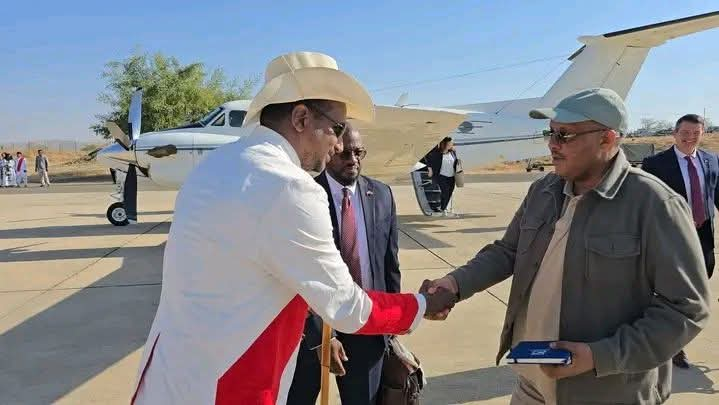
Western Tigray remains one of the most contested and unresolved components of the Pretoria Agreement. The accord sets out an Ethiopian led, constitutionally grounded, and UN backed process to determine the territory’s status and to facilitate the safe, voluntary, and dignified return of displaced populations. Any diplomatic activity in the area, even when framed in humanitarian terms, carries significant political weight.
In public remarks following the visit, Ambassador Massinga said he was warmly welcomed in Humera and described acute humanitarian challenges, including damaged infrastructure, limited medical services, and shortages of basic public services. He noted that displaced communities have relied on international support for years and stressed that while humanitarian assistance remains essential, it cannot serve as a long term solution.

The ambassador reaffirmed United States support for an Ethiopian led process that allows individuals to decide where to rebuild their lives safely and with dignity. He urged all actors to prioritize the well being of affected civilians above political competition and emphasized that decisions on political status should be made at the appropriate time. These statements broadly align with the language and principles of the Pretoria Agreement.
However, analysts caution that impartiality is judged not only by rhetoric but also by practice. Engagement that appears selective or detached from established political authority risks undermining confidence in the peace process. In a context as fragile as Western Tigray, symbolism, sequencing, and institutional discipline matter as much as humanitarian intent.
These concerns are reinforced by a recent official statement from the Tigray Interim Administration. In a press release issued on 29 August 2025, the administration stated that any attempt to sideline the people of Tigray and their interim administration is unacceptable under any circumstances.
The statement emphasized that the people of Tigray paid an immense price in their struggle for human, democratic, and self determination rights and made a historic contribution to reshaping Ethiopia’s federal order. It noted that nearly three years after the signing of the Pretoria Agreement, core commitments remain unmet, including the restoration of Tigray’s constitutional boundaries and the safe return of displaced populations.
The administration warned against emerging efforts by certain actors to marginalize both the people of Tigray and their interim administration under the pretext of resolving displacement. Such approaches, it said, risk political manipulation and could push the region toward renewed instability rather than address fundamental demands.
Central to the statement was the assertion that the restoration of Tigray’s constitutional boundaries is a core issue for both present and future generations and must be pursued through a process in which the people of Tigray and their recognized administration are directly involved and trusted. The administration described this principle as a red line that should not be crossed.
Against this backdrop, political observers argue that diplomatic engagement related to Tigray and the implementation of the Pretoria Agreement should be clearly anchored in the current interim administration led by President Tadese Werede. Reasserting this institutional leadership is seen as essential to maintaining coherence, avoiding parallel channels of legitimacy, and ensuring consistent messaging to international partners.
There is also growing emphasis on the need for President Tadese to broaden and formalize his communication model. More structured and visible engagement with diplomats, humanitarian agencies, and the public could help reduce ambiguity, counter competing narratives, and reinforce confidence in the peace process at both domestic and international levels.
Concerns persist that uncoordinated diplomatic visits to Western Tigray could harden positions on the ground. The area remains marked by unresolved security arrangements, deep social wounds, and competing administrative claims. Any perception that external actors are bypassing agreed frameworks or engaging outside institutional mandates risks fueling tension rather than facilitating reconciliation.
Supporters of continued international engagement argue that humanitarian realities justify direct access wherever suffering persists. Critics respond that humanitarian concern does not negate the need for principled and impartial engagement rooted in institutional authority, especially during a transition period designed to centralize political responsibility until a permanent settlement is achieved.
Conclusion
These developments underscore why President Tadese Werede’s leadership is central to diplomatic engagement on the Pretoria Peace Process. At this stage of transition, clarity of authority is not a procedural detail but a prerequisite for stability.
The Pretoria Agreement is built on Ethiopian ownership, constitutional processes, and institutionally grounded implementation. Within this framework, the Tigray Interim Administration remains the legally recognized political authority responsible for representing the region during the transition period. Any diplomatic engagement concerning Tigray, whether humanitarian or political, necessarily intersects with the agreement’s core provisions and cannot be detached from this institutional reality.
As a result, the participation of the Tigray Interim Administration in all diplomatic engagement related to Tigray is not optional. It is mandatory for preserving legitimacy, ensuring coherence, and maintaining impartiality in the peace process. Engagement conducted outside this structure risks weakening trust, creating parallel lines of authority, and complicating an already fragile implementation phase.
For international partners, adherence to principled and impartial engagement means working through recognized institutions rather than individuals. For domestic actors, it requires reinforcing institutional leadership and transparent communication. Only through this disciplined approach can the Pretoria Agreement move from fragile ceasefire to sustainable peace.
Editor’s Disclaimer:
The views and opinions expressed in articles published by Horn News Hub are those of the authors and do not necessarily reflect the official position or editorial stance of Horn News Hub. Publication does not imply endorsement.