

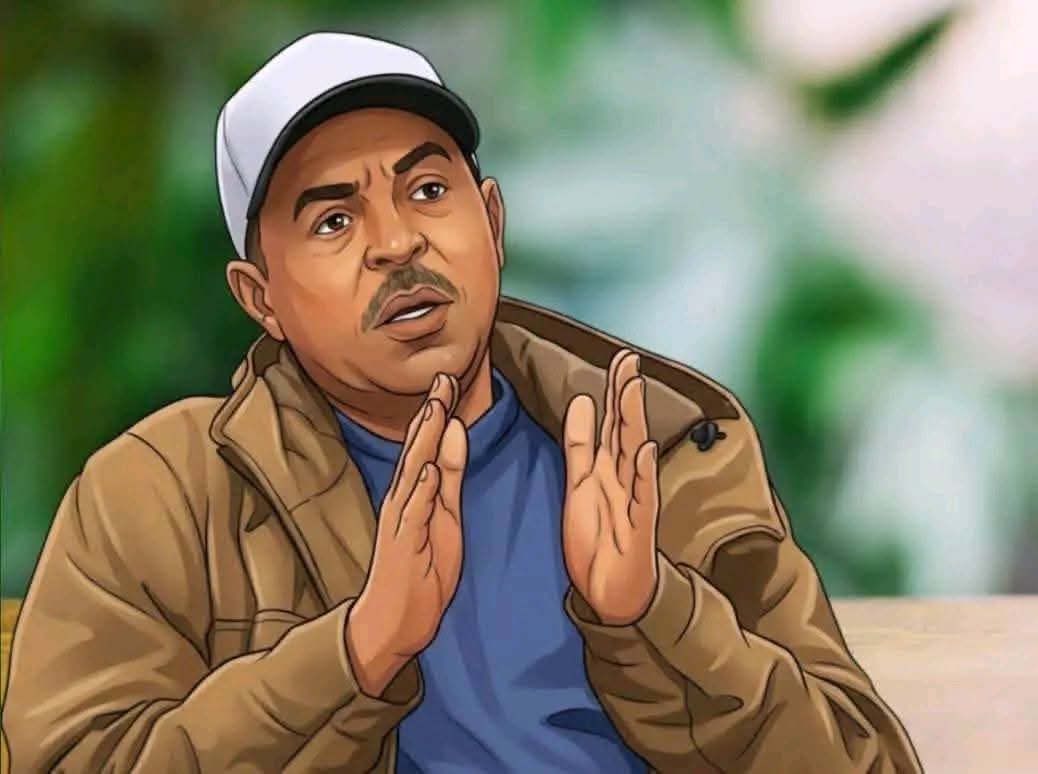
When Silence Breaks: Brigadier General Guesh Gebre and the Political Debate Over Tigray’s Future
A recent Zoom forum organized by the diaspora advocacy group I Can’t Be Silent About Tigray has stirred fresh debate about the political trajectory of Tigray and the role of its former military and political leadership.
At the center of the discussion was Brigadier General Guesh Gebre, who appeared publicly for the first time since leaving what supporters describe as a period of detention and political pressure. His remarks, delivered to a global audience of Tigrayans and observers, have since circulated widely across diaspora networks and social media platforms.
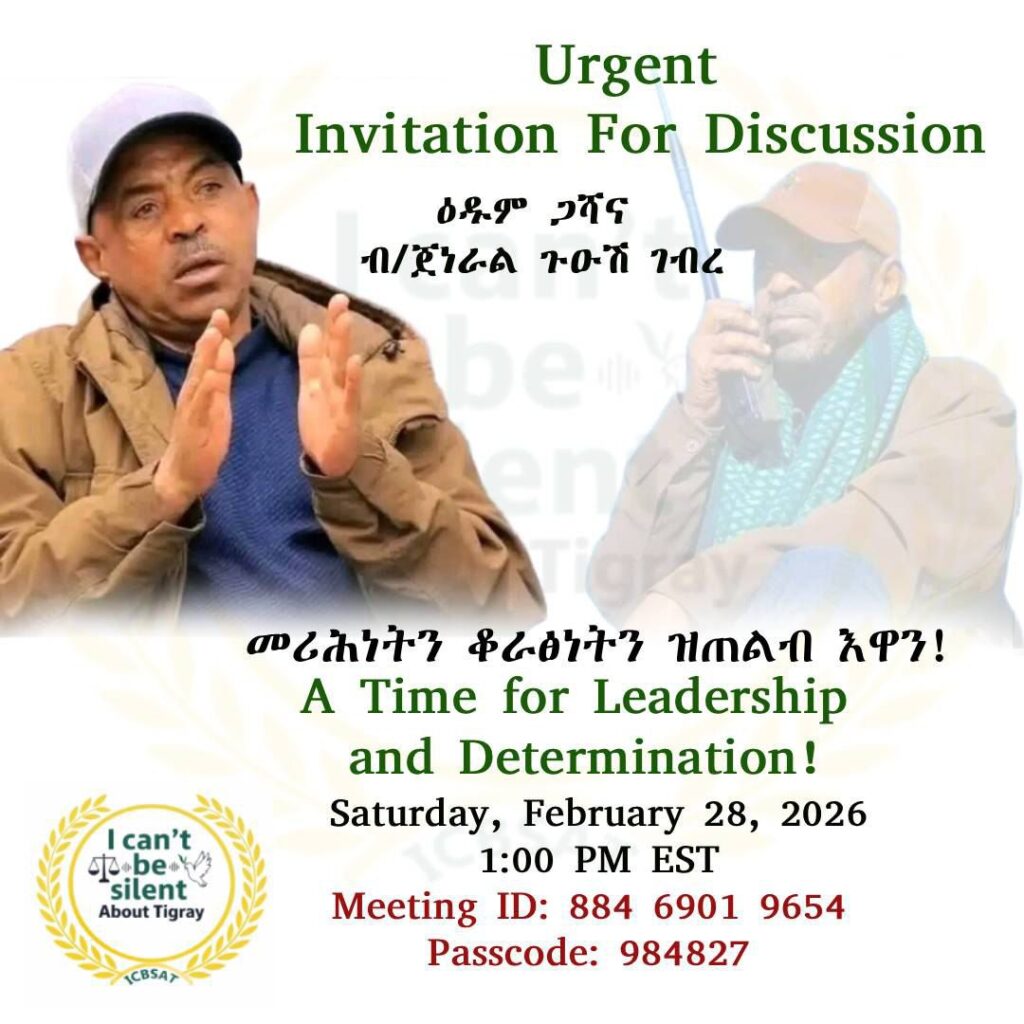
The event marked more than a routine online gathering. For many participants, it represented a rare moment of open political reckoning at a time when Tigray remains deeply fragmented and institutionally weakened following years of conflict.
A Testimony from Within
General Guesh, once associated with the Tigray People’s Liberation Front, spoke critically about decisions taken by elements of the party’s senior military and political leadership during the war. He described what he characterized as strategic miscalculations, internal power struggles, and failures of judgment that, in his view, contributed to Tigray’s current vulnerability.
His comments included allegations that certain leaders prioritized political survival over long term stability. He argued that distorted intelligence assessments and centralized decision making weakened both military preparedness and public trust.
These assertions, while not independently verified, are significant because they come from a former insider. Political analysts note that testimony from senior figures can reshape public narratives, particularly in post conflict environments where official accounts are contested.
Allegations of External Influence
Among the most consequential aspects of his remarks were claims that segments of Tigray’s political structure are operating under external pressure, particularly from the Eritrean ruling party, the People’s Front for Democracy and Justice.
Relations between Tigrayan forces and Eritrea have been marked by decades of hostility, shifting alliances, and renewed conflict during the recent war. General Guesh suggested that current political arrangements reflect compromised autonomy, an assertion that, if substantiated, would have profound implications for regional stability.
There has been no formal response from Eritrean authorities or from the leadership of the Tigray People’s Liberation Front regarding these specific claims.
A Region in Political Transition
Tigray today remains in a fragile transitional phase. The Pretoria peace agreement ended large scale hostilities, but governance challenges persist. Reconstruction is slow, displaced populations continue to seek durable solutions, and the process of security sector restructuring remains incomplete.
Against this backdrop, General Guesh’s call for dismantling what he described as an exhausted political system reflects a broader frustration among parts of the population and diaspora. Whether this sentiment translates into organized political reform remains unclear.
Political observers caution that moments of rhetorical rupture do not automatically produce institutional change. Meaningful transformation, they note, requires structured dialogue, legal frameworks, and broad based participation beyond symbolic declarations.
Unity in Diversity as a Political Proposal
A central theme of the forum was the concept of unity in diversity. General Guesh framed it as an alternative to factional dominance and ideological monopoly. He argued that Tigray’s recovery depends on inclusive governance, respect for political plurality, and the rebuilding of public institutions on accountable foundations.
The idea resonates in a society fractured by war and political polarization. Yet implementation would require reconciling competing narratives of responsibility, addressing grievances, and establishing mechanisms for transitional justice.
Measuring Impact
The true significance of the forum lies not only in its attendance but in its potential consequences. Analysts suggest that the event may contribute to three measurable shifts: widening public debate within the diaspora, increasing scrutiny of existing leadership structures, and encouraging new political actors to emerge.
At the same time, critics warn that public denunciations without coordinated reform strategies risk deepening divisions. Tigray’s political landscape remains highly sensitive, and internal fragmentation could complicate both reconstruction efforts and negotiations with federal authorities in Addis Ababa.
A Moment of Political Reassessment
The appearance of Brigadier General Guesh Gebre has undeniably reopened questions about accountability, legitimacy, and the future direction of Tigray’s governance. Whether his intervention becomes a catalyst for structural reform or remains a symbolic moment will depend on how political actors respond in the coming months.
For now, the forum underscores a broader reality. The war may have subsided, but the contest over narrative, responsibility, and political authority in Tigray is far from settled.
Editor’s Disclaimer:
The views and opinions expressed in articles published by Horn News Hub are those of the authors and do not necessarily reflect the official position or editorial stance of Horn News Hub. Publication does not imply endorsement.


