

Mekelle/Tel Aviv/Nairobi/Pretoria/London
Tigray Security Forces Besiege IRA Headquarters in Mekelle
Tigray’s political landscape was thrown into renewed turmoil this week after armed regional security forces surrounded the office of Interim Regional Administration (IRA) President Lt. Gen. Tadesse Worede in Mekelle, blocking key roads and briefly taking control of the TPLF-run Dimtse Weyane radio station. Explosions were heard on the night of December 4, and although discussions reportedly took place between the mutineers and IRA officials, no clear resolution had emerged by the morning of December 5. The whereabouts of Lt. Gen. Tadesse remained unknown, deepening public anxiety and fueling speculation over the motives behind the confrontation.
New information obtained by Horn News Hub suggests that the standoff may be part of a deeper, coordinated effort to unseat Tadesse, involving senior leaders within the Tigray People’s Liberation Front (TPLF) and key figures inside the region’s military command. Sources say TPLF chairman Debretsion Gebremichael, together with aligned military officers, may have played a central role in attempting to remove Tadesse accusing him of adopting a softer, conciliatory posture toward the federal government in Addis Ababa. If verified, these allegations would indicate that Tigray’s internal political rivalry has entered a dangerous new phase, with factions competing for post-war control and legitimacy.
The crisis also appears to be intertwined with regional geopolitics. According to the same sources, Eritrean actors may be encouraging TPLF factions to move against Tadesse.
This would represent a dramatic and controversial development, especially given recent public claims about a renewed political understanding between elements of the TPLF leadership and the Eritrean ruling party, the PFDJ. Insiders describe what they call a “historic alliance resurfacing,” suggesting that the Debretsion faction and Eritrean authorities share an interest in reshaping Tigray’s leadership allegedly pushing for Tadesse’s removal in line with President Isaias Afwerki’s strategic aims.
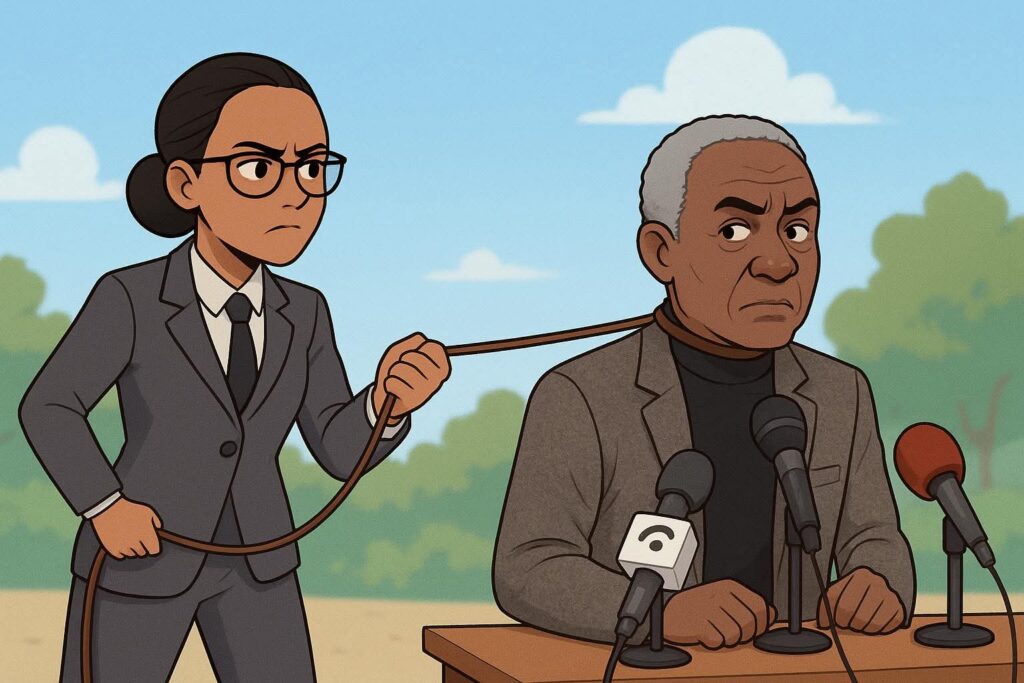
The internal power struggle gained further clarity a month ago, when veteran military strategist Lt. Gen. Tsadkan Gebretensae gave an interview to NBC Ethiopia. In that interview, Tsadkan openly stated that Tadesse himself played a leading role in the removal of former IRA President Getachew Reda describing him as “the architect of the coup.” Tsadkan argued that Tadesse lacks the political and administrative capacity to solve Tigray’s complex post-conflict challenges and asserted that he functions as a political instrument for the Debretsion-led TPLF faction.
According to Tsadkan, this alignment ensures Tadesse will ultimately remain loyal to the TPLF’s internal networks rather than the broader public interest.
These claims reinforce long-standing divisions within Tigray’s political establishment. Tadesse’s rise to power following the removal of Getachew Reda was widely perceived as a military-driven restructuring rather than a consensual political process. That transition created unresolved fractures within the TPLF, the regional security apparatus, and the IRA itself fractures now erupting into open confrontation. The earlier protests by regional security forces over unpaid salaries and benefits, though defused at the time, signaled mounting pressure within the security institutions that has now resurfaced with far greater intensity.
The Tigray Peace Force (TPF) issued a rare statement noting that it is monitoring the fast-evolving events and is prepared to intervene “to uphold the will of the people” if the unfolding crisis disrupts civilian life. While the TPF did not align itself with any faction, its intervention underscores the severity of the standoff and raises questions about whether additional armed actors could be drawn into the conflict.
The consequences of this confrontation extend far beyond Mekelle. If the push to remove Tadesse is indeed supported by senior TPLF figures and possibly Eritrean interests, the region may be heading toward a profound realignment that could destabilize relations not only within Tigray but also with the federal government. Addis Ababa is likely to interpret such moves as a rejection of the post-Pretoria political order, potentially straining already fragile negotiations on security, governance, and reconstruction.
According to Tsadkan, this alignment ensures Tadesse will ultimately remain loyal to the TPLF’s internal networks rather than the broader public interest.
For now, Mekelle remains tense and uncertain, as residents brace for the possibility of deeper internal conflict. The region’s future hangs in the balance, shaped by competing factions, historic rivalries, and external interference all unfolding at a time when Tigray’s population is still struggling to rebuild after years of war.
Editor’s Disclaimer:
The views and opinions expressed in articles published by Horn News Hub are those of the authors and do not necessarily reflect the official position or editorial stance of Horn News Hub. Publication does not imply endorsement.