
Mekelle/Tel Aviv/Nairobi/Pretoria/London፡
The Politico-Military Nexus: A System Keeping Tigray Perpetually Close to War
Addis Ababa, February 2026 — Tigray’s ongoing crisis cannot be explained solely by external threats, geopolitical competition, or historical grievances. While these factors play a role, experts say the dynamics within the region itself are equally critical. Over decades, political authority, military command, and economic influence gradually converged in the hands of overlapping circles connected less by ideology than by loyalty, mutual protection, and dependence. Analysts describe this as a closed ecosystem of power rather than a conventional political organization.
Many Tigrayans report a familiar sense of tension returning, with public rhetoric increasingly framing sacrifice and preparedness for war. Observers question who benefits from this renewed conflict, with mounting evidence suggesting that some elites rely on instability not for societal survival, but for the survival of their networks.
Ximdo: Alignment or Survival Pact? Scholars Warn of a “Death Pact”
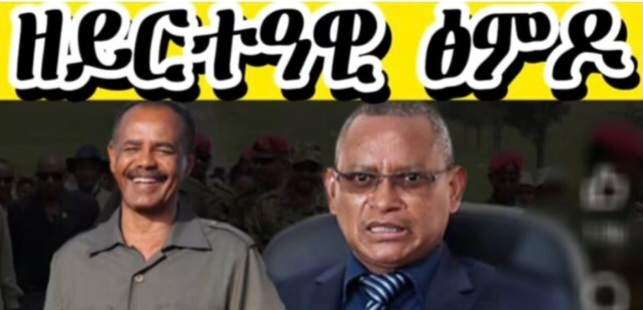
The Tigrinya term ximdo (ጽምዶ) traditionally means connection, coordination, or alignment. By 2025, the term had acquired a political dimension, reportedly describing a realignment linking elements of the TPLF with Eritrea’s PFDJ establishment. Some scholars have described this alliance linking the TPLF with what they call a historic enemy of the people of Tigray as a “death pact.” Supporters frame it as pragmatic adjustment in a dangerous region, while critics argue it represents a survival strategy among elites prioritizing influence over stability. Analysts caution that this is not reconciliation but a restructuring of protection networks, where former adversaries may align not due to shared beliefs but overlapping interests.
When Institutions Became Personal
Formal institutions in Tigray including courts, ministries, civic organizations, and development bodies existed on paper, but in practice, decisions frequently followed personal loyalties rather than institutional rules. Political scientists describe this as neopatrimonialism, where public resources are informally privatized, positions become rewards, and accountability diminishes. Under such a system, power serves a network rather than the public.
The Militarization of Politics
A significant transformation occurred as the military shifted from a purely defensive institution to a political instrument. Command structures became personalized, parallel chains of authority emerged, and intelligence services monitored both external threats and internal rivals. Armed structures began to protect loyal insiders, neutralize dissent, and shield decision-makers from civilian oversight. Analysts describe this as governance underpinned by coercive capacity rather than accident.
The Core of Power
At the system’s center sits a small circle, often invisible to the public, wielding control through armed units, intelligence channels, financial flows, and logistical access. Accountability within this core is minimal, with failures justified as security necessities. Loyalty functions as both currency and protection. Observers note that Tigray has not been administered in a conventional bureaucratic sense but managed by practical control networks.
The Layer Above Leadership
Beyond visible leadership lies another enduring layer composed of intermediaries, financiers, message-shapers, and patronage networks rooted in family and social ties. They rarely command forces openly but influence outcomes by mediating disputes, financing activities, shaping narratives, and safeguarding reputations. Leadership changes have historically produced little structural reform because the system adapts independently of individual actors.
Economic Power and Exclusion
Economic institutions, including development associations, business conglomerates, and reconstruction mechanisms, are intertwined with political networks. Positions within these institutions circulate among connected families and social circles, creating structural inequality. Merit declines in significance while proximity to the network dictates opportunity. Analysts highlight growing frustration among ordinary citizens who distinguish between hardship caused by war and hardship resulting from entrenched exclusion.
Why War Becomes Politically Useful
For networks dependent on loyalty rather than legitimacy, peace can be threatening, inviting scrutiny, reform, and accountability. Conflict, in contrast, unites supporters through fear, silences critics, justifies emergency powers, and obscures economic activities. Many observers suggest that renewed confrontation may protect entrenched interests, including economic gains and political survival, rather than the broader society.
Mapping the System
Experts emphasize that understanding this structure is crucial. Neopatrimonial systems persist by dispersing responsibility, preventing any actor from being fully accountable. Mapping resource control, funding, and command relationships is a prerequisite for reform. Without this clarity, the cycle repeats: war leads to emergency rule, which preserves elite networks while imposing costs on the population.
Conclusion: A Warning
Analysts argue that Tigray’s greatest threat may not be external invasion but internal incentives. If instability serves to preserve influence, it becomes attractive to those in power, while society bears the consequences. The central question is no longer only geopolitical but also moral and political: will Tigray be governed by accountable institutions or by networks protecting only themselves? Until this is addressed, the risk of another devastating conflict remains a predictable outcome rather than a historical accident.
Prepared by Horn of Africa Geopolitical Review (HAGR)
Independent Regional and International Geostrategy | Security, Military, and Political Analysis
———-
Editor’s Disclaimer:
The views and opinions expressed in articles published by Horn News Hub are those of the authors and do not necessarily reflect the official position or editorial stance of Horn News Hub. Publication does not imply endorsement.