
Mekelle/Tel Aviv/Nairobi/Pretoria/London
Addis Ababa’s Urban Renaissance: A Vision of Modernity, Green Development, and Global Diplomacy
Written by Chekole Alemu
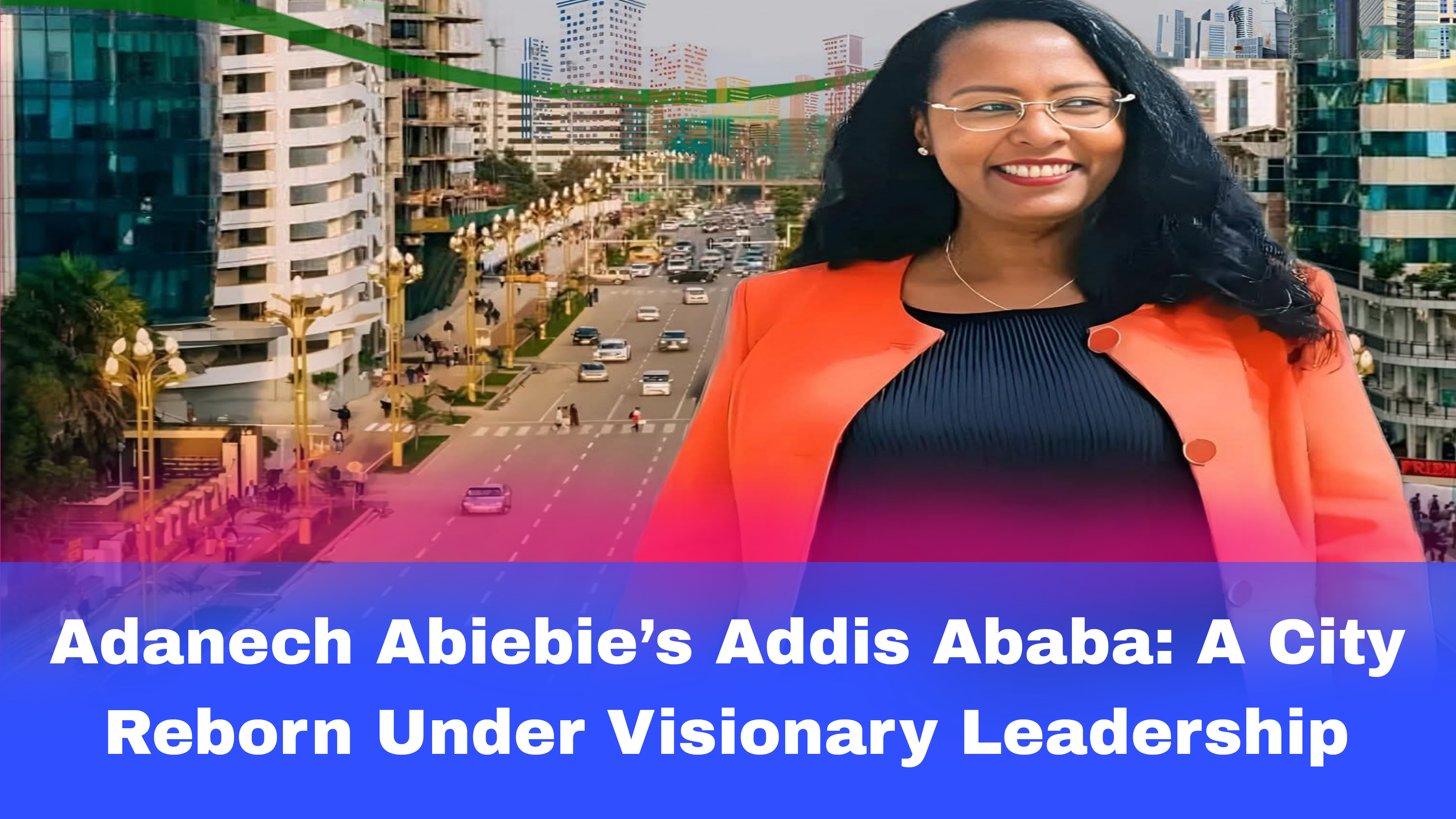
In recent years, Addis Ababa, the political capital of Africa, has been undergoing one of the most ambitious urban transformations in its history. Spearheaded by Mayor Adanech Abiebie, this overhaul is not only reshaping the city’s skyline but is also fostering a model of sustainability, economic growth, and diplomacy that has become a beacon of hope for the entire continent. Through a series of high-profile infrastructure projects, environmental initiatives, and a concerted effort to enhance urban livability, Addis Ababa is emerging as a global hub for commerce, tourism, and international diplomacy.
The Role of Prime Minister Abiy Ahmed’s Leadership
Prime Minister Abiy Ahmed’s influence in Addis Ababa’s transformation cannot be overstated. His vision for Ethiopia’s modernization has been critical in supporting and mentoring city authorities, including Mayor Adanech Abiebie and her team. His leadership has been pivotal in ensuring the successful integration of large-scale projects aimed at revitalizing the city, positioning it as a leading African metropolis.

Abiy’s emphasis on sustainability, green development, and modern infrastructure aligns with Addis Ababa’s new urban identity. His administration has provided the necessary political and financial support for projects like the city’s riverside beautification and the development of large-scale malls, all while championing Addis Ababa’s status as a premier diplomatic hub for the African Union and other international organizations.
Mayor Adanech Abiebie: Leading the Charge in Urban Renewal
Under Mayor Adanech Abiebie’s leadership, Addis Ababa is transforming into a dynamic, modern city. Mayor Abiebie’s focus on urban renewal, beautification, and the integration of green spaces has set the tone for the city’s development. Her leadership is marked by a clear commitment to making the city not just a political capital but also a thriving, livable urban space for residents and a magnet for international business and tourism.

A crucial part of her leadership strategy is the collaboration with key figures like Haftay Gebre-Egzabier, the head of the Addis Ababa City Administration Communication Office. Their collective efforts have resulted in the city being recognized as a hub for international conferences and tourism, hosting over 150 international conferences in 2017 alone. This momentum continues to build, with new projects further solidifying Addis Ababa’s reputation on the global stage.
Infrastructure and Urban Beautification: A City Reborn
One of the most visible signs of Addis Ababa’s transformation is its ongoing riverside beautification project. Spanning over 23.8 kilometers, this ambitious initiative seeks to rejuvenate the city’s rivers, turning them into vibrant spaces for tourism, recreation, and environmental sustainability. The project is designed to protect the city’s waterways, reduce flooding, and introduce parks, bike lanes, and walking paths, all while fostering a green economy.

This transformation is not just about aesthetics it’s a strategic move to address urban challenges such as flooding, climate change, and a growing population. The project’s potential to draw both domestic and international tourists is significant, making it a key element in the city’s broader vision for economic growth.
Peacock Area: The New Heart of Addis Ababa’s Modern Landscape
The construction of an artificial lake in Addis Ababa’s Peacock area is another hallmark of the city’s ambitious development plan. Set to become a focal point for both residents and visitors, the lake is expected to enhance the city’s landscape and provide new recreational spaces. This initiative will stimulate local investment, increase real estate values, and attract tourists to the area.

The artificial lake project is emblematic of a broader trend in Addis Ababa’s development: the blending of modern infrastructure with environmental consciousness. The city is working to create spaces that balance urbanization with ecological preservation setting a precedent for other African cities facing similar challenges.
The Rise of Modern Malls: Economic Growth and Investment
Alongside environmental and infrastructure projects, Addis Ababa is also witnessing a boom in commercial development. The construction of the Addis City Center Mall, one of the largest shopping malls in Africa, is a key part of this expansion. Built on 60,000 square meters of land, the mall is poised to become a retail destination with a diverse range of commercial outlets, attracting both international brands and regional investors.

Similarly, the Arada Mall, located in a historic district of Addis Ababa, is set to become a significant landmark. The mall’s design is a fusion of modern architecture and historical significance, creating a shopping experience that reflects the city’s rich cultural heritage while looking toward its future.
These malls are more than just retail spaces they are economic engines that will stimulate local employment, attract international businesses, and enhance the city’s status as a global business hub. By positioning itself as a regional leader in retail and tourism, Addis Ababa is securing its place in the competitive global market.
A Green Economy and Sustainable Future
At the heart of Addis Ababa’s transformation is a commitment to creating a green economy. The city’s focus on sustainability is evident in its riverside projects, the expansion of public green spaces, and the construction of eco-friendly infrastructure. As the city grows, its leaders are prioritizing environmental preservation alongside economic growth, ensuring that urbanization does not come at the expense of the natural environment.

By integrating green development with economic initiatives, Addis Ababa is positioning itself as a model for other African cities that are looking to balance growth with sustainability. The city’s emphasis on green spaces, renewable energy, and sustainable practices will be key to its long-term success as a thriving metropolis.
Addis Ababa: A City on the Rise
Addis Ababa is rapidly becoming one of Africa’s most dynamic cities, with a blend of modern infrastructure, economic growth, and environmental consciousness. Under the leadership of Mayor Adanech Abiebie and Prime Minister Abiy Ahmed, the city has not only been able to modernize its infrastructure but has also positioned itself as a leader in urban sustainability and global diplomacy.

As the city continues to evolve, it is clear that Addis Ababa is more than just Ethiopia’s capital—it is becoming a symbol of Africa’s future. With its focus on green development, international business, tourism, and diplomacy, Addis Ababa is setting the stage for a new chapter in African urban development, one that will be watched closely by the world.
Conclusion: The Future is Addis Ababa
Addis Ababa’s transformation is far from complete, but its progress is undeniable. The city is rewriting its future with projects that are making it more livable, sustainable, and globally connected. Whether through the riverside beautification project, the development of large-scale malls, or its growing role as a diplomatic hub, Addis Ababa is emerging as a city that not only reflects Africa’s past but also its future.

As the city continues to grow and develop under the leadership of Mayor Adanech Abiebie and Prime Minister Abiy Ahmed, Addis Ababa is set to become one of Africa’s most prominent urban centers a modern, vibrant metropolis that is shaping the continent’s future.
Editor’s Disclaimer:
The views and opinions expressed in articles published by Horn News Hub are those of the authors and do not necessarily reflect the official position or editorial stance of Horn News Hub. Publication does not imply endorsement.