


Mekelle/Tel Aviv/Nairobi/Pretoria/London
Suluhu shuts down the internet and imposes a nationwide night curfew in Tanzania.
By Horn News Hub in Dar es Salaam | 29 October 2025
Mass protests have swept across Tanzania as the country goes to the polls in an election widely criticised for excluding major opposition parties and candidates. President Samia Suluhu Hassan, the first woman to lead Tanzania, is poised to extend her rule after the National Electoral Commission disqualified key rivals, leaving voters with little real choice.
Widespread protests have escalated across various parts of the country, with reports indicating that some demonstrators have resorted to destroying and burning properties.
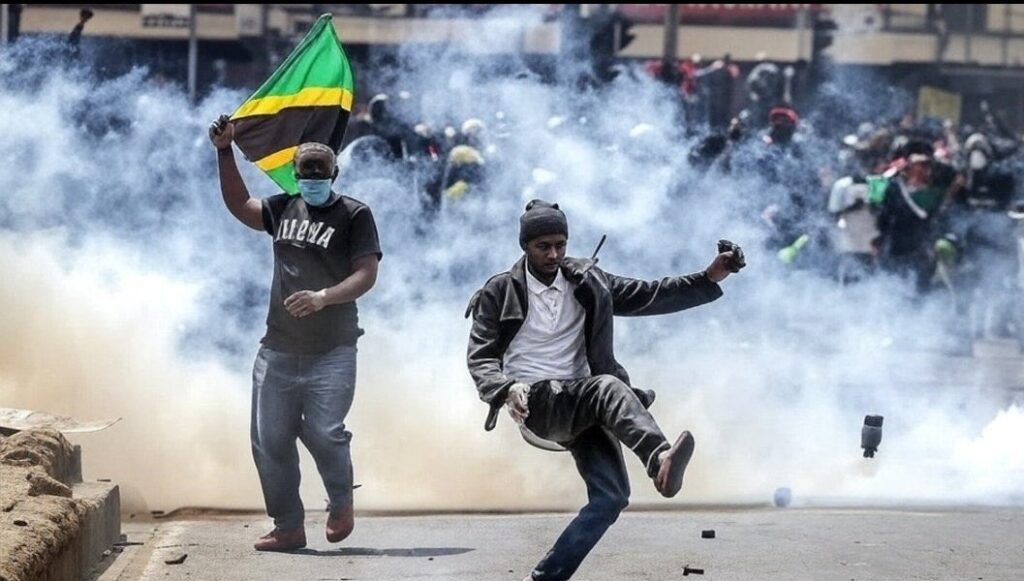
In the commercial capital, Dar es Salaam, hundreds of demonstrators took to the streets early on Wednesday, chanting “We want our country back” and demanding free and fair elections. Police responded with tear gas, water cannons, and mass arrests. Witnesses reported several injuries as clashes intensified in the city centre.
Authorities imposed a night-time curfew and deployed soldiers to key urban areas, including Mwanza and Arusha, as protests spread. In Kinondoni district, a local government office and a petrol station were set ablaze before security forces moved in to disperse crowds.
Tight restrictions and digital blackout
Access to social media platforms including X (formerly Twitter), Facebook, and WhatsApp was severely restricted throughout the day. The internet shutdown appeared coordinated, with digital rights groups accusing authorities of suppressing information and preventing citizens from sharing images of the unrest.

Meanwhile, at least a dozen opposition activists and journalists were detained in what human rights observers described as an effort to silence critical voices. Amnesty International called the arrests “arbitrary and politically motivated,” urging the government to “respect citizens’ right to peaceful assembly.”
A hollow vote
With the main opposition party CHADEMA barred from participating and its leader Tundu Lissu detained on treason charges, voter turnout appeared sharply reduced. Several polling stations in central Dar es Salaam and Arusha were almost empty by midday, according to observers.
“This doesn’t feel like an election,” said one voter, who asked not to be named. “It feels like a performance.”
International observers from the African Union and East African Community (EAC) voiced concern over “unequal conditions and restrictions on political participation.” The United Nations urged calm, warning that excessive force and mass detentions could further destabilise the country.
Democratic backsliding
Hassan, who succeeded the late John Magufuli in 2021, initially promised political reform and national unity. But opposition leaders say her administration has reverted to old authoritarian habits banning rallies, detaining critics, and curtailing press freedoms.
“Tanzania’s democratic space has narrowed significantly under President Hassan,” said Dr Joseph Mbowe, a political analyst at the University of Dar es Salaam. “The exclusion of credible opposition voices risks deepening public distrust in the state.”
Despite the turmoil, the ruling **Chama Cha Mapinduzi (CCM) in power since independence in 1961—is expected to claim victory when results are announced later this week.
For many Tanzanians, however, the real outcome is already clear: an election without choice, and a democracy under strain.
Sources:Reuters, Al Jazeera, The Guardian, Washington Post, DW, Amnesty International


