
Mekelle/Tel Aviv/Nairobi/Pretoria/London
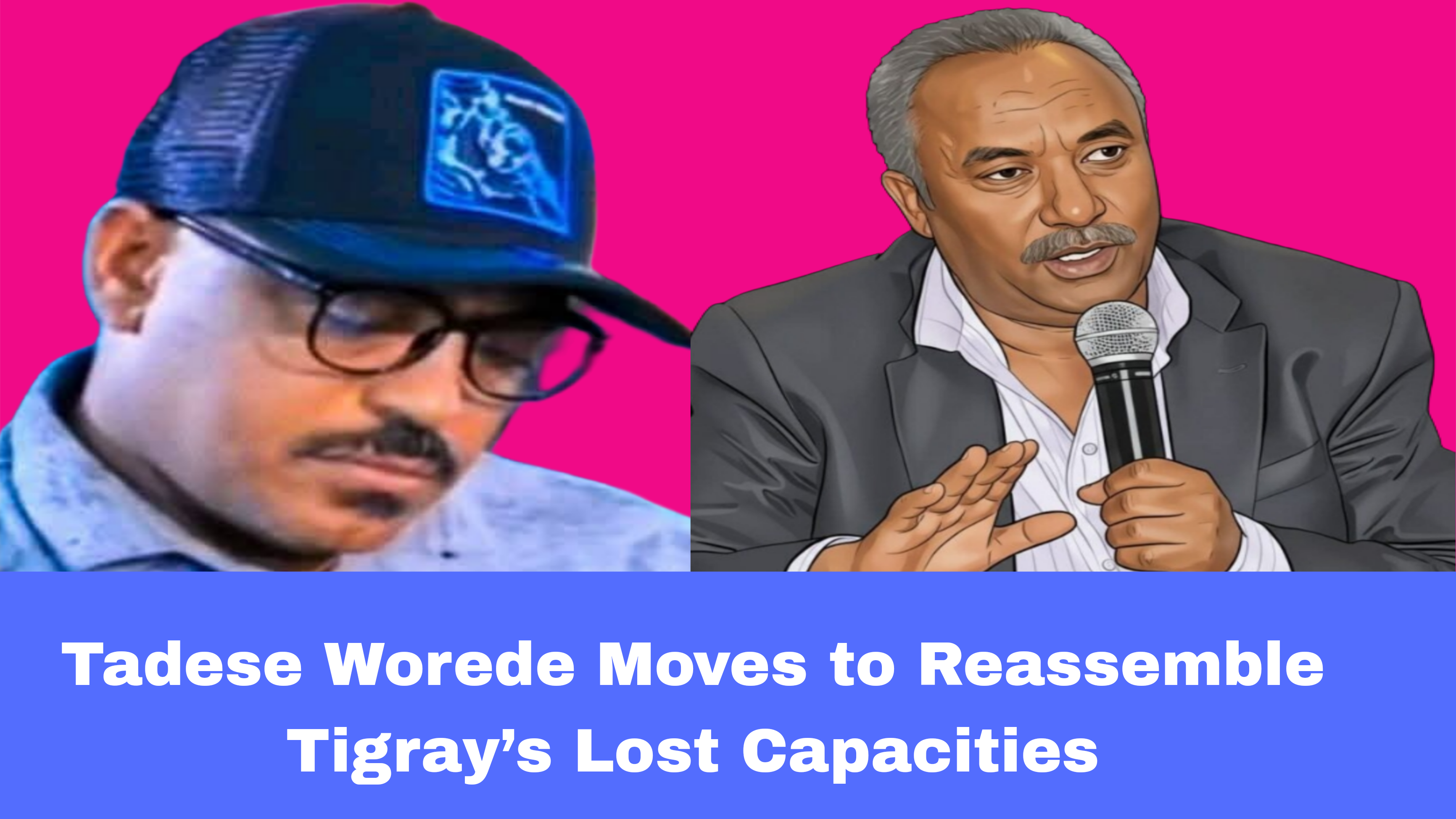
Tadese Worede Moves to Reassemble Tigray’s Lost Capacities
By Chekole Alemu
President Tadese Worede’s recent political and diplomatic trajectory is increasingly being interpreted by observers as an effort to consolidate stability through inclusion, dialogue, and institutional restoration in post war Tigray. His sustained engagement with the federal government and the international community is widely viewed as a strategy that frames peace implementation and recovery as collective responsibilities rather than isolated regional tasks.
Analysts note that this approach reflects a broader shift toward pragmatic governance during Tigray’s fragile transition. By maintaining direct communication with Addis Ababa and international partners, the interim administration appears to be seeking political legitimacy, security guarantees, and material support required to implement peace agreements and rebuild core institutions weakened by years of conflict.
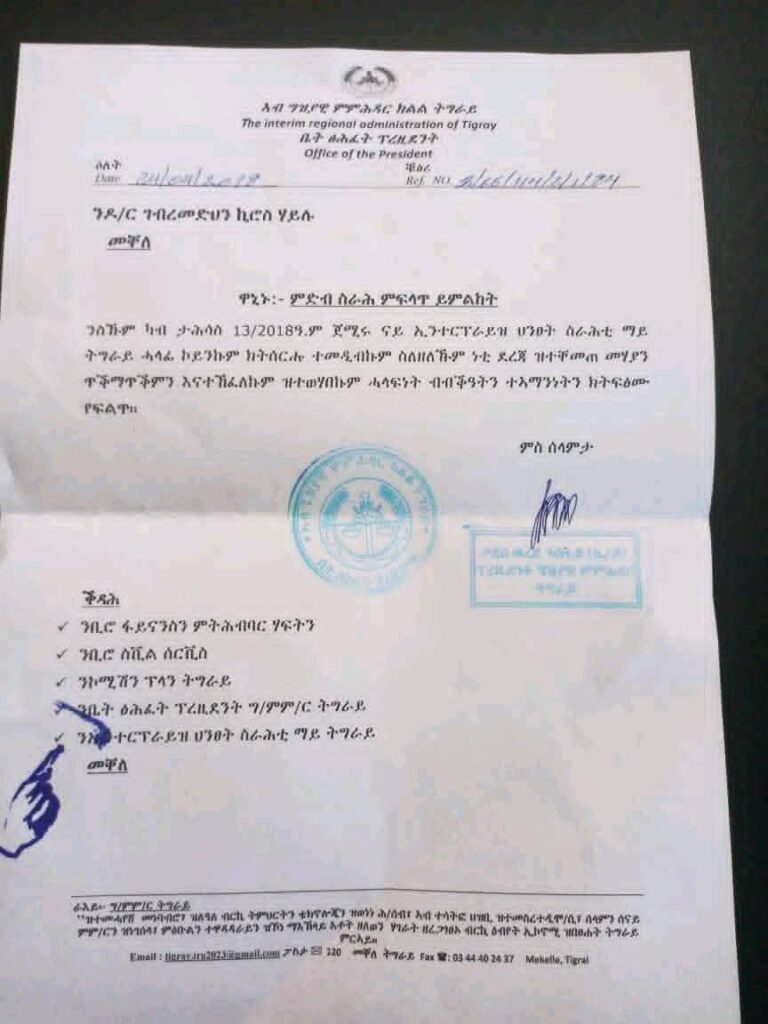
Within this framework, President Tadese is also reported to be working to bring together Tigray’s sidelined professional and administrative capacities. The recent appointment of former Mekelle City Mayor Dr. Gebremedhin Kiros as Head of the Tigray Water Works Construction Enterprise has been cited by observers as part of this broader reintegration effort. Dr. Gebremedhin, who spent more than a year in detention on charges later ruled unfounded by a court, had previously led the same enterprise for several years before serving as interim mayor of Mekelle. His return to public service is seen by analysts as a signal of institutional continuity and an attempt to restore experienced leadership.
Political observers argue that such appointments reflect the president’s stated objective of summing up Tigray’s human capital, particularly professionals who were marginalized, imprisoned, or excluded during periods of political polarization. According to these assessments, the administration’s emphasis on inclusion is aimed at reducing internal divisions and refocusing governance on the long term interests of the people of Tigray.
At the same time, growing attention is being placed on the role of the public, both inside Tigray and within the diaspora. Civic leaders and community voices stress that popular backing is now critical to safeguarding the peace process and protecting the interim administration from political destabilization. Public support, they argue, is essential not only for legitimacy but also for countering efforts to undermine institutional recovery.
President Tadese has repeatedly signaled a strong willingness to work closely with international partners to secure lasting peace in Tigray, Ethiopia, and the wider Horn of Africa. Regional analysts view this outward facing engagement as an attempt to link Tigray’s recovery to broader regional stability, humanitarian access, and economic rehabilitation.

However, this diplomatic and inclusive approach has encountered resistance from remnants of hardline factions within the TPLF leadership.
While his diplomatic engagement with the federal government and the international community has been framed by observers as essential for implementing peace and securing recovery support, analysts caution that the greatest challenges may now be emerging from within regional institutions themselves.
Political observers have warned that upon President Tadese’s return to Mekelle, remnants of hardline political elements could seek to challenge his authority, mobilize opposition, or obstruct the practical implementation of peace related policies.
Recent developments within local governance structures are being cited as early indications of this risk. Analysts argue that institutional resistance, rather than open political confrontation, may become a preferred tactic for undermining executive authority during the interim period.
One example frequently referenced by observers is the reported opposition by Mekelle City’s Transport Office to the introduction of an electronic ticketing system at the city’s bus stations.
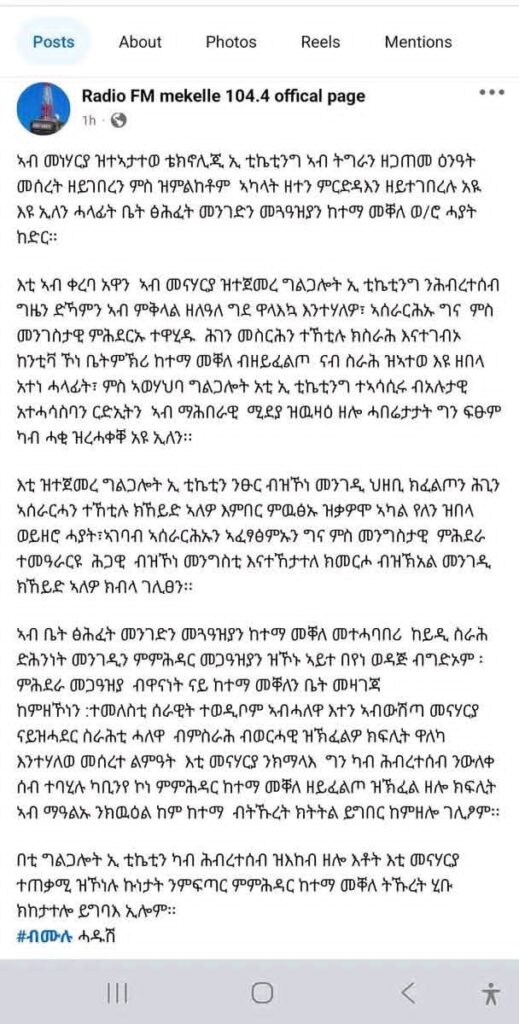
The E-ticketing initiative, understood to be part of a broader effort to improve transparency, efficiency, and revenue accountability in public services, has reportedly faced pushback from within the institution responsible for its implementation. Analysts note that while policy disagreements are not unusual in transitional administrations, the nature and timing of such resistance raise concerns about coordinated obstruction of executive decisions.

Governance experts argue that resistance to administrative reforms can reflect deeper political tensions rather than technical objections alone. In this view, opposition to executive orders issued by the president or his cabinet may signal broader dissatisfaction among entrenched actors who feel threatened by reform oriented governance, particularly measures aimed at accountability, digitization, and institutional restructuring.
According to analysts, these internal dynamics pose a serious challenge to governance at a time when administrative coherence and unity are critical. The success of the interim administration, they conclude, will largely depend on its ability to manage internal polarization, maintain federal and international cooperation, and continue reintegrating professional capacities in the service of long term stability and the collective future of the people of Tigray.
Editor’s Disclaimer:
The views and opinions expressed in articles published by Horn News Hub are those of the authors and do not necessarily reflect the official position or editorial stance of Horn News Hub. Publication does not imply endorsement.