

Mekelle/Tel Aviv/Nairobi/Pretoria/London
A Historic First, a Test of Leadership:
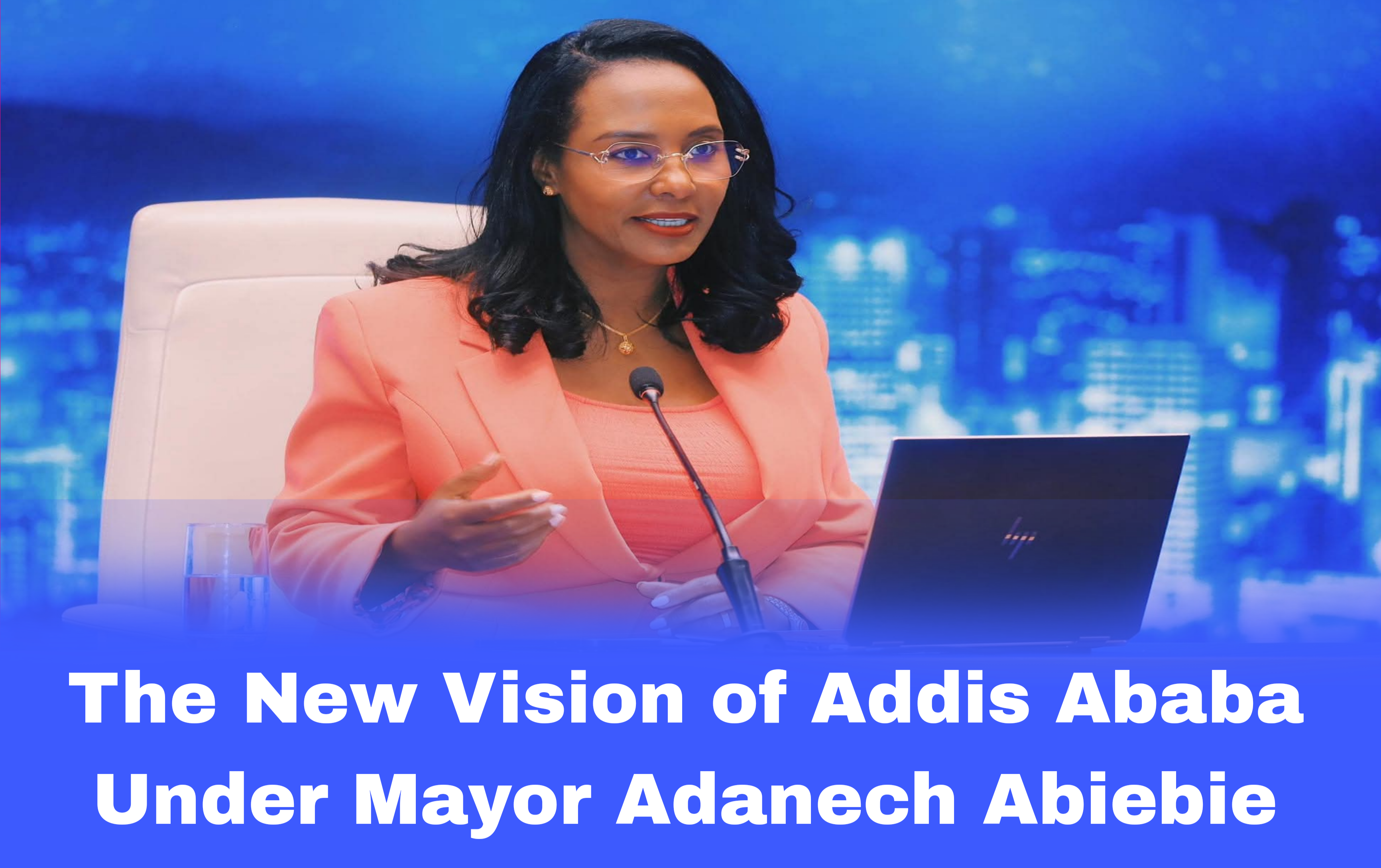
Addis Ababa Mayor Adanech Abiebie and the Changing Face of Urban Governance
Addis Ababa, Africa’s diplomatic capital and Ethiopia’s political heartbeat, has entered a consequential chapter in its modern history. The appointment of Mayor Adanech Abiebie as the first woman to lead the city since the establishment of the mayoral office in 1910 represents a landmark moment not only for gender representation, but for the evolution of urban governance in Ethiopia.

Her leadership comes at a time of exceptional complexity. Addis Ababa is undergoing one of the most ambitious urban transformations on the continent, marked by large-scale infrastructure development, extensive urban renewal, and efforts to reposition the city as a modern African hub of diplomacy, commerce, and innovation. At the same time, these changes unfold amid political polarization, economic pressure, and heightened public scrutiny.
Mayor Adanech Abiebie’s tenure must therefore be understood not simply through the lens of symbolism, but through the demanding realities of governing a rapidly expanding metropolis with deep historical, social, and political sensitivities.

What stands out in her leadership is institutional focus under pressure. Navigating entrenched political resistance and traditional power structures, she has continued to pursue an agenda centered on modernization, public order, and administrative reform. Such resolve, particularly in a political environment historically resistant to change and to women in authority reflects a leadership style grounded in discipline rather than rhetoric.

Urban initiatives such as expanded road networks, public space development, and the ongoing Riverside Project reflect an effort to redefine Addis Ababa’s relationship with its environment and its citizens. While legitimate concerns remain regarding inclusivity, displacement, and affordability issues that merit continued public debate the scale and intent of these interventions signal a city attempting to break from stagnation and imagine a long-term future.
Equally significant is Mayor Adanech’s consistent emphasis on anti-corruption and administrative accountability. In societies where corruption erodes public trust, weakens institutions, and amplifies inequality, leadership that prioritizes transparency and enforcement is neither easy nor politically neutral. It requires confronting vested interests and absorbing resistance that often operates quietly but forcefully. Her approach suggests an understanding that sustainable urban development depends as much on institutional integrity as on physical infrastructure.

Historically, women leaders in mayoral roles from Susanna Salter in 19th-century America to Elizabeth Yates in the British Empire have often emerged during periods of transition and reform. Addis Ababa’s own moment has arrived in the 21st century, shaped by different pressures but guided by the same principle: that effective leadership is defined by competence, resilience, and ethical clarity, not by gender.

Mayor Adanech Abiebie’s experience also highlights a broader truth about contemporary leadership in Africa’s capitals. Governing today’s cities demands more than political legitimacy; it requires technical capacity, crisis management skills, and the ability to balance ambition with social responsibility. In this context, her tenure represents both an opportunity and a test one whose outcomes will influence not only Addis Ababa’s trajectory, but public confidence in reform-oriented governance.

Leadership is rarely measured in moments of calm. It is revealed in periods of turbulence, when resistance intensifies and expectations collide. By maintaining institutional continuity while pursuing reform, Mayor Adanech has demonstrated a steady commitment to public service under difficult conditions.
As Addis Ababa continues its transformation, the city and the country benefits from leadership that is firm yet measured, ambitious yet accountable. Mayor Adanech Abiebie’s historic role should therefore be viewed not as an endpoint, but as part of a broader process toward more inclusive, professional, and future-oriented governance.

Her story is one of precedent, perseverance, and possibility and it remains closely intertwined with the evolving story of Addis Ababa itself.
Author
Ambassador (Ret.) Laurent M. Delacroix
Senior Retired European Union Diplomat
Former EU Adviser on Urban Governance and Institutional Reform
Observer of Addis Ababa’s Political and Urban Evolution (1970s–Present)
Prepared for
Horn News Hub
in collaboration with
Nile–Red Sea Strategic Foresight & Vision (NRSFV)
Independent. Insightful. Interconnected.
Research analysts and city-regeneration policy experts shaping strategic discourse on the Horn of Africa.

Editor’s Disclaimer:
The views and opinions expressed in articles published by Horn News Hub are those of the authors and do not necessarily reflect the official position or editorial stance of Horn News Hub. Publication does not imply endorsement.