
Mekelle/Tel Aviv/Nairobi/Pretoria/London
From Guns to Minds: A Shift in Tigray’s Political Discourse
By Horn African Geopolitical Review.
Independent Regional & International Geostrategy | Security–Military–Political Analysis
From Guns to Minds
How Tigray’s Future Depends on Thinking Beyond the Battlefield
A Strategic Rupture in Tigray’s Political Consciousness
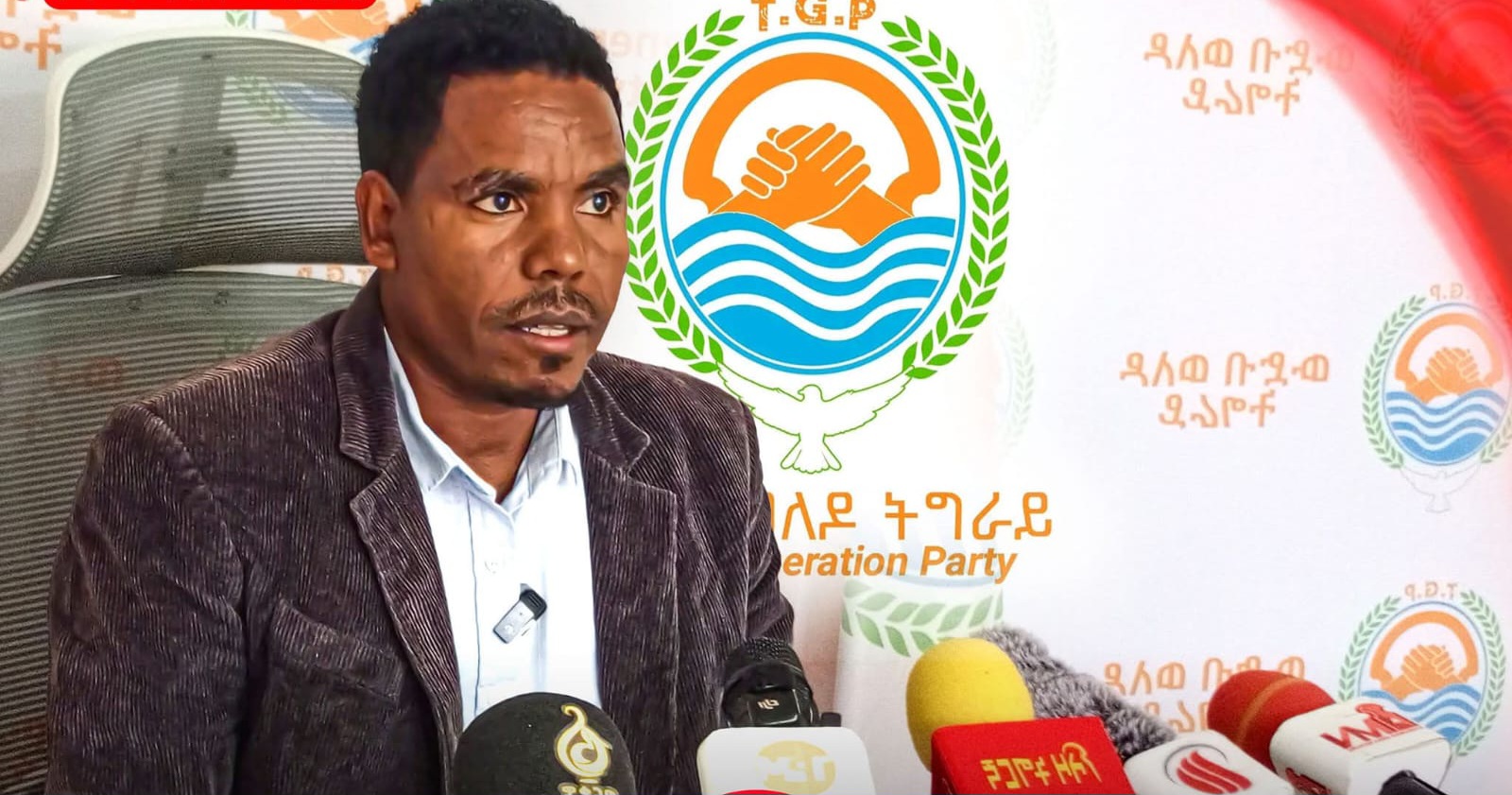
An Analysis of Tigray Generation Party (TGP) Leader
Mr. Guesh Gidey Hadgu’s Paradigm-Shift Speech
Introduction: When Language Itself Becomes a Battlefield
For decades, Tigray’s political language has been forged in war. Speeches were designed to mobilize, not to reflect; slogans replaced strategy; sacrifice was glorified while governance was indefinitely postponed. Politics became synonymous with survival, and legitimacy flowed not from competence or consent, but from military endurance.
Within this exhausted political tradition, Mr. Guesh Gidey Hadgu’s speech stands out as a decisive rupture. It represents a conscious attempt to break Tigray’s long dependence on militarized thinking and replace it with a politics grounded in intellect, strategy, and civilian leadership.
This was not rhetorical experimentation. It was a strategic intervention into Tigray’s political imagination, delivered at a moment of profound moral and social depletion—after genocide, mass starvation, internal fragmentation, and the collapse of trust between rulers and society.
“Victory by Arms” versus “Victory by Minds”: An Ideological Break
The core assertion of the speech—“Our victory is by our heads, not by our arms”—is not a catchy slogan. It is a direct ideological challenge to the TPLF’s historic doctrine, which equated political legitimacy with battlefield dominance and elevated military force from an instrument of politics into its very purpose.
This contrast exposes two fundamentally different political logics.
Two Political Worlds in Conflict
Thinking by the Army’s Muscles
This approach privileges:
Coercion over consent
Command over deliberation
Secrecy over accountability
Short-term control over long-term stability
In practice, this logic produces militarized elites, captured institutions, economic decay, and international isolation. In Tigray, it culminated in state capture, internal repression, and the normalization of famine as a political condition rather than a moral emergency.
Thinking by Heads: Politics as Intelligence
By contrast, intellectual and strategic thinking prioritizes:
Reasoned judgment over impulsive force
Diplomacy over permanent confrontation
Institution-building over personality cults
Ethics and foresight over revolutionary romanticism
Here, military force is treated as a tool—not a doctrine—and is subordinated to political objectives, civilian oversight, and long-term societal recovery.
Force Is Not Strategy: A Forgotten Political Truth
Political theory and historical experience converge on a simple but often ignored truth:
war is a political act, not a military one.
Military strength is a means. Political vision defines the ends.
History is filled with commanders who won battles yet lost wars. Hannibal’s victories against Rome remain the classical example—tactical brilliance without strategic success. Tigray’s recent experience reflects a similar tragedy: heroic endurance without political payoff, immense sacrifice without sustainable outcomes.
Mr. Guesh’s intervention confronts this failure directly. His message is unambiguous: force without strategy is not power—it is liability.
Hard Power, Soft Power, and the Reality of the Horn of Africa
The speech reflects a sober understanding of contemporary geopolitics:
Hard power can deter threats but cannot generate legitimacy.
Soft power—diplomacy, economic credibility, moral authority, narrative control—determines whether survival evolves into recovery.
In a region shaped by volatile alliances, external interventions, and post-conflict bargaining, militarism without diplomacy leads only to marginalization. Strategic thinking, not ideological rigidity, creates political space.
This is not idealism. It is pragmatism forged through failure.
Authoritarian Reflexes versus Democratic Intelligence
Implicit throughout the speech is a clear rejection of security-elite dominance over civilian life.
Militarized politics centralize power in narrow circles, suppress dissent, and treat society as a resource to be consumed. Democratic intelligence distributes authority, values debate, and recognizes a hard truth: no society heals through fear.
By elevating “heads” over “arms,” Mr. Guesh affirms a principle long eroded in Tigray—civilian supremacy over the military. For a society emerging from mass violence, this is not optional. Guns cannot remain the final arbiter of political truth.
Between Hunger and Guns: The Moral Reckoning
The speech gains profound moral weight when read alongside Mr. Guesh’s stark observation:
Tigray is suffocated between hunger and guns.
This is not rhetorical exaggeration. Starvation in post-war Tigray has been institutionalized—through state capture, predatory governance, and the systematic destruction of livelihoods. Sites such as Hitsats symbolize the ultimate consequence of muscle-driven politics: a war waged not only against enemies, but against society itself.
Any political order that cannot feed its people has already forfeited its moral claim to rule.
A New Generation, A New Definition of Leadership
The speech also signals a generational shift in leadership philosophy.
The emerging leader is no longer defined by:
Commanding fear
Revolutionary credentials
Militarized masculinity
Instead, leadership is measured by:
Empathy and social intelligence
Ethical judgment
Strategic adaptability
The ability to persuade rather than intimidate
In a traumatized society, listening becomes a form of power. Trust becomes a strategic asset. Governance becomes an act of repair rather than domination.
Why the Message Resonated
The speech’s strength lay in discipline, not theatrics.
It offered:
One clear and coherent message
Moral confidence without triumphalism
Recognition of suffering without exploitation
A vision that invites participation rather than obedience
Above all, it treated Tigrayans as thinking political agents, not expendable instruments of mobilization. That alone marks a profound cultural break.
Conclusion: Thinking as the Most Radical Act
Mr. Guesh Gidey Hadgu’s speech does not resolve Tigray’s crisis. But it fundamentally redefines the terms of political possibility.
After decades of militarized slogans, recycled elites, and permanent emergency politics, the assertion that the future belongs to minds, not muscles is both radical and overdue.
If sustained through coherent policy, institutional reform, and ethical consistency, this shift could signal the beginning of a post-TPLF political era—one grounded in intelligence, accountability, and humane statecraft.
For Tigray, emerging from genocide and betrayal, thinking by heads may be the most revolutionary act of all.
Editor’s Disclaimer:
The views and opinions expressed in articles published by Horn News Hub are those of the authors and do not necessarily reflect the official position or editorial stance of Horn News Hub. Publication does not imply endorsement.