
Ethiopia’s Quiet Geopolitical Play: Positioning for Power Along the Red Sea Corridor
Writen by Chekole Alemu
By any measure, the sequence of diplomatic engagements led by Abiy Ahmed over recent months is striking. At first glance, the meetings, phone calls, and summit sidelines may appear routine. Taken together, they reveal a deliberate and calibrated strategy that places Ethiopia at the center of an increasingly contested geopolitical space.
This is not diplomacy as usual. It is positioning.
The pattern begins at the BRICS Summit Kazan 2024, where Ethiopia engaged with Masoud Pezeshkian and other global actors, signaling its entry into broader non Western geopolitical frameworks. From there, the outreach widened. On January 8, 2026, Wang Yi was received in Addis Ababa, reinforcing ties with China, a long standing economic partner with deep infrastructure investments across Ethiopia.
Just weeks later, on February 12, Addis Ababa hosted Faisal bin Farhan Al Saud, representing Saudi Arabia, a key player in Red Sea security and Gulf politics. The discussions extended beyond bilateral ties to encompass the Horn of Africa and the fragile balance of power along one of the world’s busiest maritime corridors.
Then came a notable diplomatic convergence. Between March 9 and 11, representatives from Israel, Jordan, Kuwait, United Arab Emirates, Oman, and Saudi Arabia all engaged with Ethiopian officials in Addis Ababa. The agenda focused on economic cooperation, development, and regional stability, pointing to Ethiopia’s growing relevance as a diplomatic hub bridging Africa and the Middle East.
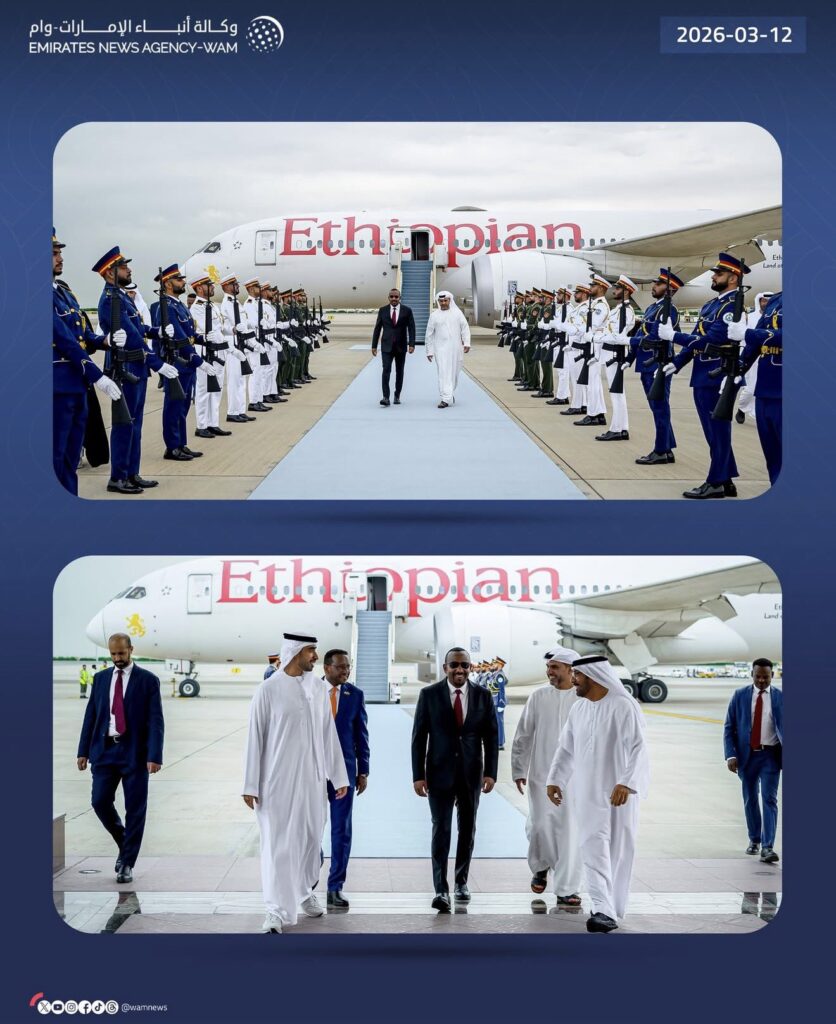
The sequence did not stop there. On March 11, Marco Rubio held talks with Abiy Ahmed, emphasizing counterterrorism, economic growth, and long term security cooperation across Africa. Two days later, the Ethiopian leader met Mohammed bin Zayed Al Nahyan, deepening ties with a country that has rapidly expanded its economic and strategic footprint in the Horn.
By March 16, another major power entered the picture. Vladimir Putin held a direct conversation with Ethiopia’s prime minister, covering trade, humanitarian cooperation, and political alignment.
Individually, each engagement reflects standard statecraft. Collectively, they form something more structured, a multi vector foreign policy that cuts across ideological lines and competing global blocs.
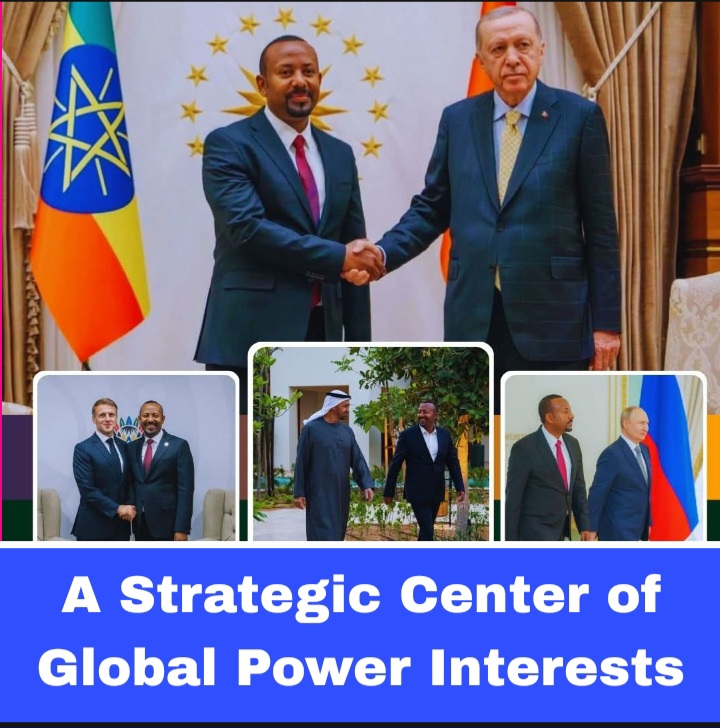
A Strategic Center of Global Power Interests
Much like a country whose depth of history and strength of character naturally draw attention, Ethiopia today finds itself at the center of growing global interest. Its appeal is not accidental. It is rooted in a long historical legacy and reinforced by a renewed sense of transformation in the present.
Today, Ethiopia has become a focal point for global and regional powers, including the United States, Russia, the Arab world, Turkey, France, Italy, Azerbaijan, and partners across Africa. This reflects the direction set at the highest levels of leadership and the broader effort to build a new national trajectory. These efforts are steadily positioning the country as a credible and attractive partner in international cooperation.
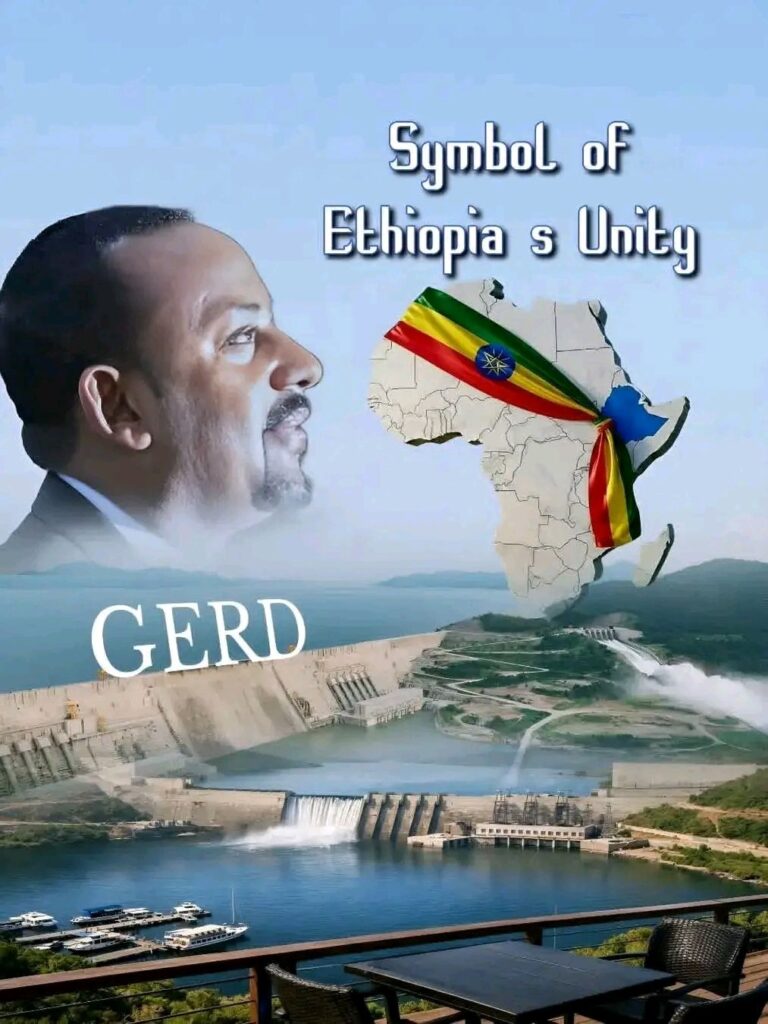
Ethiopia’s long standing independence and its symbolic role in Africa’s liberation movements continue to carry weight in global diplomacy. At the same time, its ongoing reforms and economic ambitions are reshaping its image into that of a rising hub in global trade and political engagement.
In practical terms, Ethiopia’s growing influence stems from a combination of untapped potential and active diplomacy. This has elevated the country into a higher strategic position, while also creating new opportunities to safeguard national interests and contribute to regional peace.
Across Africa, this shift is being closely watched. From Nairobi to Cairo and the political centers of South Africa, a common sentiment is emerging. Ethiopia’s effort to shape its own path is increasingly seen as a reference point for the continent.
Among policymakers and intellectuals, the diplomatic and economic strategies led by Abiy Ahmed are drawing attention as a model of how African states can reposition themselves in a shifting global order. For many observers, Ethiopia’s trajectory signals more than national progress. It reflects a broader reawakening across Africa.
Connecting the dots
Iran, China, Saudi Arabia, Israel, the United States, the UAE, and Russia rarely align in the same diplomatic space. Yet all are now actively engaging Ethiopia.
That convergence is not accidental.
It reflects the growing strategic weight of the Horn of Africa, particularly the Red Sea corridor, a maritime artery through which a significant share of global trade and energy supplies flows. Instability in this region reverberates far beyond Africa, affecting supply chains, security calculations, and global markets.
Ethiopia, though landlocked since Eritrea’s independence in 1993, remains the region’s demographic, economic, and military heavyweight. Its geographic proximity to the Red Sea, combined with its internal reforms and external outreach, positions it as a central actor in shaping the corridor’s future.
In this context, Addis Ababa is no longer just a diplomatic capital hosting the African Union. It is becoming a strategic intersection where global powers test alignments, manage rivalries, and secure interests.
From reform to regional influence
This geopolitical repositioning is closely tied to Ethiopia’s internal transformation under its reformist leadership.
Since coming to power, Abiy Ahmed has pursued a dual strategy, domestic restructuring and external re engagement. Economic liberalization efforts, infrastructure expansion, and attempts, however uneven, to stabilize conflict affected regions have been paired with an active foreign policy designed to reintroduce Ethiopia as a reliable regional partner.
The outreach to diverse global actors reflects a pragmatic approach. Rather than aligning exclusively with one bloc, Ethiopia is cultivating relationships across competing powers, maximizing diplomatic space while attracting investment, security cooperation, and political support.
At the same time, the question of sea access remains central. For a country of over 130+ million people, reliance on external ports is both an economic constraint and a strategic vulnerability. Recent diplomatic moves suggest that Ethiopia is not only seeking economic partnerships but also building the conditions for sustainable and secure access to maritime routes.
A shift in role and responsibility
When these developments are viewed together, a clearer picture emerges.
Ethiopia is positioning itself as the anchor state of the Horn of Africa, central to regional stability and increasingly critical to securing the Red Sea corridor. This role carries both opportunity and risk.
On one hand, it elevates Ethiopia’s global standing, attracting investment and diplomatic attention. On the other, it places the country at the heart of overlapping rivalries involving Gulf states, Western powers, and emerging global actors.
This is not just geography. It is a shift in power, influence, and responsibility.
The coming years will test whether Ethiopia can translate this diplomatic momentum into tangible gains, economic growth, internal stability, and equitable access to maritime trade. If it succeeds, the current wave of high level engagements may be remembered not as isolated events, but as the early moves in a long strategic game, one that reshapes both the Horn of Africa and the wider Red Sea arena.
———-
Editor’s Disclaimer:
The views and opinions expressed in articles published by Horn News Hub are those of the authors and do not necessarily reflect the official position or editorial stance of Horn News Hub. Publication does not imply endorsement.