

Mekelle/Tel Aviv/Nairobi/Pretoria/London
Ethiopia and UAE Reaffirm Strategic Partnership Amid Regional and Global Shifts
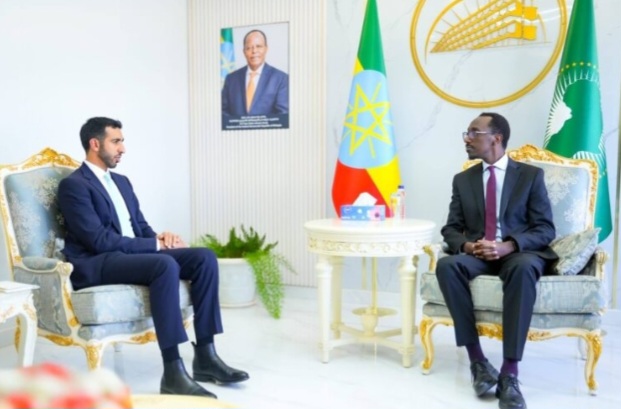
Ethiopia and the United Arab Emirates have renewed their comprehensive strategic partnership following high level ministerial talks held in Addis Ababa on January 6, underscoring the growing depth of political, economic, and security ties between the two countries.
The discussions took place during an official visit by UAE Minister of State Shakhboot bin Nahyan Al Nahyan, who met with senior Ethiopian officials to review bilateral cooperation and assess regional developments across the Horn of Africa and the wider Middle East. According to official statements, both sides reiterated their shared commitment to safeguarding peace, security, territorial integrity, and economic interests, framing the partnership as one anchored in mutual stability rather than short term diplomacy.
The timing of the talks is significant. Ethiopia is navigating a complex post conflict environment while positioning itself as a regional diplomatic hub and an emerging economic powerhouse. For the UAE, Ethiopia remains a strategic partner in Africa, offering political influence, market access, and a gateway to the Horn of Africa, a region of rising geopolitical importance due to Red Sea security, trade routes, and global supply chains.
Beyond security and political coordination, the partnership increasingly centers on economic and development cooperation. The UAE has been one of Ethiopia’s most visible partners in investment, humanitarian support, and infrastructure financing over the past decade. Analysts note that Abu Dhabi’s engagement aligns with its broader Africa strategy, which prioritizes long term economic partnerships and political stability over transactional alliances.
Climate diplomacy emerged as a key pillar of the renewed partnership. The UAE expressed readiness to support Ethiopia in delivering ambitious outcomes at the United Nations Climate Conference COP32, which Ethiopia is set to host in 2027. This commitment reflects Ethiopia’s growing role in global climate governance and its efforts to link climate action with development priorities, particularly in agriculture, renewable energy, and climate resilience.
For Ethiopia, hosting COP32 is both an opportunity and a test. Success would require strong international backing, technical capacity, and sustained financing. UAE support, given its experience hosting COP28 and its influence in global climate finance, could strengthen Ethiopia’s position and credibility on the global stage.
Regionally, the reaffirmation of ties also signals a shared interest in stability across the Horn of Africa at a time of ongoing tensions in Sudan, Somalia, and the Red Sea corridor. While official statements avoided specific references, the emphasis on peace and territorial integrity suggests alignment on preventing further regional fragmentation and protecting strategic trade and security interests.
Overall, the Addis Ababa talks reflect a partnership that has moved beyond symbolic diplomacy. As Ethiopia seeks to balance domestic recovery with regional leadership and global engagement, and as the UAE expands its strategic footprint in Africa, the relationship appears set to play a consequential role in shaping political, economic, and climate outcomes in the years ahead.
Editor’s Disclaimer:
The views and opinions expressed in articles published by Horn News Hub are those of the authors and do not necessarily reflect the official position or editorial stance of Horn News Hub. Publication does not imply endorsement.