
Mekelle/Tel Aviv/Nairobi/Pretoria/London
Addis Ababa: A Clean and Sustainable Future through Corridor Development and River Revitalization
By Chekole Alemu
Addis Ababa, once known for its hustle and bustle, is steadily transforming into a city that values sustainability, clean environments, and a high quality of life for its citizens. One of the focal points of this ambitious transformation is the development of green corridors and the revitalization of its riversides. These projects are not merely urban beautifications but a demonstration of a bold vision to make Addis Ababa cleaner, greener, and more livable for its growing population.
Green Corridors: A Path to Sustainable Urban Living
The city’s green corridor development is one of the most significant and forward-thinking initiatives. These corridors are not just pathways for transportation but are designed to integrate natural elements into urban life, connecting green spaces, parks, and pedestrian-friendly areas. This initiative is rooted in the belief that urban development and nature can coexist in harmony, creating spaces where both people and the environment thrive.

By incorporating green corridors into Addis Ababa’s urban planning, the city is addressing several key issues: air pollution, traffic congestion, and the lack of public spaces. These corridors encourage walking and cycling, which helps to reduce vehicle emissions and fosters a healthier lifestyle for residents. Moreover, the corridors are lined with trees and vegetation that not only beautify the city but also play a critical role in combating urban heat islands, improving air quality, and promoting biodiversity.
The corridor projects are designed to connect key areas of the city, making transportation more sustainable and efficient. As these green spaces expand, Addis Ababa is positioning itself as a leader in Africa’s urban sustainability efforts. The green corridors are not only aesthetic but serve as vital areas for recreation and community interaction, enriching the urban experience.

Green Spaces and Children’s Recreation: A Critical Element for Healthy Development
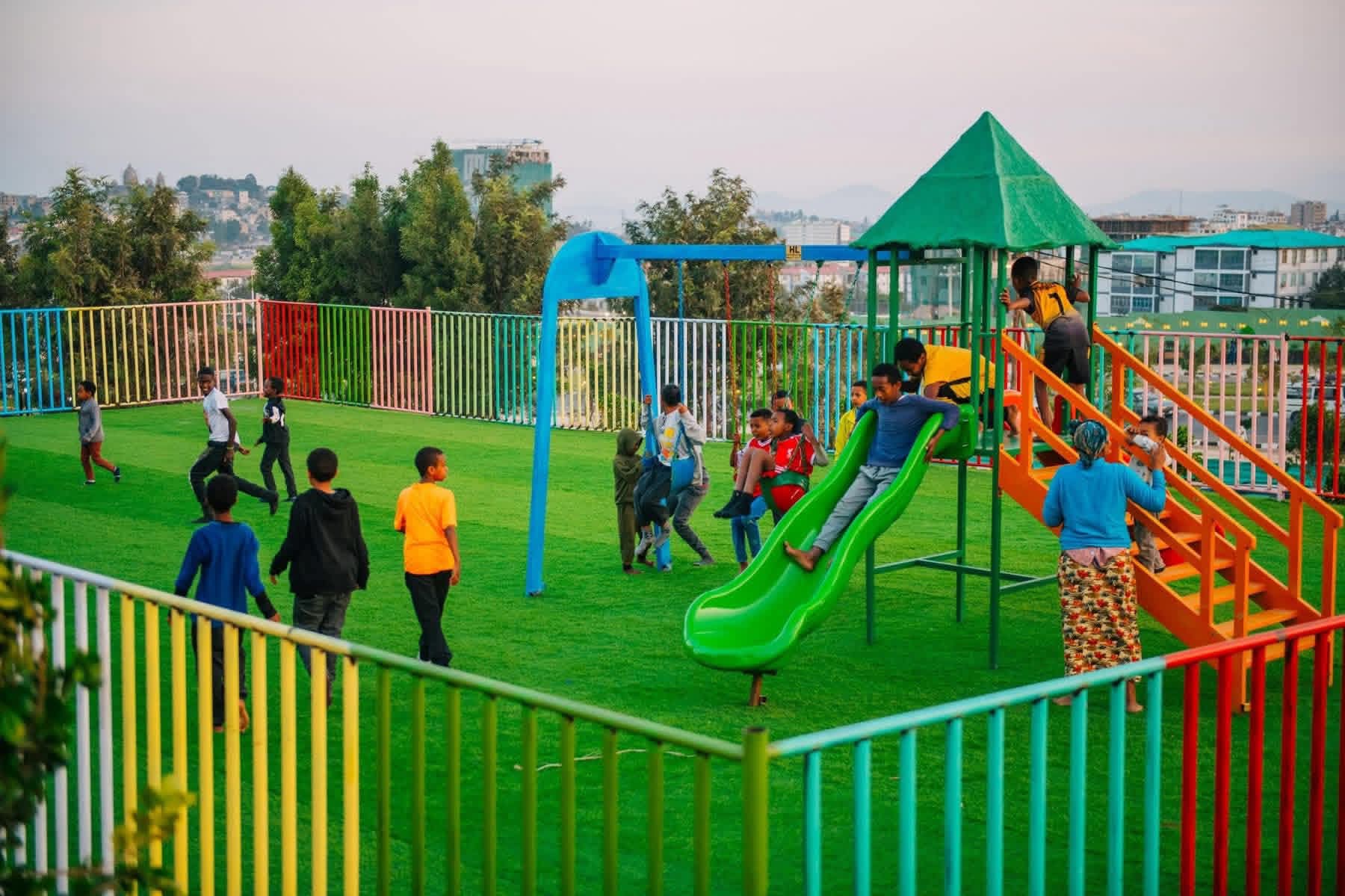
One of the most important aspects of Addis Ababa’s green corridor initiative is its impact on children’s development. In rapidly growing cities, access to open spaces for children to play and engage in outdoor activities is often limited. However, the expansion of green areas in Addis Ababa is changing that by providing dedicated spaces where children can play, explore, and develop their physical and mental well-being.

Research consistently shows that outdoor play in natural environments is essential for children’s health and development. Green spaces offer children the opportunity to engage in physical activities such as running, playing sports, or simply enjoying nature, all of which are vital for their physical growth. Additionally, these environments foster creativity, social skills, and emotional well-being. The freedom to explore green spaces allows children to develop cognitive abilities and build social connections with their peers in a safe and nurturing environment.
By creating safe, accessible, and beautiful play areas within the city’s green corridors, Addis Ababa is ensuring that future generations have access to the physical and mental health benefits that nature provides. The city’s commitment to providing children with spaces for recreation and interaction aligns with its broader efforts to create a child-friendly urban environment. Green spaces contribute to reducing stress, anxiety, and other mental health challenges that children may face, particularly in urban settings. Furthermore, such areas offer valuable opportunities for families to spend quality time together in nature, strengthening community bonds.
River Revitalization: A Step Towards Cleanliness and Sustainability
Parallel to the development of green corridors, the river revitalization project stands out as a cornerstone of Addis Ababa’s commitment to environmental cleanliness and sustainable urban planning. Addis Ababa is situated at the crossroads of several rivers, and yet, in the past, these waterways have often been neglected and polluted. However, the city’s leadership is working diligently to restore these rivers to their former natural beauty while also ensuring that they become usable and accessible for future generations.
The primary goal of the river revitalization project is to reduce pollution and improve water quality, making the rivers more suitable for recreational use and increasing the overall aesthetic appeal of the city. The government has invested in cleaning up the riverbanks, clearing out waste, and developing infrastructure that will prevent further contamination. Moreover, these river areas will be transformed into spaces where citizens can enjoy nature while being part of a cleaner, greener Addis Ababa.
With the revitalized riversides, the city is not only ensuring that its natural resources are protected but also enhancing the quality of life for its residents. These river corridors are being transformed into public spaces with walking paths, parks, and leisure areas. This integration of nature within the urban fabric offers both aesthetic value and environmental benefits, creating a welcoming environment for residents and visitors alike.
A Vision for the Future: Urban Planning That Prioritizes People and the Environment
Addis Ababa’s focus on sustainable urban development is more than just an aesthetic improvement; it is a model for cities across Africa that are grappling with rapid urbanization. As the city’s population grows, the need for infrastructure that accommodates both human activity and environmental sustainability is becoming increasingly apparent. The development of green corridors and the revitalization of river areas serve as a reminder that urban growth can and should be pursued with care for the environment.
The leadership of Addis Ababa, particularly under Mayor Adanech Abiebie, has set the stage for a brighter future. The city’s urban renewal projects are not just about beautification but about creating a healthy, sustainable, and livable environment. The green corridors are not only transforming the city’s physical appearance but also the daily lives of residents, making transportation cleaner, healthier, and more accessible. Meanwhile, the river revitalization efforts are breathing new life into neglected areas, turning them into public assets that contribute to the city’s overall aesthetic and environmental quality.

As Addis Ababa continues to rise, its commitment to sustainability, clean environments, and innovative urban planning will ensure that the city remains a symbol of progress. Through the integration of green spaces, corridors, and river revitalization, Addis Ababa is not just building a modern city but one that prioritizes the health and well-being of its people and the environment for generations to come. By prioritizing child-friendly spaces, the city is also ensuring that its youngest residents will grow up in an environment that nurtures their physical, emotional, and social development laying a strong foundation for the future of Addis Ababa and Ethiopia as a whole.
Editor’s Disclaimer:
The views and opinions expressed in articles published by Horn News Hub are those of the authors and do not necessarily reflect the official position or editorial stance of Horn News Hub. Publication does not imply endorsement.