Analyzing Misconceptions: Trump’s Statements on the Grand Ethiopian Renaissance Dam
By Chekole Alemu
Recent remarks by former U.S. President Donald Trump concerning the Grand Ethiopian Renaissance Dam (GERD) have drawn attention for containing several factual inaccuracies. Experts and officials have highlighted these misconceptions, noting that they conflict with established scientific, hydrological, and geopolitical realities surrounding one of Africa’s largest infrastructure projects.
Funding and Ownership
Trump claimed that the United States financed GERD. This is inaccurate. The dam was conceived, built, and financed entirely by Ethiopia through public bonds, domestic contributions, and state resources. No foreign government or international organization provided financial support. The project reflects Ethiopia’s sovereign initiative to harness its own river resources for national development.
Legendary Ethiopian filmmaker Tedros Teshome addressed this claim publicly, asking, if America truly financed the dam, to provide the invoice so that Ethiopians could repay the funds. His statement underscores the inaccuracy of Trump’s assertion and emphasizes Ethiopia’s ownership and responsibility for the project.
Function and Water Flow
Claims that GERD obstructs the Nile or has cut off water to downstream countries are incorrect. Hydropower dams operate by channeling water through turbines to generate electricity; they do not consume or permanently block water. The Nile continues to flow downstream, and Ethiopia has not denied Egypt or Sudan access to its waters.
Nile Origins and Hydrology
One of Ethiopia’s top officials, Dr. Birhanu M. Lenjiso, responded to Trump’s remarks on his personal social media account, emphasizing the scientific reality of the Nile’s origins. According to Dr. Birhanu:
“Ethiopia is the primary source of the Nile’s waters. Approximately 85% of the total Nile flow originates from Ethiopian highlands through three major tributary systems: the Blue Nile (Abbay) — 53%, the White Nile (Baro–Akobo–Sobat) — 24%, and the Black Nile (Tekeze–Atbara) — 8%. These rivers are not marginal contributors; they are the hydrological backbone of the entire Nile Basin. Every year, rainfall over Ethiopia’s highlands is converted into the water that sustains more than 300 million people downstream. Without Ethiopia, there is no Nile in any meaningful physical sense. The river does not pass through Ethiopia; it originates here.”
Dr. Birhanu’s intervention provides clarity where official channels have been slow. Observers note that the Ethiopian embassy in Washington, D.C., along with broader government institutions, has been largely absent in responding to repeated misrepresentations of the dam. The lack of an official, coordinated response risks allowing misinformation to shape international perceptions and diplomatic narratives.
GERD: Powering Africa’s Future
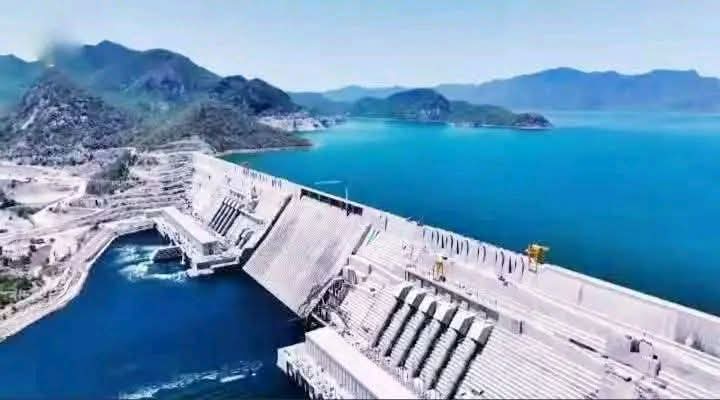
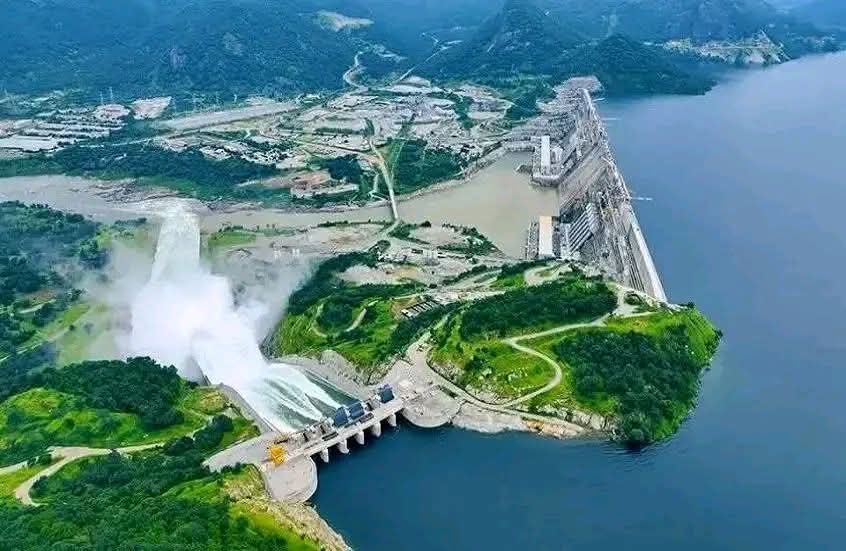
The Grand Ethiopian Renaissance Dam, built on the Blue Nile River, stands as a monumental symbol of Ethiopia’s ambition, resilience, and commitment to sustainable development. As Africa’s largest hydroelectric dam, GERD is not just an engineering marvel but a beacon of hope for millions across Ethiopia and the entire region, aiming to transform the continent’s energy landscape.
People in Africa are talking about the GERD.
The project has the potential to generate over 6,000 megawatts of clean, renewable energy, dramatically boosting Ethiopia’s electricity supply and enabling economic growth across multiple sectors. For a country where many still live without reliable access to electricity, GERD represents a leap toward energy independence, electrification of rural areas, and overall improvement in quality of life.
Beyond electricity generation, the dam plays a crucial role in irrigation and water management, helping to secure agricultural productivity and food security for millions. While it brings challenges, including regional water-sharing negotiations and environmental concerns, Ethiopia’s commitment to responsible development and regional cooperation remains steadfast.
GERD’s construction has spurred thousands of jobs and fostered technological advancements in the region, inspiring a new generation of engineers, workers, and leaders who see it as a symbol of Africa’s self-reliance and innovation.
The dam stands as a testament to the power of human determination and the pursuit of sustainable energy solutions that address climate change and environmental conservation.
Claims of Crisis and Threats
Assertions that GERD poses a direct threat to Egypt’s survival or that Ethiopia created a regional crisis are not supported by evidence. Egypt’s water challenges predate the dam and are linked to domestic resource management and population growth rather than the existence of GERD.
The dam’s primary purpose is electricity generation for Ethiopia’s population, addressing chronic energy deficits and supporting economic growth.
Sovereignty and International Perception
Statements framing GERD as a weapon or suggesting Ethiopia required external permission to build it overlook principles of national sovereignty. Ethiopia’s decision to construct the dam was an independent act of development planning. The government’s muted official response has allowed repeated false claims to circulate unchallenged. In this context, Dr. Birhanu Lenjiso’s proactive communication is notable. His clear, science-based explanation of the Nile’s origins provides an authoritative counter-narrative that could serve as a model for the government’s diplomatic communication going forward.
Conclusion
GERD represents Ethiopia’s strategic investment in its energy future and regional development. Misconceptions about the dam’s funding, operation, and impact highlight the persistent challenge of misinformation in international discourse. While criticism of the embassy and broader government response underscores the need for more proactive engagement, interventions by figures such as Dr. Birhanu Lenjiso and Tedros Teshome demonstrate how timely, factual communication can correct misunderstandings and reinforce Ethiopia’s sovereign rights. Accurate scientific and hydrological information remains essential for clarifying international debates and ensuring that Ethiopia’s narrative is heard.
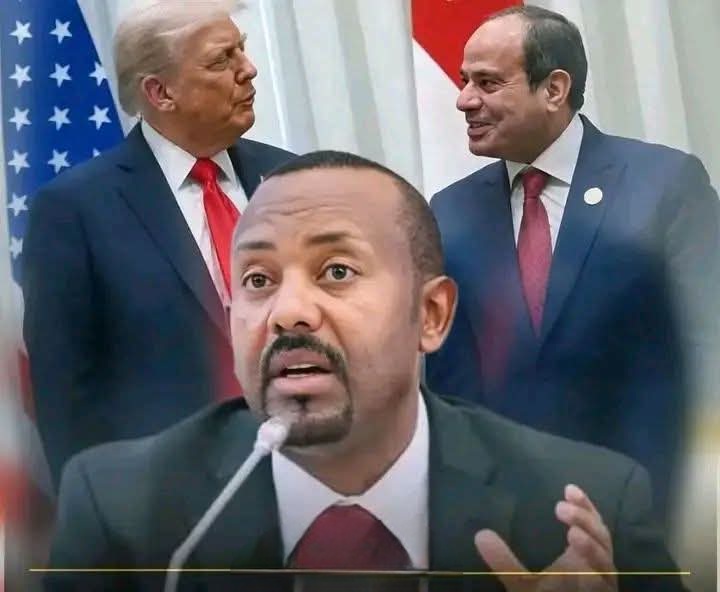
Notably, despite the controversy, Trump himself acknowledged Prime Minister Abiy Ahmed as a strong leader of Africa, a recognition that reflects Ethiopia’s growing influence and leadership role on the continent.
----------
Editor’s Disclaimer:
The views and opinions expressed in articles published by Horn News Hub are those of the authors and do not necessarily reflect the official position or editorial stance of Horn News Hub. Publication does not imply endorsement.
Mekelle/Tel Aviv/Nairobi/Pretoria/London The Forgotten Horror of Western Tigray: A Crisis of Starvation, Famine, and Political Manipulation Introduction Tigray has already…
Mekelle/Tel Aviv/Nairobi/Pretoria/London Israel’s Recognition of Somaliland: A Game-Changer for Regional Geopolitics In a historic move, Israel has officially recognized Somaliland…