
Mekelle/Tel Aviv/Nairobi/Pretoria/London
Addis Ababa’s Urban Metamorphosis: Speed, Power, and a Capital Reimagined
Written By Chekole Alemu
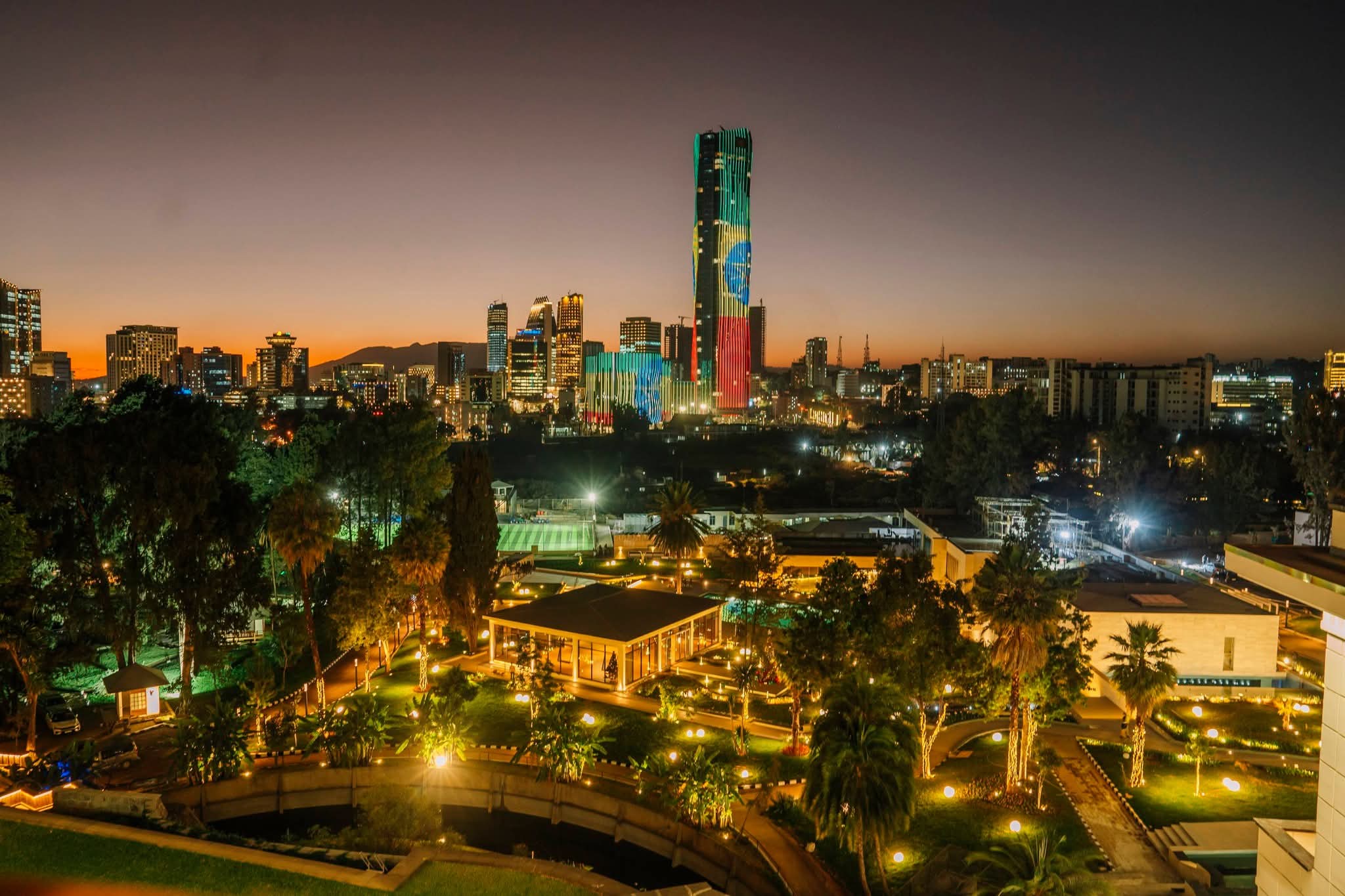
Arriving in Addis Ababa after traveling nearly 800 kilometers from Tigray, the first impression is disorienting. The scale, the speed, the architecture. At a glance, the city resembles a networked global hub, closer to Dubai than to the Addis many Ethiopians grew up knowing. Glass towers, multilane corridors, underground crossings, illuminated public spaces, and a skyline in constant motion give the sense of entering a different country altogether. Only later does the realization settle in. This is not a foreign city. This is the capital of Ethiopia.
That moment of recognition captures the essence of Addis Ababa’s current transformation. The city is undergoing one of the fastest and most centrally coordinated urban overhauls in Africa today. Change is not gradual. It is immediate, visible, and comprehensive. Entire districts are reshaped within months. For residents and returnees alike, Addis increasingly feels like a city reinventing itself in real time.
As the political and diplomatic capital of Africa, hosting the African Union, UNECA, and numerous international institutions, Addis Ababa has long held symbolic weight. What is unfolding now is a deliberate effort to align that political status with a physical and infrastructural identity that signals ambition, order, and modernity. Urban development has become a statement of national intent.
The transformation reflects Ethiopia’s continued reliance on a state led developmental model. The federal government and city administration act as the primary drivers of change, setting priorities, mobilizing resources, and executing projects at remarkable speed. Flagship initiatives such as corridor development programs, large scale road expansion, new public institutions, and environmental rehabilitation illustrate a governance approach that favors execution over delay.
This model has produced visible outcomes. New museums like the Adwa Victory Memorial link urban space with historical narrative, embedding national memory into the city’s landscape. The rehabilitation of polluted rivers and the creation of green corridors have altered long neglected environments, improving aesthetics and functionality. Public libraries, science museums, and cultural centers signal an emphasis on knowledge, identity, and public presence.
Addis Ababa’s metamorphosis is also driven by a strong entrepreneurial current. Private investment, much of it from diaspora Ethiopians, has reshaped real estate, hospitality, banking, and commercial sectors. Luxury apartments, hotels, and office complexes rise rapidly, reflecting confidence in the city’s future and its role as Ethiopia’s economic nerve center. For many, Addis has become the place where opportunity appears tangible and immediate.
What makes the transformation particularly striking is its velocity. Projects are announced and implemented almost simultaneously. The city operates with a sense of urgency, as if standing still is no longer an option. Supporters of this approach often point to a simple reality. Things are getting done. Infrastructure that once took decades to plan is now delivered within years or even months.
Socially, Addis Ababa projects resilience and momentum. A growing middle class, a large pool of educated professionals, and globally connected entrepreneurs form the backbone of the city’s dynamism. Despite bureaucratic and political constraints, the capital functions as an engine of aspiration for millions across the country. For Ethiopians outside Addis, the city represents possibility, even if that possibility remains unevenly accessible.
At the same time, the transformation has profoundly reshaped everyday life. Longstanding neighborhoods have given way to new developments. Populations have been relocated, urban routines disrupted, and social geographies rewritten. While mitigation measures and compensation schemes exist, the experience of transition varies widely across social groups. The process has been orderly in appearance, but deeply disruptive in lived reality.
Yet Addis Ababa continues to advance, carrying the contradictions of a city that is simultaneously inclusive in its promise and selective in its outcomes. It stands as a relative island of growth and stability within a country facing complex political and social challenges elsewhere. That contrast only heightens the city’s symbolic role as a national showcase.
What is unfolding in Addis Ababa is more than urban renewal. It is the physical manifestation of a political vision that equates development with visibility, speed, and transformation. For those arriving from distant regions, the shock of recognition remains powerful. What looks at first like a foreign metropolis is, in fact, home.
The future of Addis Ababa will be defined not only by how quickly it builds, but by how deeply it integrates its citizens into that transformation. The city already commands attention. The next chapter will determine whether it also commands lasting cohesion, belonging, and balance.
----------Editor’s Disclaimer:
The views and opinions expressed in articles published by Horn News Hub are those of the authors and do not necessarily reflect the official position or editorial stance of Horn News Hub. Publication does not imply endorsement.