
Mekelle/Tel Aviv/Nairobi/Pretoria/London
Addis Ababa’s Artificial Lake Redefines Urban Life as Riverside Development Takes Shape.
By Chekole Alemu
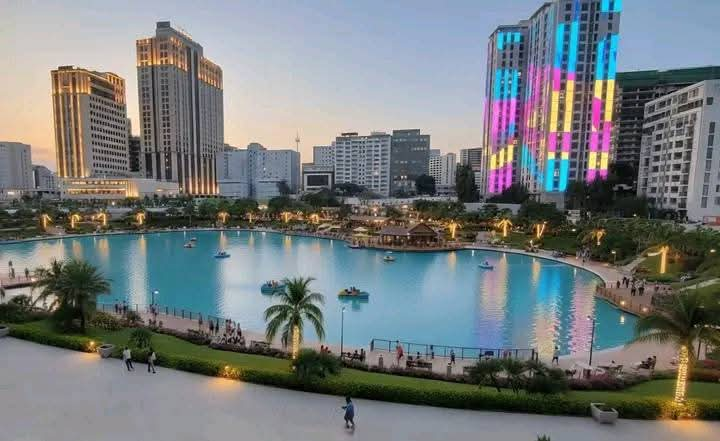
Addis Ababa is undergoing one of the most visible urban transformations in its modern history, anchored by the development of large artificial lakes and an integrated riverside green corridor. The project, now entering an advanced stage, is reshaping parts of the capital with new public spaces, landscaped walkways, and water features that signal a shift in how the city is planned and experienced.

The artificial lake developments are concentrated around the Peacock area and extend behind the historic Ghion Hotel, linking multiple sections of the city under the broader Riverside Green Development initiative. Together, these lakes form one of the largest man made water systems in Addis Ababa. Recent footage shows sections of the lakes being filled and fountains undergoing testing, marking a key milestone in a project that combines flood control, environmental rehabilitation, and urban beautification.

The areas surrounding the lakes feature pedestrian walkways, cycling lanes, green zones, and riverside landscaping designed to reconnect residents with waterways that were long neglected or environmentally degraded. Behind Ghion Hotel, a location historically associated with greenery and leisure, the new lakes complement the area’s legacy landscape while opening it up through improved public access and recreational spaces.
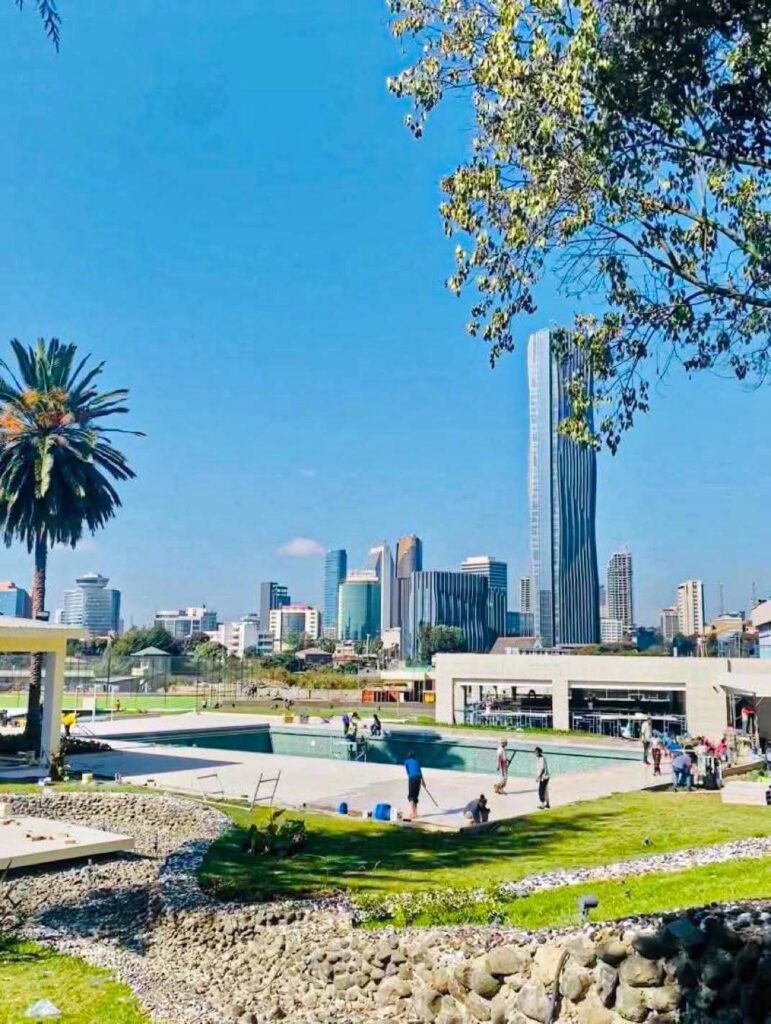
City officials say the project is not purely aesthetic. The lakes are designed to help regulate runoff during the rainy season, improve urban microclimates, and expand inclusive public spaces in a rapidly growing city. The development reflects a broader shift toward environmentally conscious urban planning in Addis Ababa.
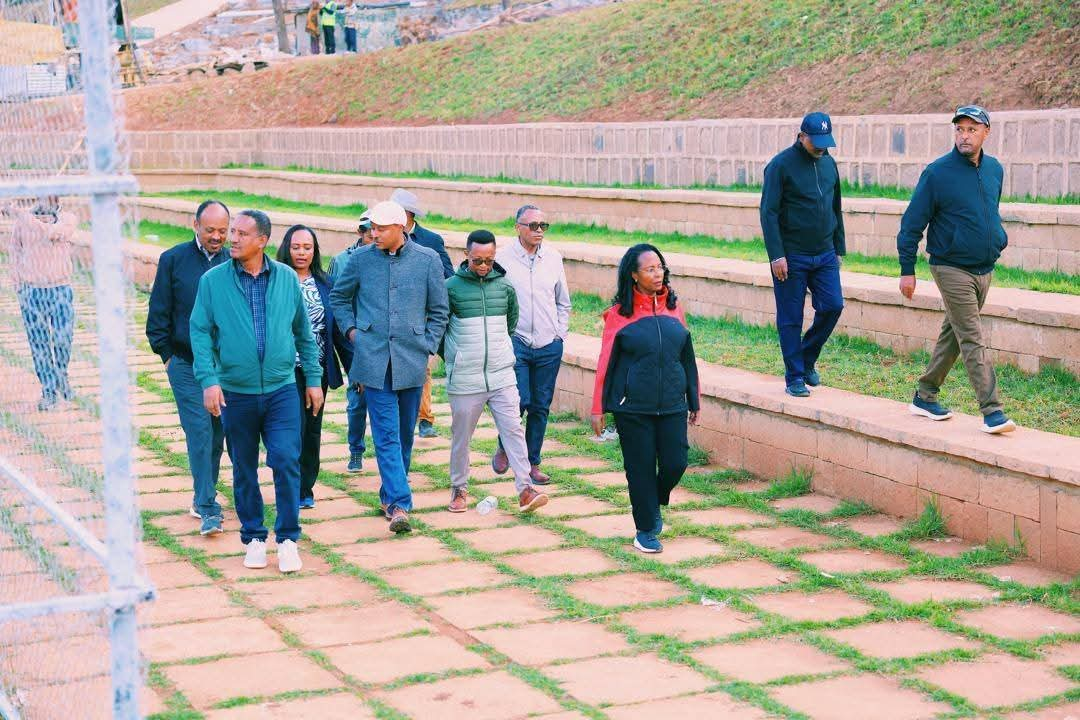
Mayor Adanech Abiebie has played a central role in driving the initiative forward. Since taking office, her administration has prioritized river restoration, green development, and the rehabilitation of public spaces. Supporters credit her leadership with accelerating implementation, coordinating institutions, and turning long discussed plans into visible infrastructure. The integration of the Ghion Hotel area, in particular, reflects an effort to balance heritage with modernization rather than isolating historic sites from new development.

The artificial lakes are also part of a wider transformation reshaping Addis Ababa. Major commercial, residential, and recreational projects are rising across the city, altering its skyline and strengthening its position as a regional hub for business and tourism. While challenges remain, including long term maintenance and equitable access, the lakes have already become a powerful symbol of the capital’s changing identity.

For many residents, the expanding lake system represents a city reclaiming its rivers, restoring its environment, and redefining urban life through green centered development under a more assertive and coordinated municipal leadership.
———-
Editor’s Disclaimer:
The views and opinions expressed in articles published by Horn News Hub are those of the authors and do not necessarily reflect the official position or editorial stance of Horn News Hub. Publication does not imply endorsement.