
Feb., 17, 2026፡Addis Ababa(HNH)
Addis Ababa’s Transformation and the Politics of Regional Power
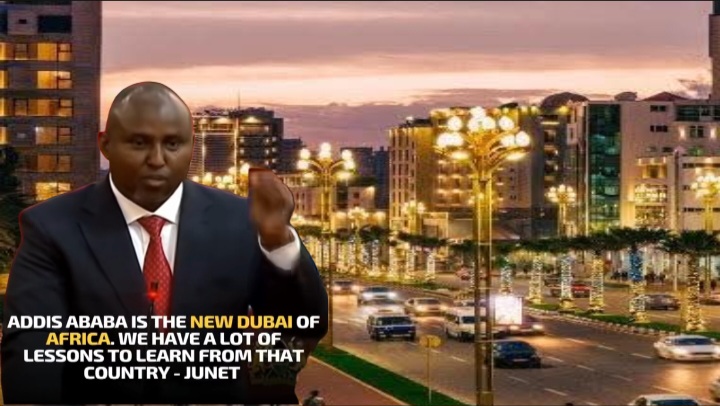
When Kenya’s National Assembly Minority Leader Junet Mohamed described Addis Ababa as “the new Dubai of Africa,” the remark was more than parliamentary rhetoric. It reflected what many African delegates witnessed firsthand during the 39th African Union Summit hosted in the Ethiopian capital.
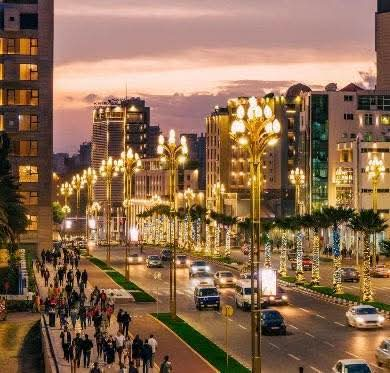
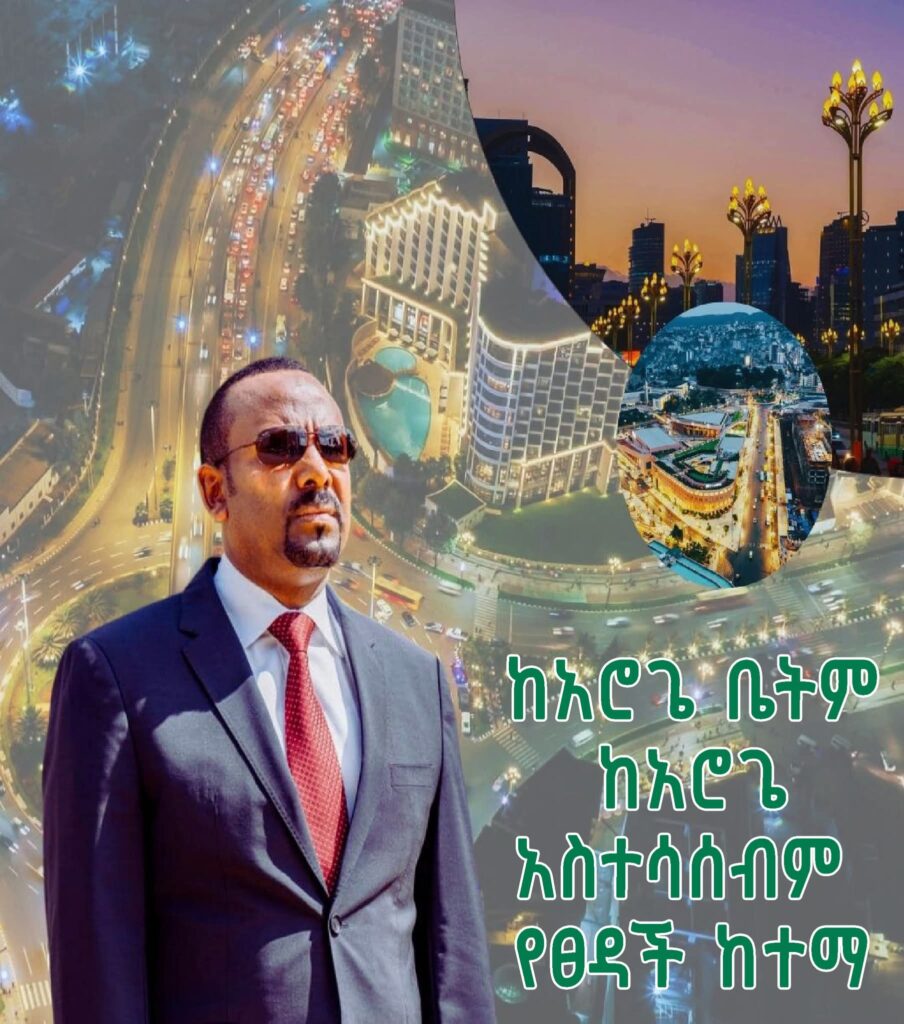
For visiting lawmakers and officials, the contrast was striking. Wide corridors of newly landscaped avenues, modern public spaces, improved lighting, expanding corridors of high-rise developments, and heightened security presence signaled a city undergoing accelerated change. The summit became a stage not only for continental diplomacy but also for Ethiopia’s urban rebranding.
At the center of that shift is Prime Minister Abiy Ahmed, whose administration has pursued an ambitious modernization agenda. Supporters frame it as a long-overdue correction to decades of underinvestment in urban infrastructure. Critics question pace, cost, and priorities. But few dispute that Addis Ababa looks and functions differently today compared to a decade ago.
Urban Renewal as Political Statement
Addis Ababa is not just Ethiopia’s capital. It is the diplomatic capital of Africa, home to the African Union. That status carries symbolic weight. For years, the city’s infrastructure lagged behind its diplomatic importance. Congested roads, aging public spaces, and limited nighttime vibrancy often clashed with its continental role.
Under Abiy’s leadership, the federal government invested heavily in corridor development projects, riverbank rehabilitation, urban parks, and expanded road networks. These projects aim to reposition Addis Ababa as a competitive African metropolis.
The visible improvements during the summit were deliberate. International summits are moments of scrutiny. They test logistics, security, and urban management. Delegates walking the city late at night without security concerns, as Junet Mohamed recounted, speaks to another aspect of governance: stability. Urban transformation is not only about buildings. It is about perception, order, and confidence.
Addis Ababa’s evolution also mirrors a broader narrative that Abiy has tried to project: Ethiopia as a rising, self-confident African power shaping its own development path rather than imitating Western models.
Energy as Strategic Leverage
No discussion of Ethiopia’s transformation is complete without electricity. Ethiopia’s energy strategy, particularly hydropower expansion, underpins its development ambitions.
The flagship project is the Grand Ethiopian Renaissance Dam (GERD), the largest hydroelectric dam in Africa. Once fully operational, it is expected to generate over 6,000 megawatts of electricity. Beyond domestic supply, Ethiopia plans to export power to neighboring countries, including Kenya.
Junet Mohamed’s remarks about importing Ethiopian electricity reflect a regional reality. Ethiopia’s hydropower generation costs are among the lowest in Africa. For Kenya and others facing high domestic tariffs, Ethiopian energy offers a cheaper alternative. Power interconnection projects between Ethiopia and Kenya are already operational, signaling growing economic integration.
Electricity is more than infrastructure. It is geopolitical currency. By becoming a regional energy hub, Ethiopia strengthens its diplomatic and economic leverage in East Africa.
The Question of Sea Access
Yet energy alone does not define Ethiopia’s strategic calculus. With a population exceeding 130 million, Ethiopia is the largest landlocked country in the world. Since Eritrea’s independence in 1993, Ethiopia has relied heavily on Djibouti’s ports for more than 90 percent of its trade.
Sea access is not a symbolic aspiration. It is an economic necessity. Logistics costs significantly affect Ethiopia’s export competitiveness and import prices. As industrial parks expand and manufacturing ambitions grow, port dependency becomes a structural vulnerability.
Prime Minister Abiy has repeatedly argued that sustainable growth for Ethiopia requires diversified and secure maritime access. This position has sparked regional debate, particularly in the Horn of Africa, where port politics are sensitive and often entangled with sovereignty concerns.
Kenya’s proposal, referenced in parliament, to align the Lamu Port under the LAPSSET corridor with Ethiopian trade interests signals an opportunity. If realized at scale, such arrangements could reduce logistical pressure on Djibouti and deepen Kenya–Ethiopia economic ties.
For Ethiopia, sea access discussions are not about expansionism. They are about demographic pressure, industrialization, and long-term economic security.
Leadership and Controversy
Abiy Ahmed’s leadership has been transformative but also polarizing. He came to office in 2018 promising political reform, regional peace, and economic liberalization. Early moves, including rapprochement with Eritrea, earned him the Nobel Peace Prize.
However, subsequent internal conflicts, particularly the Tigray war, reshaped both domestic and international perceptions. Economic strain, inflation, and debt pressures complicate the modernization narrative.
Still, the visible transformation of Addis Ababa suggests that the administration views infrastructure and urban development as anchors of political legitimacy. Modern capitals symbolize national ambition. They serve as proof points that leadership can deliver tangible change.
Benchmarking Within Africa
One notable element in Junet Mohamed’s remarks was the call for benchmarking within Africa rather than looking exclusively to Europe or Asia. That shift in perspective reflects a broader continental trend. African capitals increasingly study each other’s models, from Kigali’s urban planning to Addis Ababa’s energy strategy.
Addis Ababa’s trajectory shows how infrastructure, energy, and diplomacy can intersect to reshape national identity. The 39th AU Summit became a showcase moment. Delegates witnessed a city striving to match its diplomatic status with urban substance.
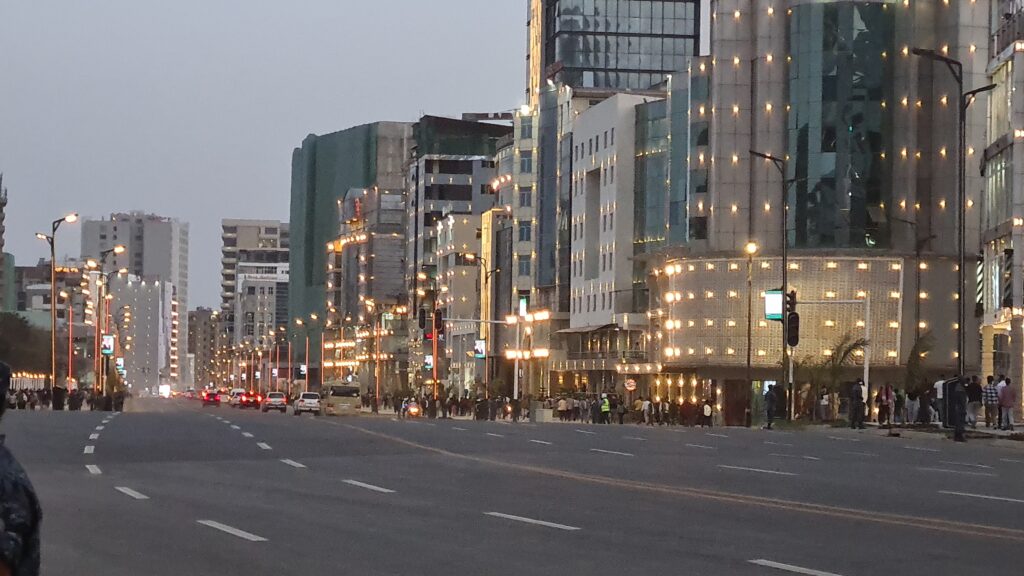
Whether Addis Ababa truly becomes “the Dubai of Africa” remains to be seen. Dubai’s rise was built on maritime access, finance liberalization, and aggressive global positioning. Ethiopia is following a different path, grounded in hydropower, demographic scale, and continental diplomacy.
What is clear is this: under Abiy Ahmed’s leadership, Ethiopia is repositioning itself. Through energy exports, urban renewal, and assertive regional policy, the country is seeking to redefine its role in East Africa and beyond.
For 130 million Ethiopians, the stakes are not symbolic. They are economic, generational, and strategic.
——————–
Editor’s Disclaimer:
The views and opinions expressed in articles published by Horn News Hub are those of the authors and do not necessarily reflect the official position or editorial stance of Horn News Hub. Publication does not imply endorsement.