
Strategic and Geopolitical Analysis – March 2026
By Horn of Africa Geopolitical Review
A dramatic shift appears to be underway in the strategic posture of the United States and Israel toward Iran. Military operations identified as “Epic Fury” by Washington and “Operation Roaring Lion” by Israel suggest a departure from decades of deterrence and containment that shaped Western policy since Iran’s 1979 revolution.
Rather than relying on incremental pressure through sanctions, proxy confrontation, and calibrated strikes, the approach in early 2026 reflects a doctrine centered on rapid systemic disruption. Analysts describe it as a move from long horizon containment to compressed warfare designed to destabilize adversarial leadership structures at speed.
From Attrition to Leadership Targeting
For much of modern history, wars were structured around attrition. Military planners focused on degrading enemy forces, destroying supply chains, and exhausting adversaries over time. Recent developments indicate a doctrinal shift.
The emerging model prioritizes leadership decapitation and high value targeting. The objective is to neutralize political and military decision makers, disrupt command and control systems, and create institutional paralysis before a coordinated response can be mounted.
Strategists argue that this approach seeks to shorten conflicts by targeting the decision making core rather than peripheral forces. The emphasis is less on battlefield mass and more on precision, intelligence integration, and timing.
Iran as a Test Case
Reports from early 2026 indicate that Iran became the first large scale test of this doctrine. According to regional and Western sources, coordinated US and Israeli strikes focused on senior political and military leadership as well as nuclear and intelligence infrastructure.
Among the reported outcomes were the elimination of Supreme Leader Ali Khamenei and several senior commanders of the Islamic Revolutionary Guard Corps. Targets allegedly included ground, naval, and intelligence leadership as well as facilities associated with nuclear enrichment.
If confirmed, the scale and simultaneity of the strikes represent a significant escalation. Observers describe the situation as a succession crisis unfolding under active military pressure. Potential successors were reportedly sidelined by the pace of events, forcing interim arrangements under conditions of uncertainty.
Intelligence and the Compression of Conflict
Central to the campaign was intelligence dominance. Western security officials have suggested that months of surveillance enabled the identification of a rare convergence of top leadership figures. Such a window, once identified, was reportedly exploited within minutes.
Security analysts note that the defining feature of this operation was speed. In contemporary warfare, rapid decision cycles can replace numerical superiority. The side that observes first and acts first can impose structural shock before defensive systems adjust.
This compression of conflict timelines reduces the space for escalation management. It also increases the stakes of intelligence accuracy, as miscalculation under such conditions carries immediate and far reaching consequences.
Institutional Survival Versus Strategic Coherence
Iran’s governing structure was designed with redundancy, anticipating assassination attempts and external pressure. Institutions may endure leadership loss in theory. However, simultaneous disruption across political, military, and intelligence hierarchies presents a different challenge.
Experts draw a distinction between institutional continuity and strategic coherence. Even if ministries, security agencies, and regional proxies continue operating, the absence of a synchronized leadership core can fracture coordination. In Iran’s case, this could affect networks across Lebanon, Yemen, Iraq, and Syria.
Regional Implications: Middle East, Red Sea, and Horn of Africa
The regional implications extend beyond Iran’s borders. Armed groups aligned with Tehran, including the Houthi movement in Yemen, have relied on Iranian strategic direction and logistical support. A sustained disruption in Tehran’s leadership could weaken coordination, funding flows, and intelligence sharing.
The Red Sea corridor and the Horn of Africa are also affected. Iran has historically sought influence in these areas as part of its asymmetric strategy. Any degradation of central command in Tehran could reduce its capacity to project power into these maritime chokepoints.
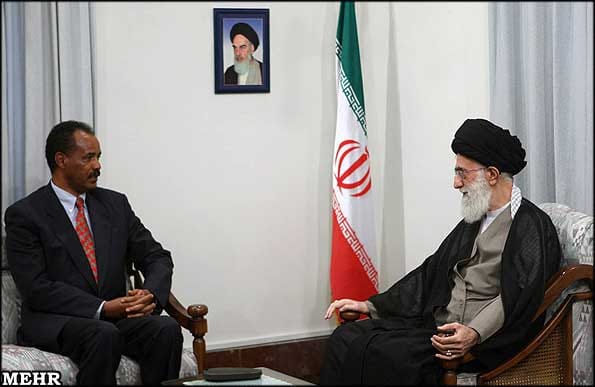
Attention has also turned to Eritrea’s long reported ties with Iranian officials. President Isaias Afwerki maintained a pragmatic relationship with Tehran that included intelligence and security cooperation. His 2008 visit to Tehran, hosted by then President Mahmoud Ahmadinejad, symbolized that alignment.
If Iran’s leadership structure has indeed been dismantled, Eritrea may face reduced external backing and increased strategic isolation. Analysts caution, however, that regional alignments often adapt rather than disappear.
Strategic Lessons for Ethiopia and the Region
For Ethiopia and other states in the Horn, the episode underscores the evolving character of conflict. Traditional mass mobilization and protracted ground campaigns are increasingly supplemented, and in some cases replaced, by precision capabilities.
Military planners across the region are closely observing the emphasis on intelligence integration, cyber operations, electronic warfare, and targeted strikes against leadership networks. The implication is clear: future confrontations may hinge less on troop numbers and more on the ability to disrupt adversaries at the command level.
This does not eliminate the risk of prolonged instability. Leadership targeting can create power vacuums, factional competition, and unpredictable escalation pathways.
A Shifting Balance of Power
The broader question is whether the campaign marks the fragmentation of an informal axis linking Tehran with partners in the Middle East and parts of Africa. If Iran’s central command structure remains weakened, allied networks may struggle to maintain cohesion.
At the same time, regional actors may recalibrate quickly. Power vacuums often invite new alignments, not simply collapse.
Conclusion
The reported US and Israeli operations reflect a changing grammar of power in the twenty first century. Military effectiveness is increasingly defined by intelligence integration, precision, and speed.
Whether this model produces lasting stability or triggers new cycles of retaliation remains uncertain. What is clear is that the strategic environment across the Middle East, the Red Sea, and the Horn of Africa is entering a period of accelerated transformation.
Editor’s Disclaimer:
The views and opinions expressed in articles published by Horn News Hub are those of the authors and do not necessarily reflect the official position or editorial stance of Horn News Hub. Publication does not imply endorsement.