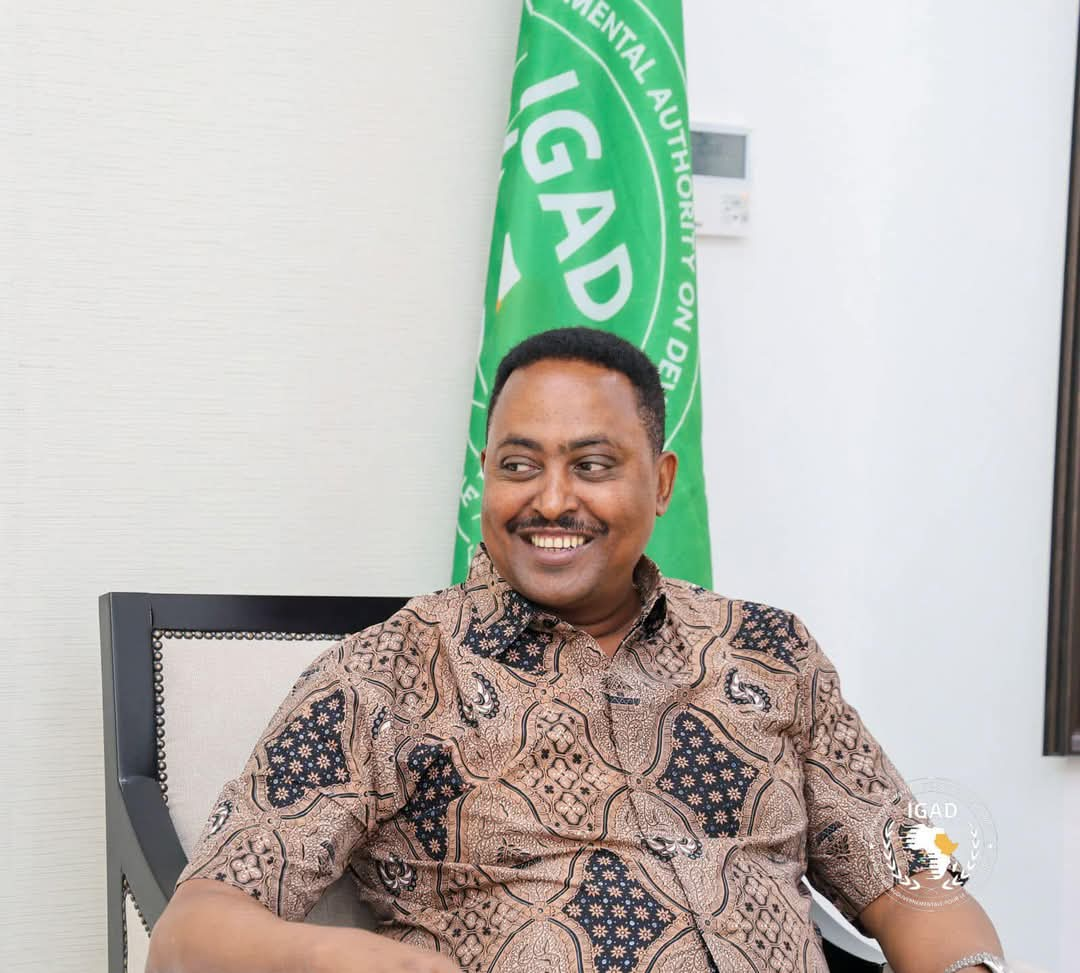


Dialogue, Not Division: Why Tigray Must Be Part of Ethiopia’s National Conversation
By Horn News Hub | Analysis
Ethiopia’s National Dialogue process has entered a sensitive phase as debates intensify over representation, participation, and the pace of engagement with the Tigray region. At the center of the discussion are competing narratives. One claims the Dialogue Commission has trivialised Tigray. Another argues the Commission has made sustained efforts despite difficult political realities on the ground.
A closer examination suggests the situation is more complex and requires a balanced assessment grounded in facts, context, and the urgent need for peace.
The Commission Established Amid War
The Ethiopian National Dialogue Commission was established during one of the most turbulent periods in Ethiopia’s recent history. When the Commission began its work, the country was already in the midst of the two year war in northern Ethiopia. The conflict created severe constraints on mobility, communication, and public engagement, particularly in Tigray.
These conditions made it nearly impossible to conduct inclusive consultations across all regions. As a result, the Commission was forced to operate under extraordinary circumstances from the outset.
Originally, the Commission was mandated to complete its work within three years.
However, the ongoing conflict, humanitarian crisis, and political instability significantly delayed the process. Because of these challenges, the Commission extended its timeline beyond four years, reflecting both the complexity of the national dialogue and the need to ensure broader participation, including from conflict affected regions like Tigray.
This timeline suggests that Tigray was not sidelined but rather became one of the most difficult areas to engage due to conditions beyond the Commission’s control.
Why the Agenda Collection Process Was Moved
Despite these efforts, the Commission acknowledged that the final agenda collection process could not be carried out within Tigray itself. Officials noted that logistical challenges, political disagreements, and security concerns made it difficult to conduct a comprehensive and representative consultation inside the region.
At the same time, Commission officials stressed that proceeding with a national dialogue without meaningful participation from Tigray would undermine the credibility and inclusiveness of the entire process. This recognition is significant. It signals that the Commission considers Tigray an essential stakeholder rather than a peripheral participant.
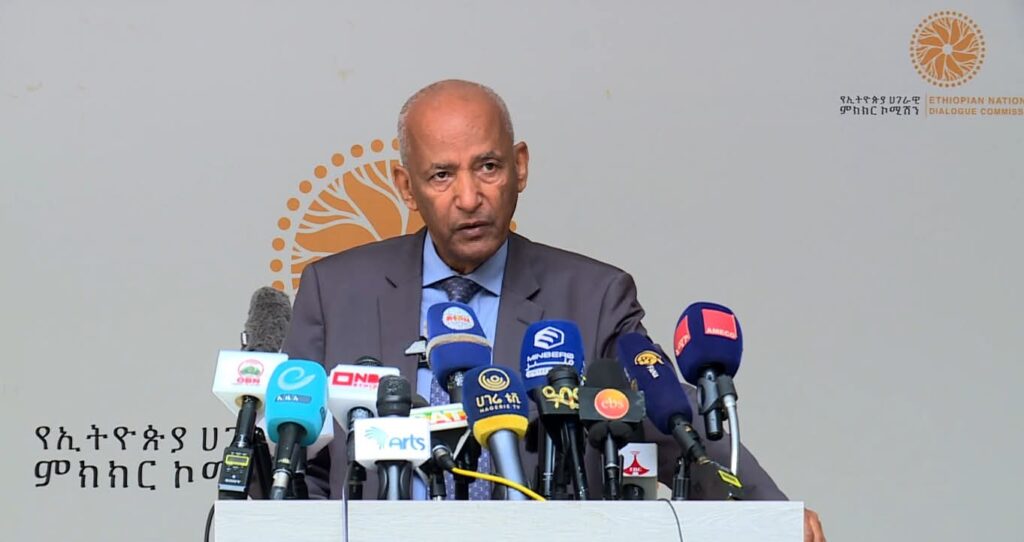
As a result, the Commission decided to organize a dedicated agenda collection forum in Addis Ababa. The three day meeting is expected to bring together participants from Tigray alongside Tigreans living in Addis Ababa and other parts of the country. The forum aims not only to collect public priorities but also to ensure broader representation from diverse Tigrean voices, including those displaced by the conflict.
In addition, the forum will identify representatives from Tigray who will participate in the upcoming national dialogue conference scheduled for April 2026. This step further underscores an attempt to build an inclusive, fair, and participatory dialogue process rather than marginalizing the region.
Beyond Numbers and Representation
The debate also touches on the question of demographic weight. Some critics argue that references to population share risk undermining the seriousness of Tigray’s concerns. Others maintain that national dialogue must balance regional representation with national priorities.
What remains clear is that reconciliation cannot be built on numbers alone. Tigray experienced one of the most devastating conflicts in Ethiopia’s modern history. Millions were displaced. Infrastructure collapsed. Health services were severely disrupted. Social trust deteriorated across communities.
These realities make meaningful participation from Tigray not only necessary but essential for national healing.
At the same time, dialogue requires engagement from all actors within the region. The success of the process depends not only on the Commission but also on political leaders, armed groups, civic actors, and community representatives willing to participate in good faith.
The Role of Political Narratives
Another sensitive dimension concerns figures and actors shaping the current discourse. Some critics highlight the role of individuals who previously supported military confrontation but now advocate for peace. Among those frequently mentioned is Mulugeta Asrate, who critics claim played a significant role in escalating tensions during the war and is now presenting himself as a proponent of peace.
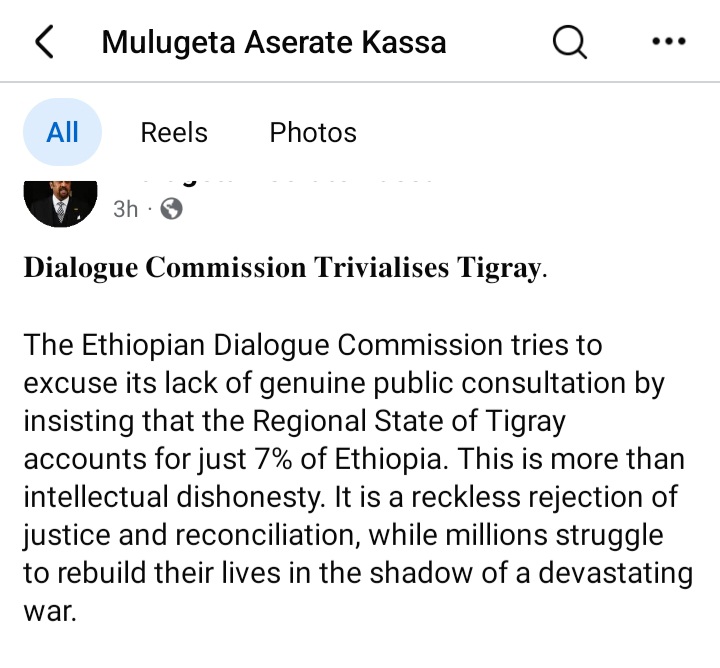
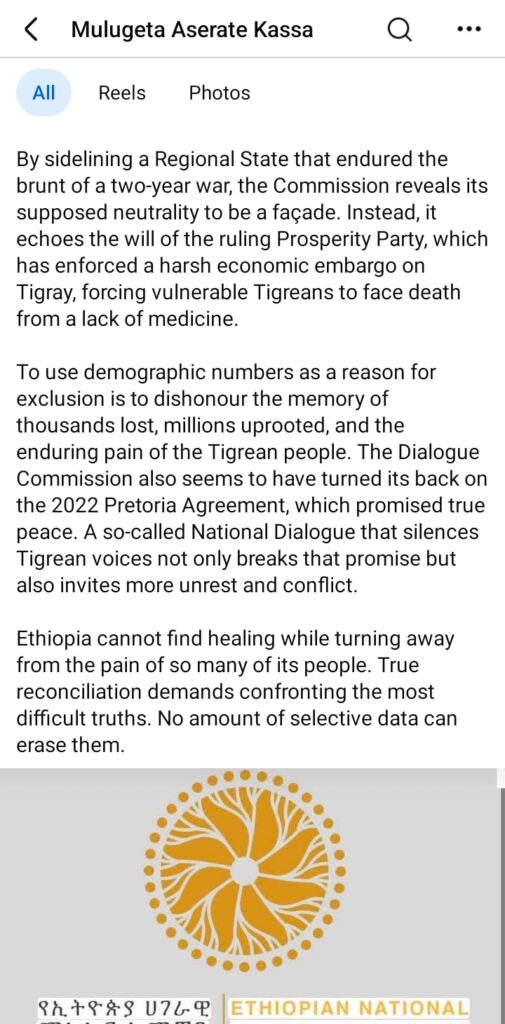
Such accusations reflect the deep mistrust that still exists within Tigray’s political environment. Whether these claims are accurate or politically motivated, they reveal a broader challenge. Post conflict dialogue often struggles when key actors are viewed through the lens of past actions.
For reconciliation to succeed, transparency and accountability must accompany dialogue. Peace efforts gain credibility when participants acknowledge past roles and commit clearly to non violent political engagement.
Dialogue as the Only Viable Path
Despite disagreements, there is growing consensus that dialogue remains the only viable path forward. Military confrontation has already demonstrated its devastating consequences. Continued fragmentation risks prolonging instability not only in Tigray but across Ethiopia.
For many Tigreans, the stakes are existential. Reconstruction, return of displaced communities, restoration of services, and rebuilding trust all depend on political stability. These goals cannot be achieved without inclusive dialogue.
Similarly, Ethiopia’s broader political future depends on addressing long standing grievances that extend beyond Tigray. Issues of federalism, governance, identity, and power sharing remain unresolved. The national dialogue offers a rare opportunity to confront these challenges collectively.
A Constructive Path Forward
To strengthen the process, several steps appear critical.
First, the Dialogue Commission must continue expanding inclusive engagement in Tigray, ensuring that diverse voices are heard beyond political elites.
Second, political actors in Tigray should commit to constructive participation rather than strategic obstruction.
Third, confidence building measures must accompany dialogue, including humanitarian access, economic normalization, and restoration of basic services.
Fourth, transparency in the dialogue process is essential to reduce suspicion and build public trust.
A Shared Responsibility for Peace
Ethiopia’s path to reconciliation remains fragile. The wounds of war are still fresh, and political divisions remain deep. Yet dialogue offers a rare opportunity to move forward.
The challenge is not whether dialogue is necessary. The challenge is whether all actors are willing to engage sincerely and place long term stability above short term political advantage.
Tigray’s participation is not a peripheral issue. It is central to Ethiopia’s future. Lasting peace will depend on inclusive engagement, honest reflection, and a shared commitment to preventing another cycle of conflict.
The success of the national dialogue will ultimately be measured not by timelines or technical achievements but by whether it helps rebuild trust among communities that have endured profound suffering.
That responsibility belongs not only to the Dialogue Commission but to all stakeholders, including political leaders, civic actors, and citizens seeking a peaceful and stable Ethiopia.
Editor’s Disclaimer:
The views and opinions expressed in articles published by Horn News Hub are those of the authors and do not necessarily reflect the official position or editorial stance of Horn News Hub. Publication does not imply endorsement.