
By HORN OF AFRICA GEOPOLITICAL REVIEW (HAGR)
Special Intellectual Recognition Edition
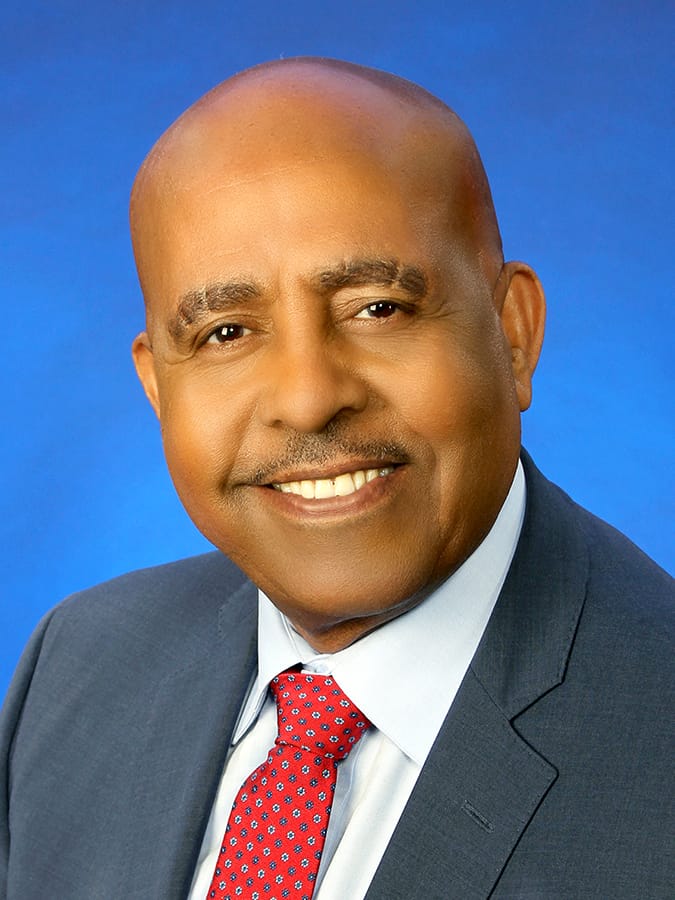
Some individuals build careers. Others build a body of thought that shapes institutions over time. Dr. Moses Haregewoyn belongs to the latter category. His professional record is substantial, but what ultimately distinguishes him is a consistent effort to connect knowledge with practical human need.
Describing him solely as a businessman, policy developer, or academic does not capture the full scope of his work. His career reflects an ability to move across disciplines and institutions while treating ideas as instruments for improving systems and the lives of those who depend on them.
Dr. Haregewoyn was born and raised in Aksum, in Ethiopia’s Tigray region. Aksum is widely regarded as one of Africa’s ancient centers of civilization, historically associated with governance, scholarship, faith, and trade. Growing up in such an environment often fosters a structural view of society, one that looks beyond individual leadership to the endurance of institutions.
His later academic and professional life in the United States broadened that early foundation. Over decades of study and leadership, he developed a synthesis that combines African historical consciousness with modern institutional practice shaped in America.
Academic Foundation and Public Engagement
Dr. Haregewoyn holds advanced degrees in Organizational Behavior at the doctoral level, Business Administration at the master’s level, as well as academic training in Sociology and Public Health. His academic career included teaching graduate courses in leadership, statistics, and the economics of education at Ashland University and The Ohio State University.
In 2010, he published research examining the experiences of political refugees in the United States. The study has been used in social science instruction at several universities. The subject matter reflects a sustained interest in migration, institutions, and the human consequences of public policy.
While active in academia, Dr. Haregewoyn also pursued a parallel path in healthcare administration. Beginning in the early 1990s, he worked in community education and outreach initiatives before assuming increasing levels of responsibility. He later became president of Automated Health Systems, where he helped oversee programs connected to Medicaid, Medicare, and public health enrollment systems across multiple states.
His work has directly influenced how vulnerable populations access healthcare services. Though less visible than political leadership, such institutional management plays a significant role in shaping public welfare.
Observers note that his career bridges two roles that rarely converge: explaining systems as a scholar and operating them as an administrator.
Ethical Leadership and Intellectual Orientation
The intellectual heritage associated with Aksum has often been linked to continuity, literacy, and balanced governance. Dr. Haregewoyn’s professional life reflects similar themes. Efficiency, in his approach, is paired with attention to dignity and ethical responsibility within institutions.
In his 2023 book, Leadership: An Incumbent of Faith, he argues that leadership separated from ethical grounding risks becoming mechanical administration. The work presents leadership as stewardship, emphasizing accountability, restraint, and responsibility.

Colleagues describe his management style as disciplined and approachable. Staff members commonly refer to him as Dr. Moses in a manner that reflects familiarity rather than formality. He is known for building teams, stabilizing complex programs, and remaining engaged in implementation rather than operating solely at a strategic distance.
His professional engagements have taken him to policy and academic forums in Brussels, New Delhi, Moscow, Qatar, Dubai, and New York, reflecting a career that intersects healthcare systems, public policy, and international dialogue.
Knowledge, Judgment, and Service
Across his academic writing and administrative leadership, three themes consistently emerge: competence, moral judgment, and service. He approaches authority as responsibility before privilege. This perspective has informed his long involvement in programs serving low income and medically vulnerable communities.
His career suggests that influence is not measured primarily by visibility but by institutions that continue to function effectively after leadership transitions.
Between Traditions
Dr. Haregewoyn represents a generation shaped by both African civilizational heritage and modern American institutional practice. Rather than abandoning one for the other, he integrated both traditions. His trajectory indicates that modernization need not require cultural detachment. Leaders grounded in historical context often demonstrate long term perspective and institutional patience.

In this sense, his professional path mirrors a broader pattern associated with Aksum’s historical engagement with the wider world while maintaining continuity of identity.
Recognition
This special edition of HORN OF AFRICA GEOPOLITICAL REVIEW recognizes not only a distinguished career but a particular type of contribution: the institutional intellectual. Dr. Moses Haregewoyn’s work in healthcare administration, academic instruction, public policy research, and ethical leadership forms a coherent whole grounded in service.
The recognition is offered in sincere respect for intellectual seriousness, ethical consistency, and sustained public engagement.
HORN OF AFRICA GEOPOLITICAL REVIEW (HAGR)
Independent Regional and International Geostrategy | Security | Political | Institutional Analysis
Editor’s Disclaimer:
The views and opinions expressed in articles published by Horn News Hub are those of the authors and do not necessarily reflect the official position or editorial stance of Horn News Hub. Publication does not imply endorsement.