
Mekelle/Tel Aviv/Nairobi/Pretoria/London
Diaspora Group Accuses TPLF Faction of Provoking Conflict, Warns of Proxy War in Tigray
A Tigray diaspora advocacy movement has issued a sharp warning against renewed armed mobilization in the region, accusing an outlawed faction of the Tigray People’s Liberation Front (TPLF) of provoking conflict and undermining the Pretoria Peace Agreement.
In an open letter addressed to Lt. Gen. Tadesse Worede, President of the Tigray Interim Regional Administration, the group “I Can’t Be Silent About Tigray” (ICBSAT) urged the regional leadership to take an unequivocal stand against war. The letter argues that continued political ambiguity risks dragging a traumatized society back into violence and puts young Tigrayans in danger.
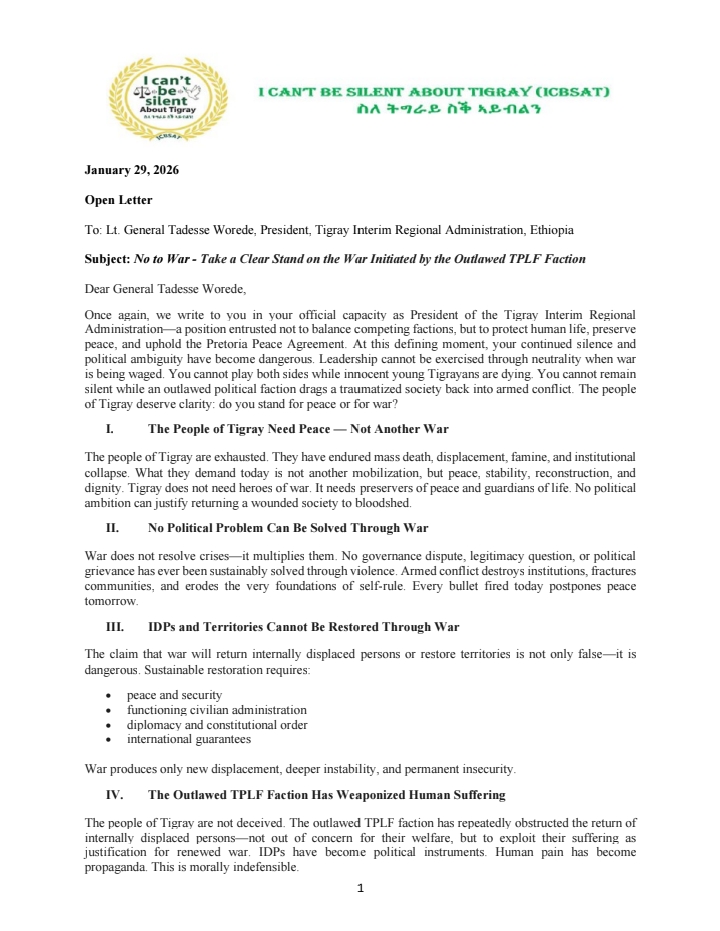
The group said the population of Tigray, after years of mass death, displacement, and economic collapse, is demanding peace, reconstruction, and dignity, not renewed mobilization. “No political problem can be solved through war,” the statement said, warning that armed conflict destroys institutions, deepens displacement, and delays recovery.
ICBSAT rejected claims that fighting could restore disputed territories or enable the return of internally displaced persons. It argued that sustainable solutions require security, functioning civilian administration, diplomacy, and international guarantees. The group accused the outlawed TPLF faction of exploiting IDP suffering to justify renewed conflict, calling the practice morally indefensible.
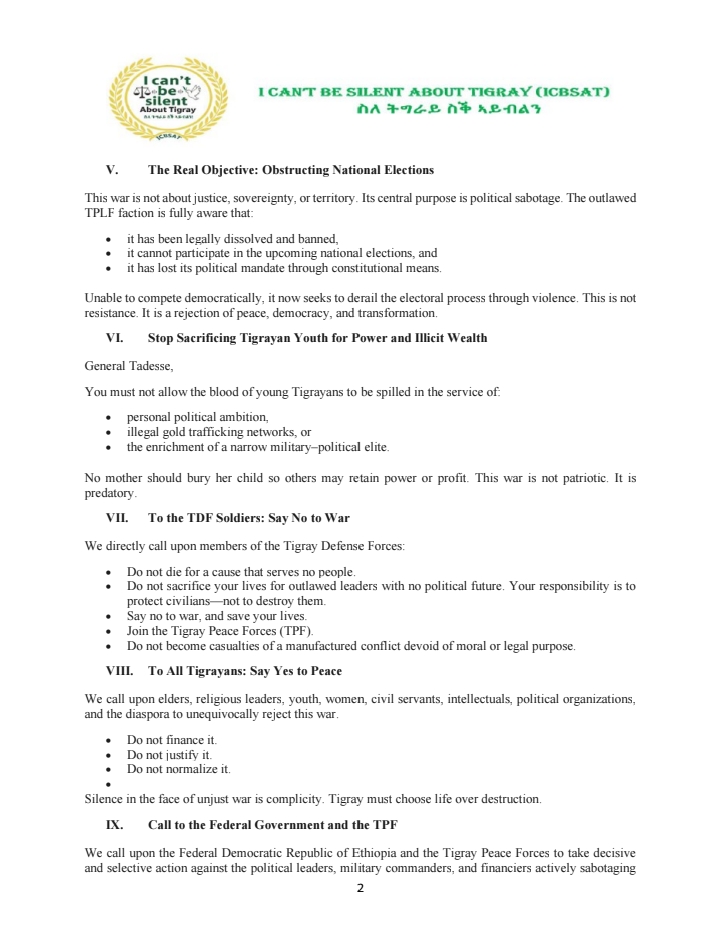
The statement framed the latest tensions as a political effort to obstruct Ethiopia’s national elections. According to ICBSAT, the faction, having been dissolved and barred from electoral participation, seeks to derail the democratic process through violence. “This is not resistance. It is a rejection of peace and democratic transition,” the group said.
In direct language, the letter appealed to members of the Tigray Defense Forces to refuse participation in what it described as a manufactured conflict, urging them to prioritize civilian protection and life over political agendas.
Beyond internal dynamics, the group highlighted concerns that the current push toward war reflects broader proxy interests. Observers argue that the fighting does not primarily serve Tigrayan interests but advances the strategic objectives of external actors, including Eritrea’s ruling People’s Front for Democracy and Justice and Egypt. Analysts allege coordination between elements of the outlawed TPLF faction and Eritrean authorities, often referred to as Shaebia, to destabilize the Horn of Africa and undermine the post-Pretoria order in Tigray.
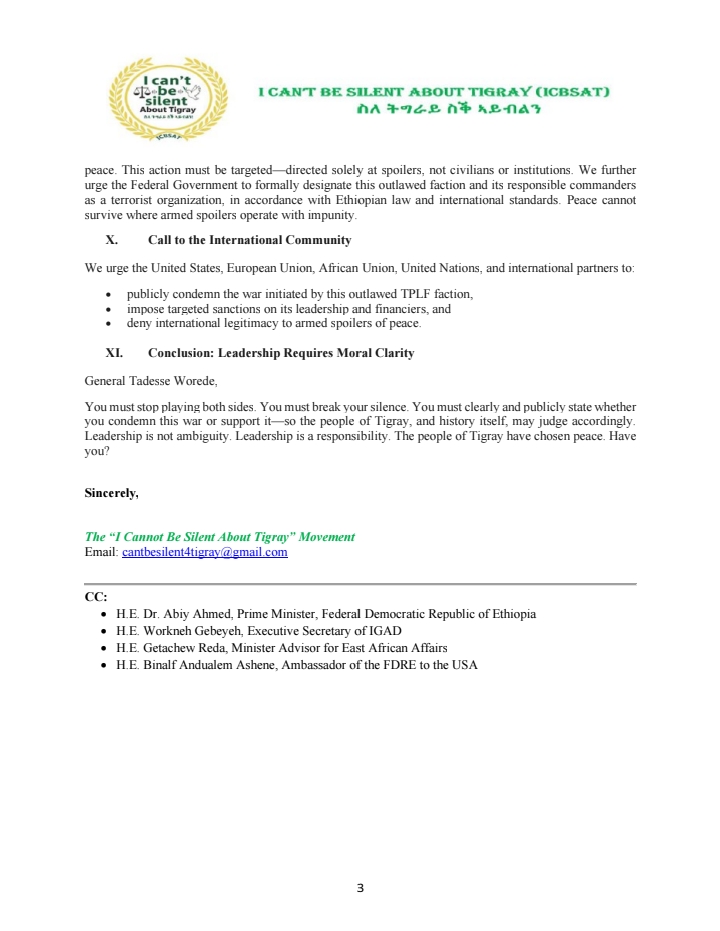
ICBSAT called on the federal government to take selective and targeted measures against political and military spoilers while avoiding harm to civilians and institutions. It also urged Addis Ababa to formally designate leaders and financiers accused of sabotaging the peace agreement as terrorists in line with Ethiopian law.
The group appealed to international partners, including the African Union, United Nations, United States, and European Union, to publicly condemn renewed violence, impose targeted sanctions on alleged spoilers, and deny legitimacy to armed actors undermining the Pretoria Peace Agreement.
At the center of the message was a demand for moral clarity from Tigray’s interim leadership. “Leadership is not neutrality when lives are at stake,” the letter said, calling on Lt. Gen. Tadesse Worede to publicly state whether he stands for peace or war.
The statement reflects growing concern among the diaspora that the hard-won ceasefire could unravel not only through internal factionalism but also through regional power plays that risk turning Tigray into a battlefield for proxy conflicts once again.
Adding weight to the call for peace, Prime Minister Abiy Ahmed’s advisor and former president of the Tigray Interim Regional Administration, Getachew Reda, has urged accountability for TPLF individuals accused of prolonging the suffering of the Tigray people for personal power. He alleged that some leaders are attempting to drag the region back into war under the pretext of restoring territorial integrity or facilitating the return of displaced people.
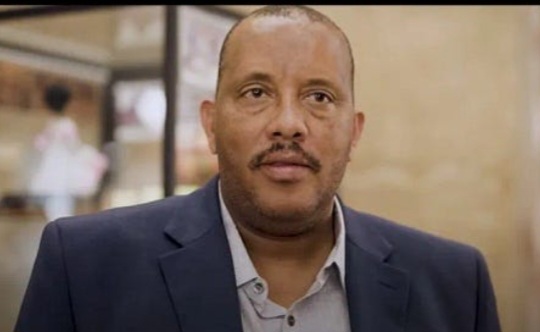
Getachew warned former Tigray combatants against being used in another round of conflict, emphasizing that the safe return of displaced persons depends on sustainable peace, trust-building, and substantial resources for rehabilitation, with active involvement from both local and external stakeholders.
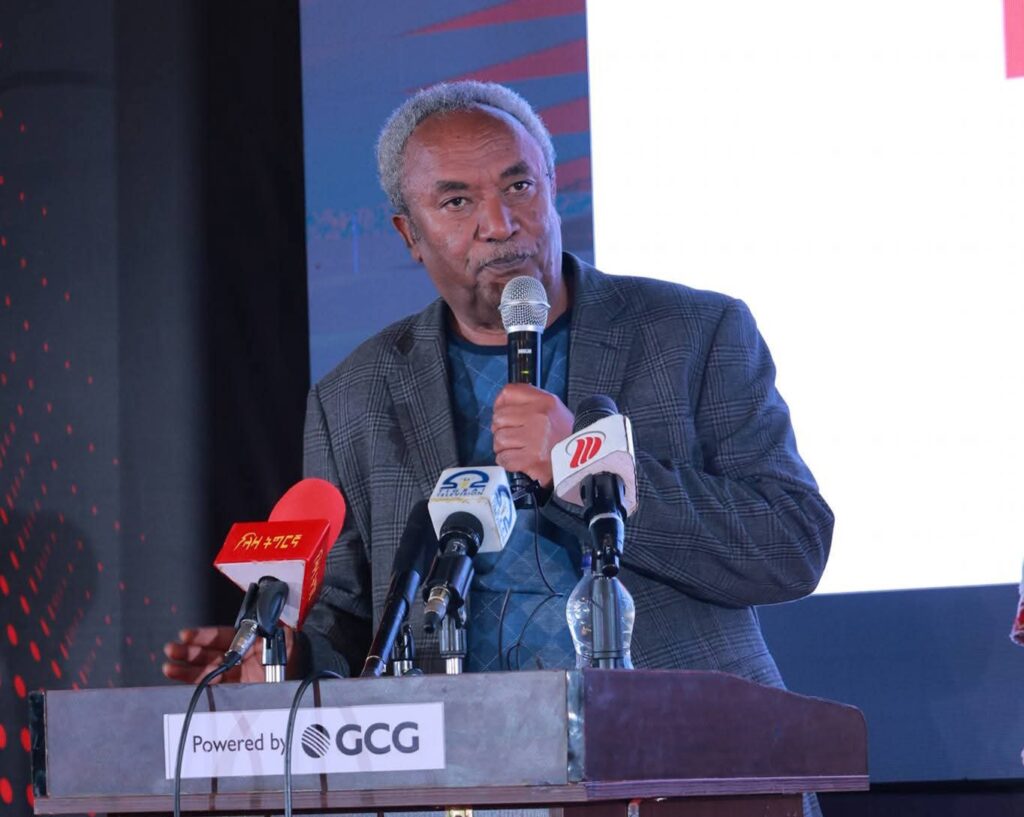
President Tadese, speaking yesterday at the opening program for the rebranding of the Tigray Investment Commission, sought to calm rising concerns over recent tensions. According to local media reports, he stated that the unrest “will not scale up to a full-fledged war” and emphasized that the Tigray regional government is committed to de-escalating the situation. He also called on the federal government to cooperate in implementing the Pretoria peace agreement, underscoring the need for continued dialogue and joint action to maintain stability.
The Chairperson of the African Union Commission, H.E. Mahmoud Ali Youssouf, has expressed deep concern over recent developments in the Tigray region of Ethiopia. He emphasized the importance of preserving the gains achieved under the AU-led Permanent Cessation of Hostilities Agreement, signed in Pretoria on 2 November 2022, between the Ethiopian government and the Tigray People’s Liberation Front.
Youssouf called on all parties to exercise maximum restraint, avoid actions that could undermine trust, and resolve outstanding issues through constructive dialogue in line with the Permanent COHA. He reaffirmed the African Union’s commitment to fully implementing the agreement and supporting both parties in the ongoing peace-building and reconciliation process.
The AU, through its high-level Panel on Ethiopia, indicated it is prepared to intensify efforts to facilitate dialogue, cooperation, and confidence-building to ensure sustainable peace and stability in Tigray.
Editor’s Disclaimer:
The views and opinions expressed in articles published by Horn News Hub are those of the authors and do not necessarily reflect the official position or editorial stance of Horn News Hub. Publication does not imply endorsement.