
Mekelle/Tel Aviv/Nairobi/Pretoria/London
GERD and the Return of African Self-Belief
By Chekole Alemu
The Grand Ethiopian Renaissance Dam is often discussed in terms of megawatts, water flows, and regional diplomacy. But in the conversation between Trevor Noah and Barbados Prime Minister Mia Amor Mottley, GERD emerged as something deeper: a political, psychological, and civilizational statement.
African-American comedian Trevor Noah, formerly host of The Daily Show and now a Podcaster on global issues, conducted an exclusive interview with Barbados Prime Minister Mia Mottley.
Barbados Prime Minister Mia Mottley praised the dam, noting it was built through the contributions of Ordinary Ethiopian Citizens.
It is not merely a dam. It is a declaration.
Mottley’s description of GERD as the “21st-century Adwa” was not rhetorical excess. It was a historically grounded comparison that places the project within a long African struggle for agency, dignity, and self-determination.
Adwa in 1896 shattered a global assumption. An African nation, unified and determined, defeated a European colonial power. That victory did more than preserve Ethiopian sovereignty. It altered how Africa saw itself and how the world was forced to see Africa. It planted the intellectual and emotional seeds of Pan-Africanism.
GERD carries that same disruptive power.
Built When the World Said No
One of the most striking points in the interview was not the size of the dam or its engineering complexity, but how it was financed.
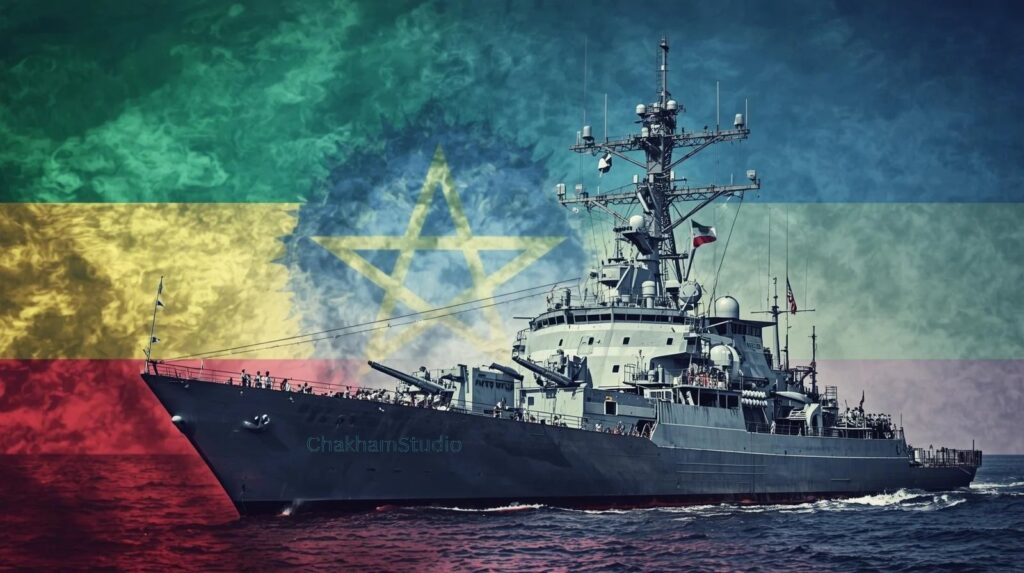
Ethiopia did what many believed was impossible in the modern global financial order. When international financial institutions refused to fund the project, citing political and technical concerns, Ethiopia turned inward. The state mobilized its own financial system. Domestic banks stepped in. The central bank played a coordinating role. Ordinary citizens bought bonds, donated salaries, and contributed what they could.
This was not symbolic participation. It was material sacrifice.
In a world where development is often conditional on external approval, GERD broke a long-standing dependency pattern. It demonstrated that sovereignty is not only defended with armies or diplomacy, but with financial courage and collective discipline.
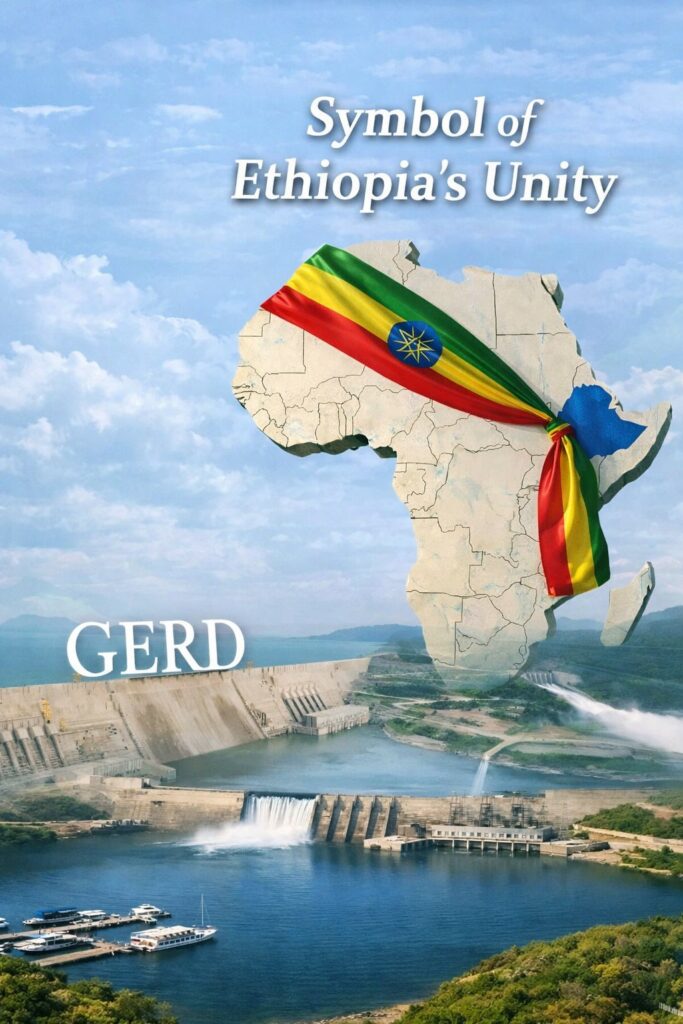
That is why Mottley called it resilience. Not abstract resilience, but practical resilience, measured in years of patience, inflationary pressure, political pushback, and sustained national commitment.
Fourteen years later, the dam stands.
Power Beyond Electricity
GERD’s physical purpose is clear. Ethiopia has over 130 million people, yet until recently, more than half lacked access to electricity. Across Africa, nearly 600 million people still live without power, even as the global conversation accelerates toward artificial intelligence and digital economies.

In that context, GERD is not excess. It is necessity.
But its power goes beyond electricity generation.
It redefines what African-led development looks like. Renewable, domestically financed, and rooted in social consensus rather than elite-driven extraction. It challenges the idea that Africa must wait its turn, seek permission, or accept structural limits imposed by others.
This is why the dam resonates beyond Ethiopia’s borders. As Mottley noted, this is Africa’s story. GERD becomes a reference point in debates about climate justice, energy transition, and fairness in global finance.
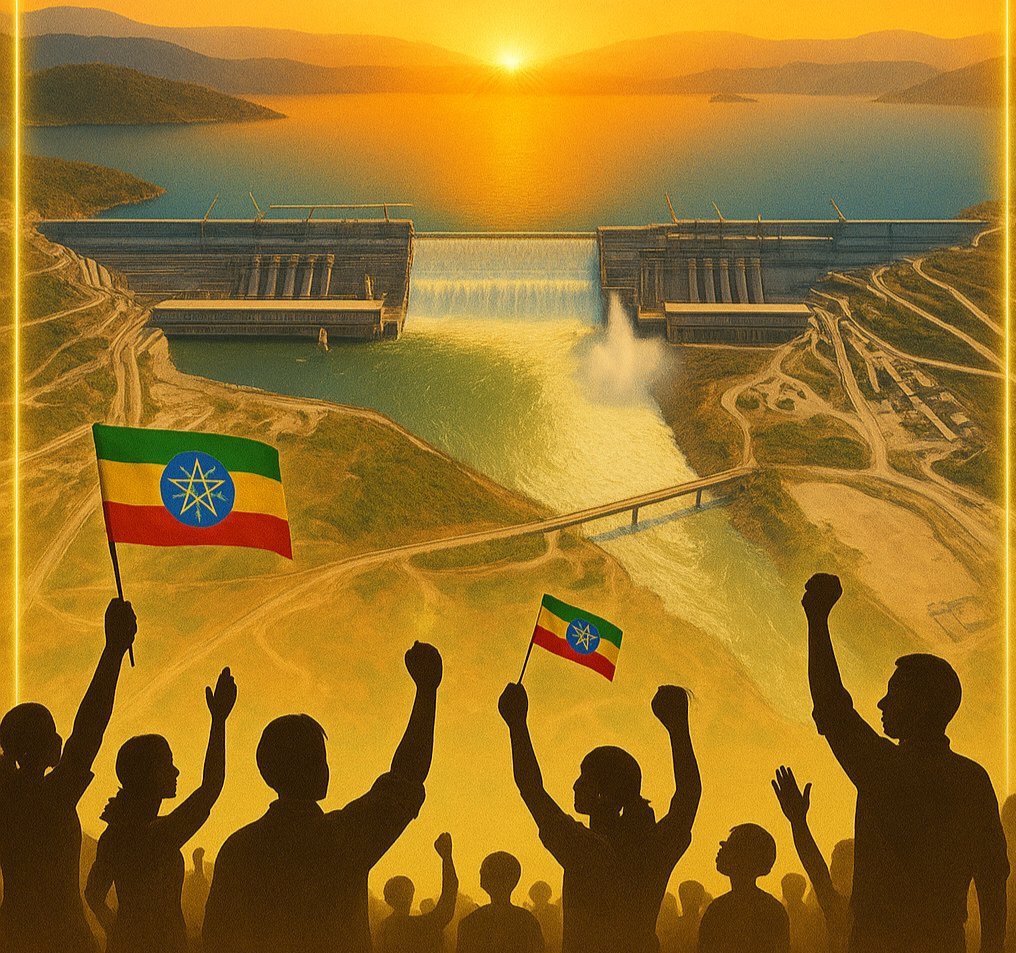
Africa contributes the least to climate change, yet bears a disproportionate burden of energy poverty. GERD addresses both realities at once: clean energy and mass access.
The Politics of Resistance and Negotiation
The interview also acknowledged the sensitivities surrounding the Nile. Ethiopia’s downstream neighbors, particularly Egypt, view the dam through a lens of historical water security and geopolitical anxiety.
These concerns cannot be dismissed. They require diplomacy, data sharing, and sustained engagement.
But what GERD has already proven is that Ethiopia’s right to development is no longer theoretical. It is concrete, irreversible, and operational. The era of blocking African development through political pressure alone is ending.
That shift changes negotiations. It moves the conversation from “whether” to “how.”
Pan-Africanism, Revisited
Mottley’s reference to Adwa was not accidental nostalgia. Adwa catalyzed the Pan-African movement because it demonstrated possibility. It showed that domination was not destiny.
GERD performs a similar function today.
It tells African societies that internal mobilization still matters. That unity is not a slogan, but an economic force. That self-financing is not backward, but strategic. And that dignity can be engineered, brick by brick, megawatt by megawatt.
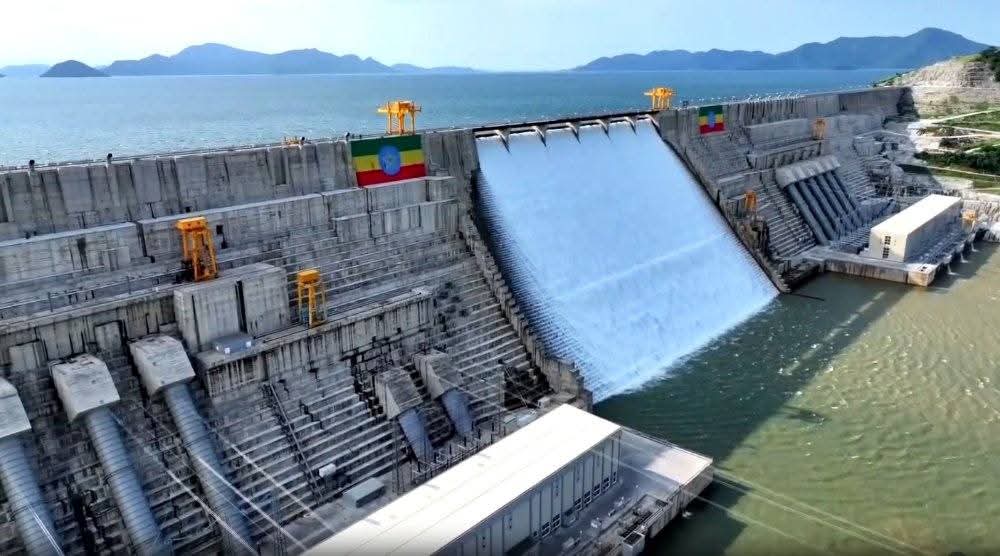
In that sense, GERD is a hub of power not only in electrical terms, but in narrative terms. It shifts the story Africa tells about itself.
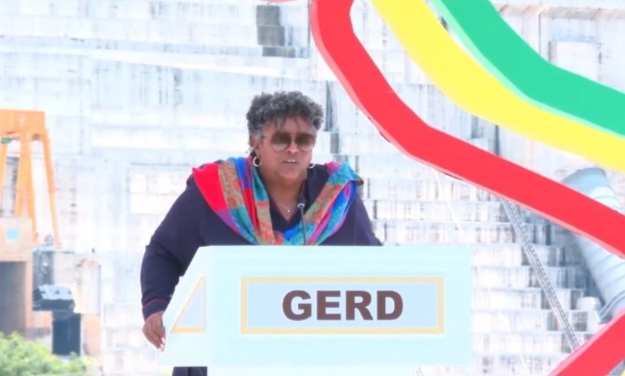
When Barbados Prime Minister Mia Amor Mottley participated in the inauguration of the Grand Ethiopian Renaissance Dam on September 1, 2018, in the Ethiopian calendar, she framed the moment in terms that went far beyond infrastructure. Standing before Africa’s largest hydroelectric project, she declared that Ethiopia was not merely inaugurating a dam, but inaugurating belief.
That framing has since echoed far beyond the ceremony. In a later conversation with Trevor Noah on What Now?, Mottley returned to GERD as a powerful illustration of self-reliance, collective action, and African achievement in the face of global resistance. Though Ethiopia was not the central topic of the discussion, the dam emerged as one of its most compelling real-world examples.
GERD, now operational and transformative, is often discussed through technical specifications or regional diplomacy. Yet Mottley’s intervention points to a deeper meaning: how Ethiopia’s experience challenges long-standing assumptions about development, dependency, and power in Africa.
----------Editor’s Disclaimer:
The views and opinions expressed in articles published by Horn News Hub are those of the authors and do not necessarily reflect the official position or editorial stance of Horn News Hub. Publication does not imply endorsement.