
Mekelle/Tel Aviv/Nairobi/Pretoria/London
Ideological Entrapment and Strategic Failure
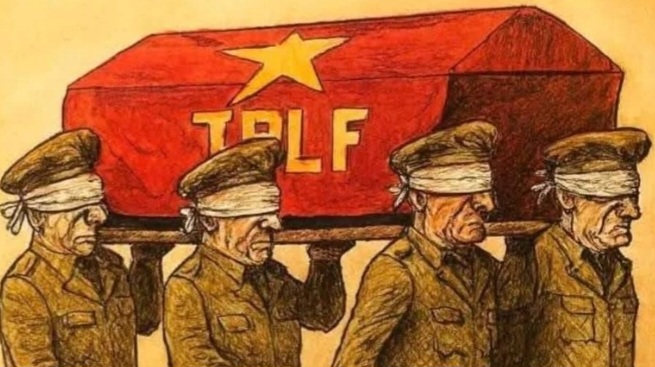
TPLF’s Armed Political Legacy and Its Generational Impact on Tigray
For more than five decades, the Tigray People’s Liberation Front has been a central actor in shaping Tigray’s political and security trajectory. Established in February 1975 as an armed insurgent movement, the organization evolved through multiple phases: guerrilla force, dominant ruling elite within Ethiopia’s federal system, and later a regionally entrenched political and military authority. Across these transitions, the organization’s approach to power remained heavily shaped by armed struggle, centralized control, and ideological rigidity.
The cumulative outcome of this political trajectory is widely debated, but its generational consequences are increasingly difficult to ignore. Large segments of Tigray’s population have experienced repeated cycles of war, displacement, repression, and economic disruption. Observers now warn that without a fundamental shift in political culture, similar patterns could persist into the future.
Armed Politics as a Foundational Identity
From its earliest years, the TPLF defined itself primarily through armed struggle. During the conflict against the Derg regime between 1975 and 1991, the organization also engaged in violent confrontations with rival Ethiopian and Tigrayan political movements, including the Tigray Liberation Front, the Ethiopian Democratic Union, and the Ethiopian People’s Revolutionary Party. Armed conflict was not only directed outward but also used internally to consolidate authority and marginalize alternative political voices.
This period established a political culture in which military capacity and revolutionary credentials became the primary sources of legitimacy. Civilian politics, pluralism, and institutional compromise were secondary considerations.
From Insurgency to State Power Without Structural Reform
Following the fall of the Derg in 1991, the TPLF emerged as the most influential force within the Ethiopian People’s Revolutionary Democratic Front coalition. While the transition offered an opportunity to shift from insurgency to civilian governance, the underlying political logic changed only partially.
Governance during this period was framed through concepts such as revolutionary democracy and later the developmental state. Critics argue that these frameworks masked a highly centralized system in which political loyalty often outweighed institutional autonomy and accountability. Security institutions retained disproportionate influence, and military experience continued to shape political decision making.
Major military engagements, including the Eritrea Ethiopia border war and Ethiopia’s intervention in Somalia, reflected a continued reliance on force as a central instrument of state policy. By the time widespread protests emerged between 2015 and 2018, institutional trust had significantly eroded.
Post-2018: Ideological Entrapment Becomes Strategic Suicide
The loss of federal power in 2018 marked a turning point. Rather than undertaking internal reform or political reconciliation, the TPLF consolidated its authority within Tigray, maintaining a posture shaped by military readiness and ideological continuity.
Analysts note that during this period, the leadership underestimated shifts within Ethiopia’s political landscape and broader regional alignments. The possibility of coordinated security action between Addis Ababa and Asmara was dismissed, and the belief persisted that past military experience ensured strategic superiority.
These assumptions culminated in the November 2020 attack on the Northern Command of the Ethiopian National Defense Force. The decision triggered a large-scale conflict that rapidly escalated beyond the control of any single actor.
The Tigray War: A Self-Inflicted Strategic Disaster
The conflict between 2020 and 2022 resulted in extensive civilian casualties, widespread destruction of infrastructure, and the collapse of basic services across much of Tigray. Multiple armed forces were involved, including federal troops, Eritrean forces, and allied militias. Humanitarian access was severely restricted, contributing to famine-like conditions in several areas.
Independent assessments suggest that the scale of destruction was not inevitable. It was the product of political decisions that prioritized military confrontation over negotiation and risk management. The Pretoria Agreement of 2022 ended major hostilities but did not resolve underlying political fractures.
Generational Impact
The long-term effects of repeated conflict are evident across different segments of Tigrayan society.
Older generations remain deeply shaped by the liberation narrative of the late twentieth century, often interpreting past victories as enduring political entitlement. This perspective has complicated efforts at adaptation and reform.
The middle generation, which had formed the region’s economic and professional base, experienced severe disruption. Livelihoods were destroyed, displacement became prolonged, and dependence on humanitarian assistance increased.
The youngest generation has borne the most lasting consequences. Educational systems collapsed, schools were damaged or destroyed, and large numbers of children grew up amid violence, trauma, and food insecurity. These conditions pose significant risks to long-term social recovery.
Patrimonial Militarism and Institutional Weakness
At the structural level, analysts identify patrimonial militarism as a core challenge. Power is concentrated within personalized networks, institutions lack autonomy, and loyalty often substitutes for merit. Public resources are used to maintain political allegiance rather than to strengthen governance.
Such systems can appear stable in the short term but tend to be fragile in crisis. In Tigray, this model undermined civilian administration, weakened accountability, and complicated post-war recovery efforts.
Post-War Tigray and Unresolved Risks
Since the cessation of large-scale fighting, Tigray has faced persistent challenges. Internal political divisions, unresolved security arrangements, food shortages, and contested governance authority continue to affect stability. Efforts to demilitarize and rebuild civilian institutions have progressed slowly, often encountering resistance from entrenched interests.
Observers warn that without a decisive shift toward inclusive civilian governance, institutional reform, and political compromise, the risk of renewed instability remains high.
Conclusion
The central question facing Tigray today is not ideological but structural and strategic. Five decades of experience suggest that reliance on armed politics, centralized authority, and ideological rigidity has produced repeated cycles of conflict and social regression.
Sustainable recovery will require a clear departure from militarized political culture and a commitment to civilian leadership, accountable institutions, and realistic engagement with regional dynamics. Without such changes, the burdens borne by previous generations may continue to shape the future, limiting prospects for lasting peace and reconstruction.
Prepared By:
Dr. Dawit Tesfay
Institutional Policy & Religion–State Relations Researcher
Post-War Military & Security Affairs Expert
----------Editor’s Disclaimer:
The views and opinions expressed in articles published by Horn News Hub are those of the authors and do not necessarily reflect the official position or editorial stance of Horn News Hub. Publication does not imply endorsement.