


Mekelle/Tel Aviv/Nairobi/Pretoria/London
Addis Ababa’s Urban Transformation and the Homegrown Economic Reform Agenda
By Chekole Alemu
Addis Ababa is undergoing one of the most ambitious urban transformations in its modern history, a shift that city and federal officials describe as both deliberate and policy driven. New parks, wider roads, pedestrian corridors, cycling lanes, and rehabilitated riverbanks are reshaping the capital’s physical landscape. Beyond aesthetics, the changes reflect a deeper national strategy rooted in Ethiopia’s Homegrown Economic Reform Agenda.

Launched in 2024, the Corridor Development Project sits at the heart of this transformation. It has introduced expanded road networks with modern lighting, pedestrian walkways, and cycling lanes, alongside public parks, playgrounds, sanitation facilities, and parking areas. The objective is to make Addis Ababa a functional, livable, and inclusive city, capable of supporting economic growth while improving everyday life for residents.
For many residents, the shift is dramatic. Neighborhoods once dominated by congestion and limited public space now offer room for walking, cycling, and recreation. Improved lighting has extended safe use of streets into the evening, while new playgrounds and green areas have changed daily routines for families. The growing network of bike lanes is also encouraging alternative transport, easing pressure on traffic and contributing to healthier urban mobility.
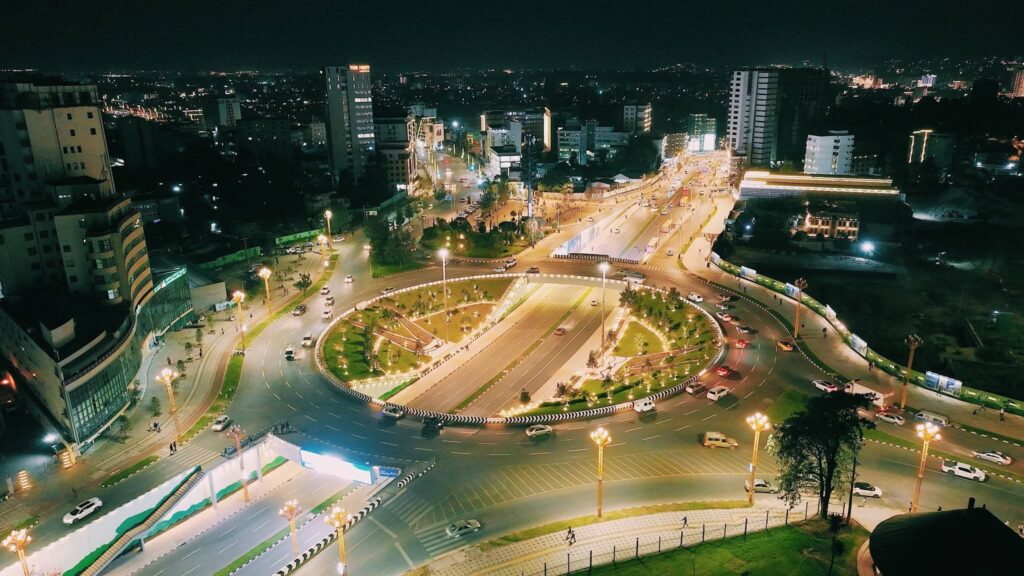
Alongside the corridor initiative, the Riverside Development Project is transforming a 56 kilometer stretch along the city’s two main rivers. Areas long associated with pollution, informal settlements, and environmental risk are being cleaned and opened to the public. Riverbanks that were once hazardous have been turned into green corridors with walking paths and cycling lanes, adding both ecological and social value to the city.
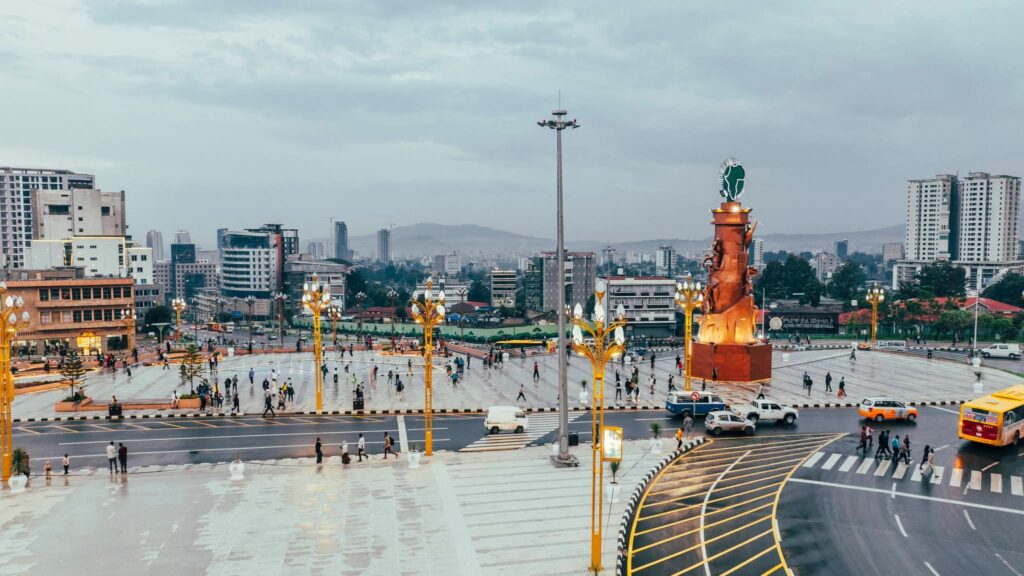
One of the most visible examples is in the historic Piazza area. Previously known for dense housing, poor sanitation, and difficult living conditions, parts of the neighborhood have been converted into public parks with open green spaces, playgrounds, and cleaner air. The speed of the transformation has surprised long time residents and visitors alike.
Veteran city tour guide Tesfa Yehunes Yacob says the changes have revitalized tourism. According to him, sites that once existed but remained hidden or inaccessible are now visible and attractive. Riverbanks that were previously avoided have become destinations, drawing both locals and tourists. The improved urban image, he argues, has given Addis Ababa a renewed cultural and recreational appeal.

City officials point to broader economic and social gains. They say congestion has eased, public health indicators are improving, and the city is better positioned to host major events. Upgraded water, sewage, and road systems are addressing long standing infrastructure gaps that had constrained productivity and quality of life. Officials also highlight job creation, noting that both permanent and temporary employment opportunities have emerged during construction and maintenance phases.
Crucially, the corridor development initiative is not an isolated city project. It is a direct outcome of Ethiopia’s Homegrown Economic Reform Agenda, the national policy framework introduced to stabilize the economy, modernize institutions, and place inclusive growth at the center of development. The reform agenda recognizes that economic transformation cannot succeed without functional, connected, and livable cities.
Under this framework, urban infrastructure is treated as economic infrastructure. Wider roads, pedestrian corridors, public spaces, and green areas are designed to reduce inefficiencies, support small businesses, improve labor mobility, and lower the cost of living and doing business. By connecting neighborhoods and formalizing underused urban spaces, the corridor initiative aims to unlock economic and social potential not only in Addis Ababa but across cities nationwide.
Prime Minister Abiy Ahmed has consistently emphasized urban reform as a pillar of national renewal. His Homegrown Economic Reform Agenda extends beyond macroeconomic policy to address how Ethiopians live and interact within cities. The focus on people centered, environmentally resilient urban development reflects a shift away from fragmented projects toward integrated planning that links economic growth with social wellbeing.

In Addis Ababa, Mayor Adanech Abiebie has been tasked with translating this national vision into action. City officials describe the corridor development as a practical implementation of federal policy at the municipal level. Backed politically and strategically by the Prime Minister, the mayor has overseen a complex program involving infrastructure renewal, public space creation, and neighborhood reorganization. The scale and pace of implementation signal strong alignment between federal leadership and city governance.
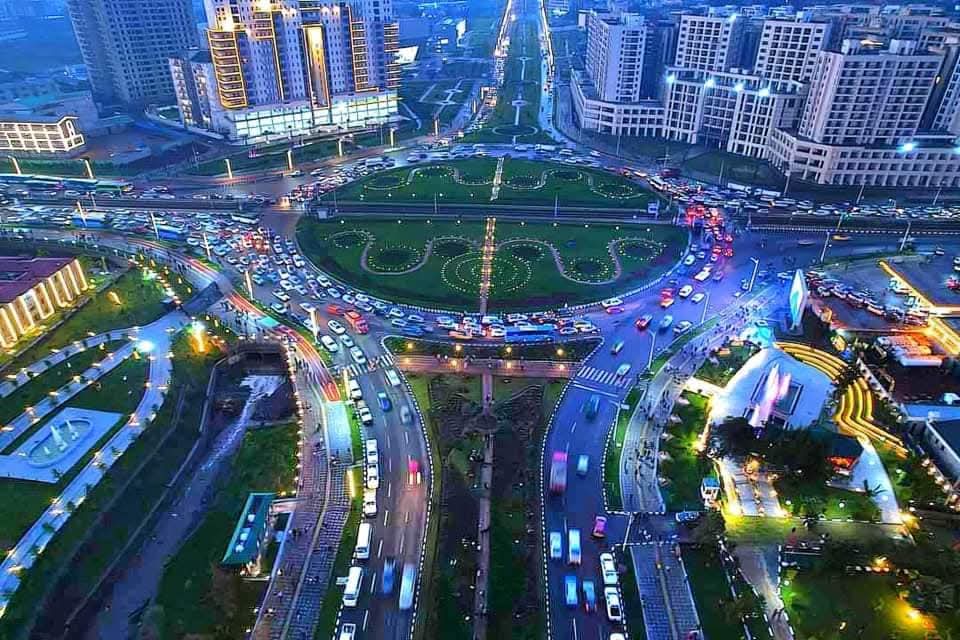
The expansion of corridor development to other cities further highlights its national significance. By improving mobility, revitalizing public spaces, and strengthening environmental resilience, the initiative aims to support balanced urban development across Ethiopia. Improved accessibility is expected to encourage investment, boost tourism, and stimulate local economies in regional cities.
The transformation, however, has not come without cost. Demolitions, displacement, and relocation of entire neighborhoods have been part of the process. Authorities maintain that inclusion has been a guiding principle, citing early consultations, data driven relocation planning, and dedicated grievance handling mechanisms. Whether these measures fully address the social impact remains a subject of public debate.
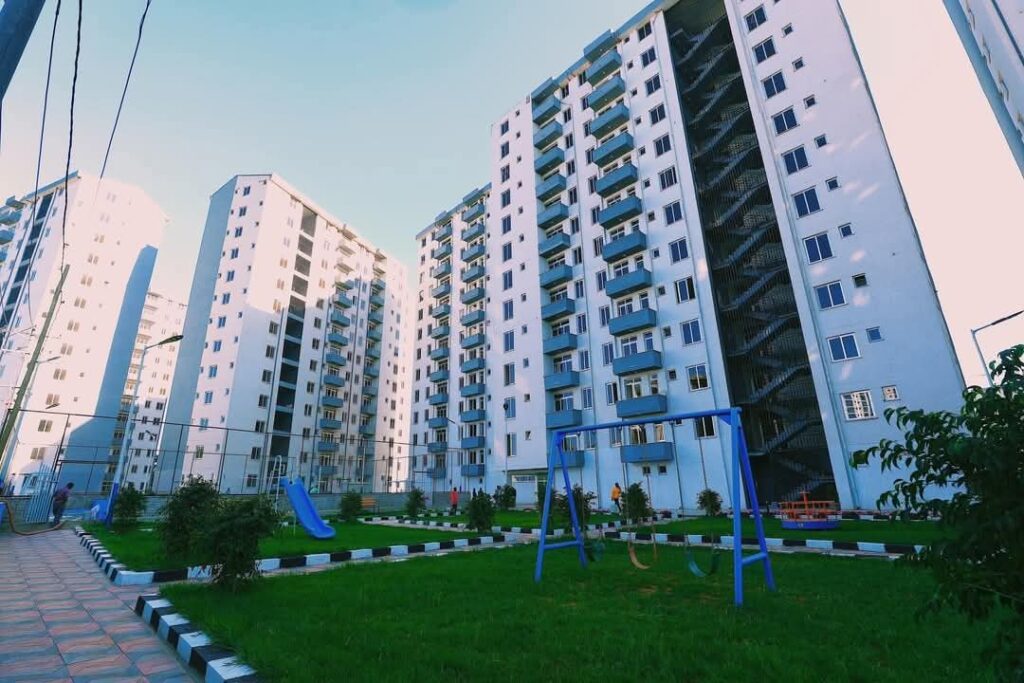
What is clear is that Addis Ababa is redefining itself. More than 135 years after its founding, the city whose name means “new flower” is beginning to reflect that identity through its streets, rivers, and public spaces. As a flagship outcome of the Homegrown Economic Reform Agenda, the corridor development initiative stands as one of the most visible expressions of Prime Minister Abiy Ahmed’s effort to reshape Ethiopia’s development path through coordinated national policy and local execution.
———-
Editor’s Disclaimer:
The views and opinions expressed in articles published by Horn News Hub are those of the authors and do not necessarily reflect the official position or editorial stance of Horn News Hub. Publication does not imply endorsement.