
Mekelle/Tel Aviv/Nairobi/Pretoria/London
No Lasting Peace Without Tigray: Interim Administration Sets Conditions for Dialogue and Return
By Chekole Alemu
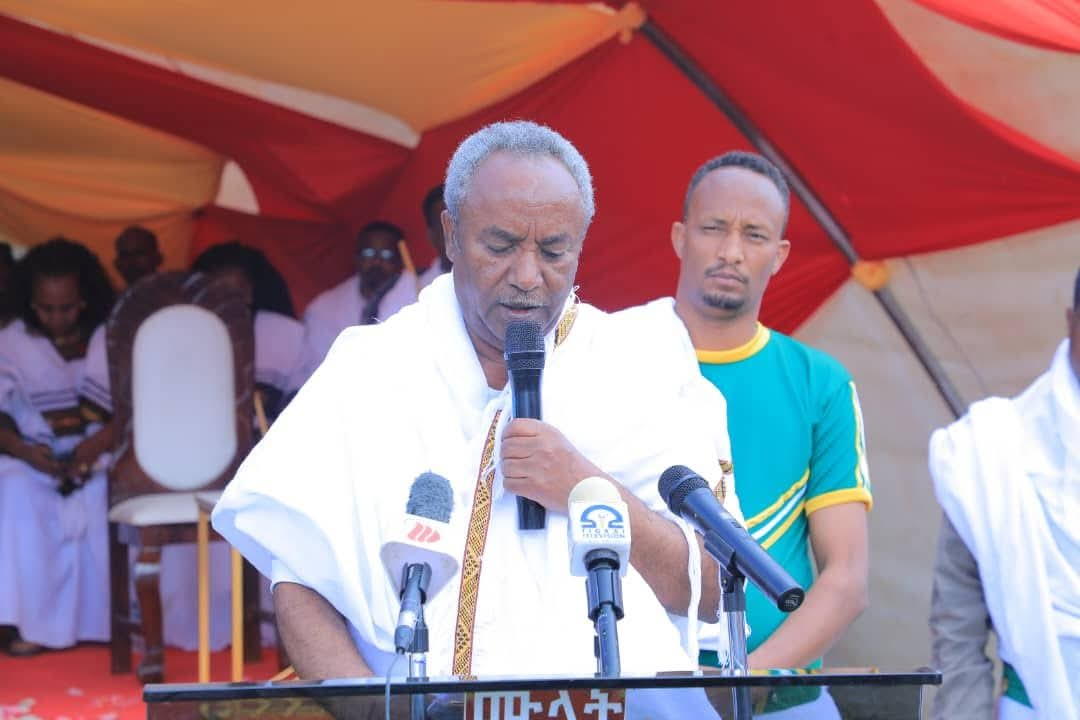
President Tadese Werede’s address during Timket celebrations in Maichew carried a message that went far beyond religious observance. Speaking at a moment symbolizing renewal and unity, he framed the future of Tigray around a single core principle: the region’s crisis can only be resolved through direct dialogue between Tigray and the federal government. The choice of venue and timing was deliberate. In a society emerging from war and trauma, Timket provided both moral weight and public visibility to a political argument grounded in inclusion rather than force.
Tadese’s remarks reflected a broader recalibration by the Tigray Interim Administration. After years of armed conflict and institutional collapse, the administration is openly prioritizing negotiation and political engagement. His message was clear. Delayed talks, parallel arrangements, or security-first approaches that avoid addressing political questions will not deliver stability. Dialogue is not framed as a tactical option, but as the only viable path to resolve disputes around governance, security, and territorial administration.
Crucially, the interim administration is tying political dialogue to reconstruction. Tadese emphasized that readiness to discuss is matched by readiness to rebuild. Much of Tigray’s infrastructure remains damaged or nonfunctional, and public services are struggling to recover. Without visible reconstruction, political processes risk losing legitimacy among communities whose daily realities have yet to improve. The administration’s position suggests that peace must be tangible, measured not only by agreements but by restored schools, clinics, and livelihoods.
Humanitarian conditions remain a major concern. While aid operations continue, Tadese acknowledged that humanitarian activities are limited in scale and reach. Emergency assistance alone, he argued, cannot sustain a population facing prolonged displacement and economic disruption. He called on the international community to expand its role, shifting from short-term relief to sustained support for recovery and rebuilding. Without this transition, humanitarian gaps will continue to undermine stability.
A particularly sensitive issue raised in Tadese’s speech was the return of internally displaced persons. He openly acknowledged that the return process to Tselemti woreda faced serious problems, citing shortcomings in coordination, preparedness, and participation. However, he stressed that these failures would not be repeated in the planned return of IDPs from Western Tigray. According to Tadese, lessons have been learned, and future return processes will be more structured, inclusive, and guided by the full involvement of the interim administration.
This point carried broader political significance. Tadese made it clear that return and reintegration processes conducted without the meaningful participation of Tigrayan institutions are both flawed and unsustainable. Any approach that sidelines the interim administration, particularly on sensitive issues such as Western Tigray, risks deepening mistrust and reopening conflict. In his view, return is not merely a logistical exercise but a political process that must respect local authority and community consent.
Underlying all these points was a firm warning. Peace processes that exclude Tigray are unlikely to endure. Tadese argued that stability cannot be imposed through externally driven frameworks or parallel mechanisms that bypass regional institutions. Inclusion, ownership, and accountability are essential if agreements are to hold and if displaced communities are to return safely and with dignity.
In Maichew, President Tadese Werede used a moment of spiritual unity to deliver a sober political message. Dialogue with the federal government, inclusive decision-making, credible reconstruction, and properly managed returns are not optional steps. They are the foundations of any lasting peace in Tigray. Without them, calm may persist temporarily, but genuine stability will remain elusive.
———-
Editor’s Disclaimer:
The views and opinions expressed in articles published by Horn News Hub are those of the authors and do not necessarily reflect the official position or editorial stance of Horn News Hub. Publication does not imply endorsement.